One description - “3 kVA online, tower, LCD, 220V” - is quoted anywhere from USD 100 to USD 320 on public sourcing platforms at 1-10 unit quantities; a 1 kVA unit commonly lands at USD 95-150, and a 10 kVA three-phase-in single-phase-out machine at USD 550-620. The spread does not come from the brand. It comes from three things you cannot see on the quotation sheet: whether VA is being quoted as W, whether the battery cabinet is inside the price, and whether runtime is calculated at the 20-hour rate or the 1-hour rate.
This article covers the buying actions only - how to tell the three machine types apart, how to check capacity and runtime, which battery chemistry to choose, where the money goes, the 12 points to lock into the RFQ, what to test at acceptance, and the six pitfalls buyers fall into most often. Inside a hotel ELV system, a UPS is the item most easily squeezed as a “power accessory” - but when it stops, the surveillance, access control, network and PA systems on the whole floor stop with it.
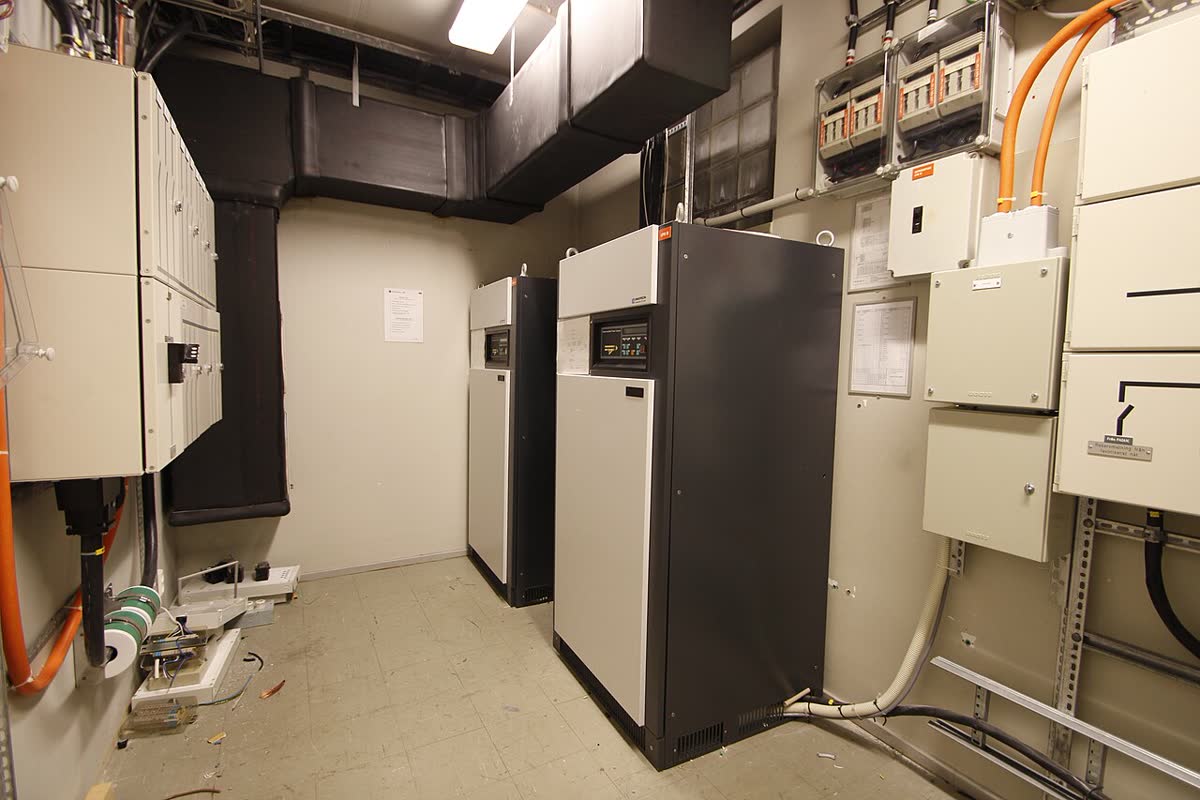
Photo: Work With Sounds, CC BY-SA 4.0, via Wikimedia Commons.
Separate the Three Machine Types Before You Talk Price
Under the standard the three types are different products, and putting them into one comparison table is the first mistake. IEC 62040-3 classifies them with three codes: VFD (standby), VI (line-interactive) and VFI (double-conversion online).
| Machine type | Standard class | Transfer time | Output waveform | Typical loads | Common capacity range |
|---|---|---|---|---|---|
| Standby | VFD | typically 4-10 ms | square wave or simulated sine | single PC, router, POS terminal, single-point devices | 0.5-2 kVA |
| Line-interactive | VI | typically 2-6 ms | simulated sine | small network cabinet, wireless APs, lightly loaded comms box | 1-3 kVA |
| Double-conversion online | VFI | 0 ms (no transfer) | pure sine | NVR, access controllers, core switches, IPTV head-end, PA host | 1-200 kVA |
The test is a single question: will this load restart if power drops for a few milliseconds? Everything at the head-end of the comms room (NVR and storage, access controllers, core switches, IPTV head-end, PA host) should be specified as double-conversion online (VFI). End-point cameras and single door readers do not get their own UPS - they are powered from the PoE switch, and the head-end unit feeding that switch is enough (for the PoE budget and acceptance practice, see the PoE switch sourcing guide).
The most common substitution sits right here: selling VI as VFI. Three self-checks: (1) does the datasheet state a “pure sine” output waveform; (2) input voltage range - a wide range such as 110-300 V is usually a VI signature, while VFI is normally stated at around +/-20%; (3) is the transfer time stated as 0 ms.
Capacity: VA Is Not W
There is one formula:
Usable load (kW) = nominal capacity (kVA) x output power factor (PF)
- Modern high-frequency units, PF 0.9-1.0: 3 kVA nominal, 2.7-3.0 kW usable
- Older or low-cost units, PF 0.6-0.8: 3 kVA nominal, only 1.8-2.4 kW usable
Both are labelled “3 kVA”, and the usable load differs by 50%. That is the first layer of the two-to-three-times price spread.
A first-cut calculation from the load list (typical values, for pre-RFQ estimating):
| Device | Typical power | Own UPS required? |
|---|---|---|
| Fixed bullet / dome camera | 4-8 W (PoE powered) | No, powered centrally from the PoE switch |
| PTZ and heated models | 15-30 W (PoE+) | No, same as above |
| NVR and storage host | 60-250 W | Yes |
| Access controller / field controller | 20-60 W | Yes |
| Core / aggregation switch | 100-370 W | Yes |
| IPTV head-end and encoders | 50-200 W | Yes |
| PA / voice alarm amplifiers | 100-500 W | Yes |
| Comms room PC, monitor, KVM | 150-400 W | Yes |
Two design rules: keep at least 25-30% headroom; size long-running systems at 70-80% of full load, because an online unit loses efficiency and gains temperature rise at 100% load.
How to Calculate Runtime So It Is Not Overstated
Runtime t (hours) = battery capacity (Ah) x battery string voltage (V) x usable discharge factor x inverter efficiency / load (W)
Example: one cabinet of 8 x 12V/9Ah batteries (nominal 96 V / 9 Ah, about 864 Wh), a 500 W load, inverter efficiency 0.9, and a usable factor of 0.6 at the 1-hour discharge rate:
(9 x 96 x 0.6 x 0.9) / 500 = 0.93 hours, about 55 minutes
From a battery cabinet labelled 864 Wh you actually get about 520 Wh at the 1-hour rate. Usable lead-acid capacity falls as the discharge rate rises (the Peukert effect) - which is the main reason a supplier’s “1 hour runtime” becomes a bit over 30 minutes on site:
| Discharge rate | Usable capacity as share of C20 nominal |
|---|---|
| 20-hour rate (C20) | 100% |
| 10-hour rate | about 90% |
| 3-hour rate | about 75% |
| 1-hour rate | about 55% |
| 15-minute rate | about 35% |
So never let “1 hour runtime” stand alone in an RFQ. Write it as: at XX W actual load, discharged at the 1-hour rate, with a battery configuration of XX Ah x XX units - and have the factory quote the battery count and cabinet size against that configuration.
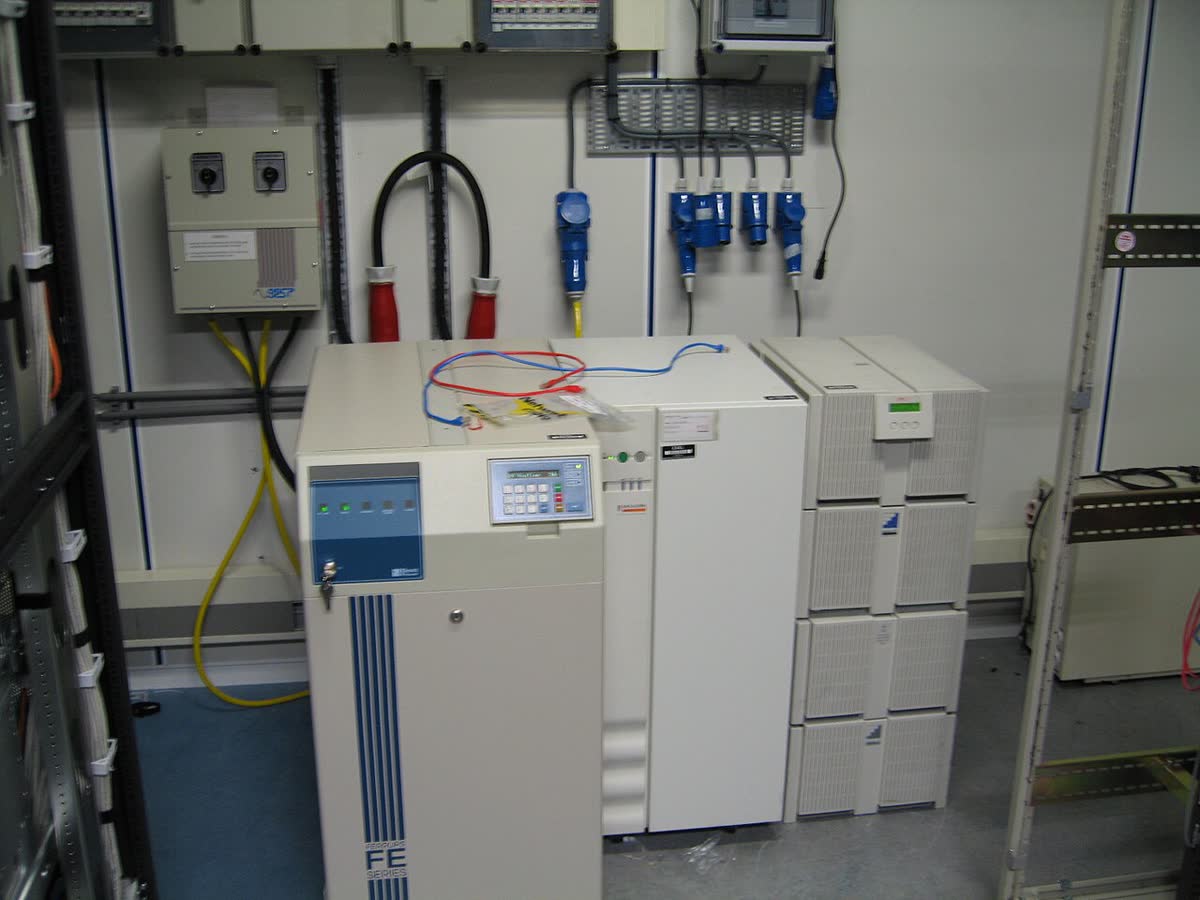
Photo: Jemimus, CC BY 2.0, via Wikimedia Commons.
Battery Choice: VRLA or LiFePO4
| Comparison | VRLA (AGM / GEL lead-acid) | LiFePO4 lithium iron phosphate |
|---|---|---|
| Design life on float charge at 25°C | 3-5 years | 8-10 years |
| Cycle life at 80% DOD | about 300-500 cycles | about 2,000-6,000 cycles |
| Volume / weight at equal capacity | about 2-3 times the lithium pack | baseline |
| Battery cost | baseline | 1.5-3 times higher |
| Temperature sensitivity | above 25°C, life roughly halves for every 10°C rise | also heat-sensitive, but the BMS has over-temperature protection |
| Transport | dangerous goods (UN2794 / UN2800), declaration required | needs a UN38.3 report, most forwarders accept it |
| Maintenance | no BMS, relies on periodic voltage and internal resistance checks | BMS plus communications, remote alarms available |
How to choose: floor or zone backup, budget first, happy to replace batteries every 3-5 years -> VRLA; comms room, unmanned site, an 8-10 year horizon or high ambient temperature -> LiFePO4. Whichever you choose, three things must be settled before you accept a quote: whether batteries are included in the price, the battery brand and grade, and whether the battery cabinet ships as a complete assembly.
Where the Money Goes: Cost Structure and Price Anchors
The usual split of a quotation, line item by line item (for judging quotes, not an industry statistic):
| Stage | Share of unit cost | What the buyer should watch |
|---|---|---|
| Battery bank | 25-40% | Whether batteries are included, Ah and brand grade, whether the cabinet ships complete |
| Transformer and magnetics | 10-20% | Line-frequency units are heavy and surge-tolerant; high-frequency units are lighter and more efficient - do not compare the two topologies on price alone |
| IGBTs and power devices | 8-15% | Device grade and thermal design decide full-load temperature rise and service life |
| Control board and firmware | 8-12% | Charge current adjustable or not, alarm logic, display and communication protocols |
| Structure and cooling | 8-12% | Fan strategy, airflow, sheet-metal gauge; rackmount units also depend on rails and load rating |
| Certification and test amortisation | 2-5% | Who the certificate is held by (see section six) |
| Factory margin | 10-20% | A margin clearly below 10% usually means one of the lines above has been substituted |
Common FOB ranges seen on public sourcing platforms at 1-10 unit quantities (October 2026):
| Machine type | Typical FOB range |
|---|---|
| 1 kVA single-phase high-frequency online | about USD 95-150 |
| 2-3 kVA single-phase online | about USD 145-320 |
| 6-10 kVA three-phase-in single-phase-out online | about USD 550-620 |
| 10-20 kVA three-phase online (line frequency / with isolation transformer) | quoted to configuration, usually above USD 900 |
Three notes: volume pricing typically runs 10-25% below the 1-unit basis; the battery cabinet, communications card (SNMP / Modbus) and bypass switch are usually quoted as separate lines; private-label MOQ moves with type and capacity, and a common published position is “standby 500 units, 1-3 kVA online 100 units, 6-10 kVA 20 units” - ask early if you want your own brand on a small first order.
Compare five-year total cost of ownership, not unit price. A VRLA system normally needs one or two battery replacements within five years, and batteries are 40-60% of the five-year cost; LiFePO4 costs more up front but needs far fewer replacements. Put both into one TCO table and the conclusion frequently flips.
The 12 Points Your RFQ Must Lock Down
- Machine class (VFI / VI / VFD) with a declared compliance with IEC 62040-3
- Nominal capacity in kVA, active power in kW, and output power factor
- Input voltage range, frequency range, input power factor and THDi
- Output voltage, waveform (pure sine / simulated sine), output voltage distortion THDv
- Transfer time in ms, and whether a static bypass and a manual maintenance bypass are fitted
- Battery type, brand and grade, Ah rating and number of units, string voltage, whether the cabinet is included
- The test condition for runtime: load in W plus discharge rate (state the 1-hour rate; a C20 figure alone is not acceptable)
- Adjustable charge current range (e.g. 1-12 A)
- Communications: SNMP / Modbus card, dry contacts, USB / RS232, standard or optional
- Certification: CE (LVD 2014/35/EU + EMC 2014/30/EU), IEC 62040-1 / -2 / -3 reports, UL 1778 (US market), RoHS - and the entity that holds them
- Operating temperature range, ingress protection (IP), noise (dBA), dimensions and weight
- Packaging (wooden case / carton), transport declaration for units shipped with batteries (UN2794 or UN38.3), warranty period and whether the warranty covers batteries
Certifications: Look at the Holder, Then Run Five Tests
| Standard / requirement | What it governs | What counts as evidence |
|---|---|---|
| IEC 62040-1 | Safety | Issued by a third-party laboratory, with the applicant / holder being the manufacturing factory itself |
| IEC 62040-2 | Electromagnetic compatibility (state the category: C1 / C2 / C3) | Same, and the model must match the enclosure |
| IEC 62040-3 | Performance and test methods (including the VFI / VI / VFD classification) | A report for the same model - a sibling model at another capacity does not substitute |
| CE (LVD + EMC directives) | EU market access | Requires an EU responsible person plus a technical file, not a laboratory self-declaration |
| UL 1778 | US market access | A certificate from UL or ETL; CE alone will not get you into the US |
| UN38.3 / UN2794 | Transport of lithium / lead-acid batteries | Lithium cells must have a UN38.3 report |
At acceptance, run these five tests as standard. Skipping any one usually means remedial work after go-live:
- Full-load temperature rise: run 4-8 hours at full load and record internal temperature, fan behaviour and whether the unit derates
- Transfer and bypass: an online unit should ride through mains loss at 0 ms with no interruption; on a standby unit, record the measured transfer time
- Measured runtime: discharge at the actual load until the unit shuts down and compare with the target - the most commonly failed item
- Input range: simulate low and high mains voltage and verify the real input window, transfer behaviour and alarms
- Communications and alarms: connect the SNMP card to a real network and read the data once; trigger a dry-contact alarm for real
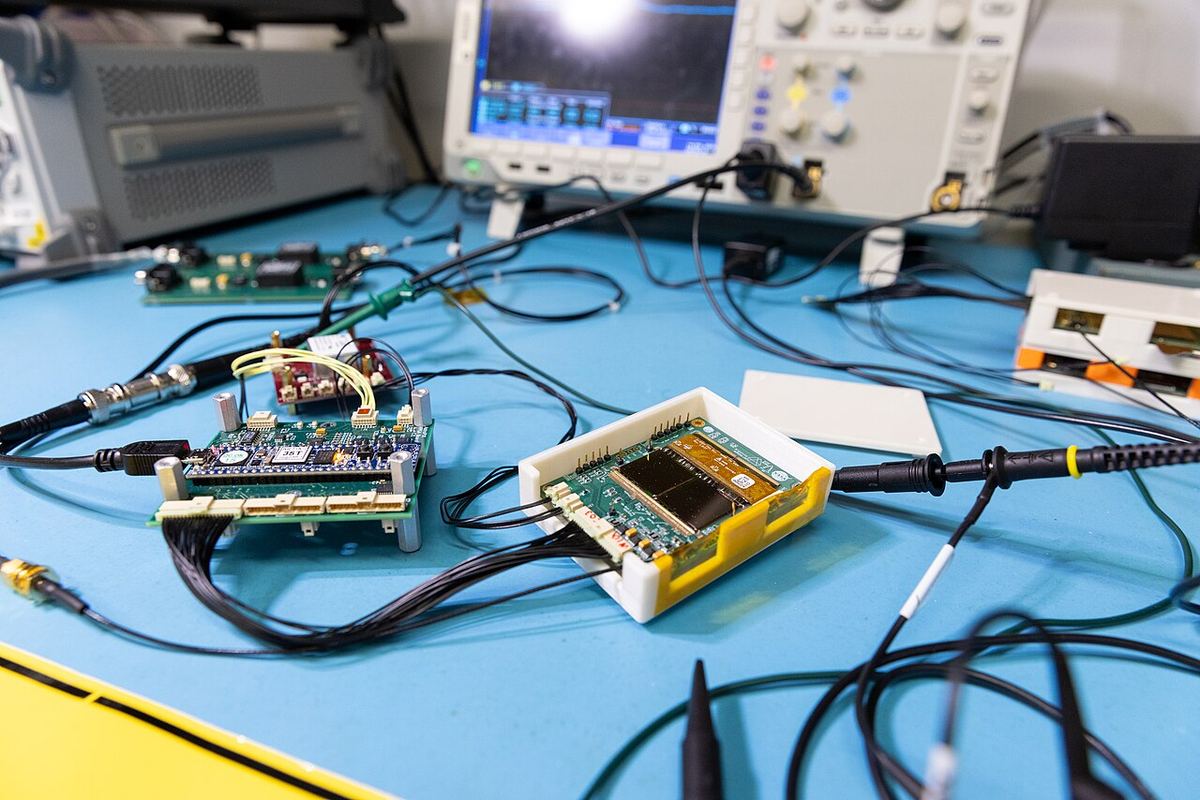
Pricing for third-party inspection and factory audits is set out in inspection and audit costs; sampling follows the AQL general inspection level II table, and reports include photos and measured data. If you are building a full low-voltage package, check the UPS together with the cabling, network and surveillance equipment in one BOQ review - do not let the power system be the only item in the package that never went through acceptance testing.
The Six Most Common Pitfalls
- Quoting VA as W: two units both labelled 3 kVA carry either 1.8 kW or 2.7 kW, depending on the output power factor
- A quote that excludes batteries and the battery cabinet: the head unit looks cheap, and the total with batteries comes out above the competition
- Runtime stated at the 20-hour rate: at the 1-hour rate only about 55% of the capacity is usable, so the number collapses once installed
- Only a self-declared CE, with no report under the factory’s own name - and no UL 1778 for a project heading to the US
- Selling line-interactive (VI) as online (VFI): check the output waveform, the input range and the transfer time
- Communications card, bypass switch and battery temperature probe billed outside the quote: all are mandatory line items in a project budget, so put them in the enquiry from the start
FAQ
Q1: What does a 1-3 kVA UPS sourced from China cost? A 1 kVA single-phase high-frequency online unit runs about USD 95-150 on public sourcing platforms at 1-10 unit quantities; 2-3 kVA about USD 145-320; 6-10 kVA three-phase-in single-phase-out about USD 550-620. Volume pricing is typically 10-25% lower, and battery cabinets and communications cards are usually quoted separately.
Q2: Why does the same specification differ by two to three times in price? Three places: output power factor (two units both labelled 3 kVA can run 1.8 kW or 2.7 kW), whether batteries are included and on what capacity basis (C20 or the 1-hour rate), and who holds the certification (third-party reports under the factory’s own name, or a trader’s self-declaration).
Q3: How should a UPS be sized inside a hotel low-voltage package? One double-conversion online (VFI) unit at the comms room head-end, covering NVR and storage, access controllers, core switches, the IPTV head-end and the PA host; end-point cameras do not get their own UPS, because the head-end unit feeds the PoE switch that powers them. The full scope and the division of systems are set out in hotel ELV systems and the 500-room hotel ELV package case.
Q4: VRLA or LiFePO4 batteries? It depends on the replacement cycle and whether the room is manned: floor backup, budget first, replacement every 3-5 years means VRLA; a comms room, unmanned operation, an 8-10 year horizon or high ambient temperature means LiFePO4. Both must be compared in one five-year TCO table, not on unit price alone.
Q5: Can you do only the inspection or the factory audit, without handling the purchase? Yes. Inspection is priced by city and product complexity at about RMB 700-2,000 per order, with a report containing photos and measured data; a factory audit is about RMB 1,500-3,500 per factory and covers the production line, incoming inspection and certification documents. Sampling follows AQL general inspection level II.
Q6: How do I screen out traders that only re-sell? One test: will it give you the full-load temperature-rise test report for the same model, the battery configuration calculation, and the entity that holds the certification. UPS overstatement lives in the batteries and the power electronics; the supplier willing to hand over all three, and to let you open a unit and look at the battery compartment and thermal design, is the one that can carry project responsibility.
Next Step
Send us your load list (device types, wattage, target runtime), the installation environment (comms room / floor comms cabinet / outdoor enclosure), your target market (whether UL 1778 is required) and the quantity. Within 48 hours you will have the recommended machine class, a battery configuration proposal and an RFQ template.
👉 Contact our sourcing team or start with how product sourcing services work; if you are unsure how a full low-voltage package should be split, begin with the hotel ELV systems overview.