The same hotel, the same ELV scope, three suppliers, and three numbers 2-3x apart - and none of them is lying. The difference is not expensive or cheap, it is the scope: one quotes equipment FOB, one quotes delivered to site, one includes installation and programming. What you need to compare is the same thing, not three numbers.
This article does not publish a cost per square metre - no honest unit rate survives a real bill of quantities. It covers four things you can check: how the money in an ELV package splits into five blocks, how to budget from point counts when you have no drawings, why the same BOQ differs 2-3x, and the 12 points that must be nailed down on the quotation. ELV is the umbrella term for hotel low-voltage system integration, and more money goes into making the systems work together than into any single device.
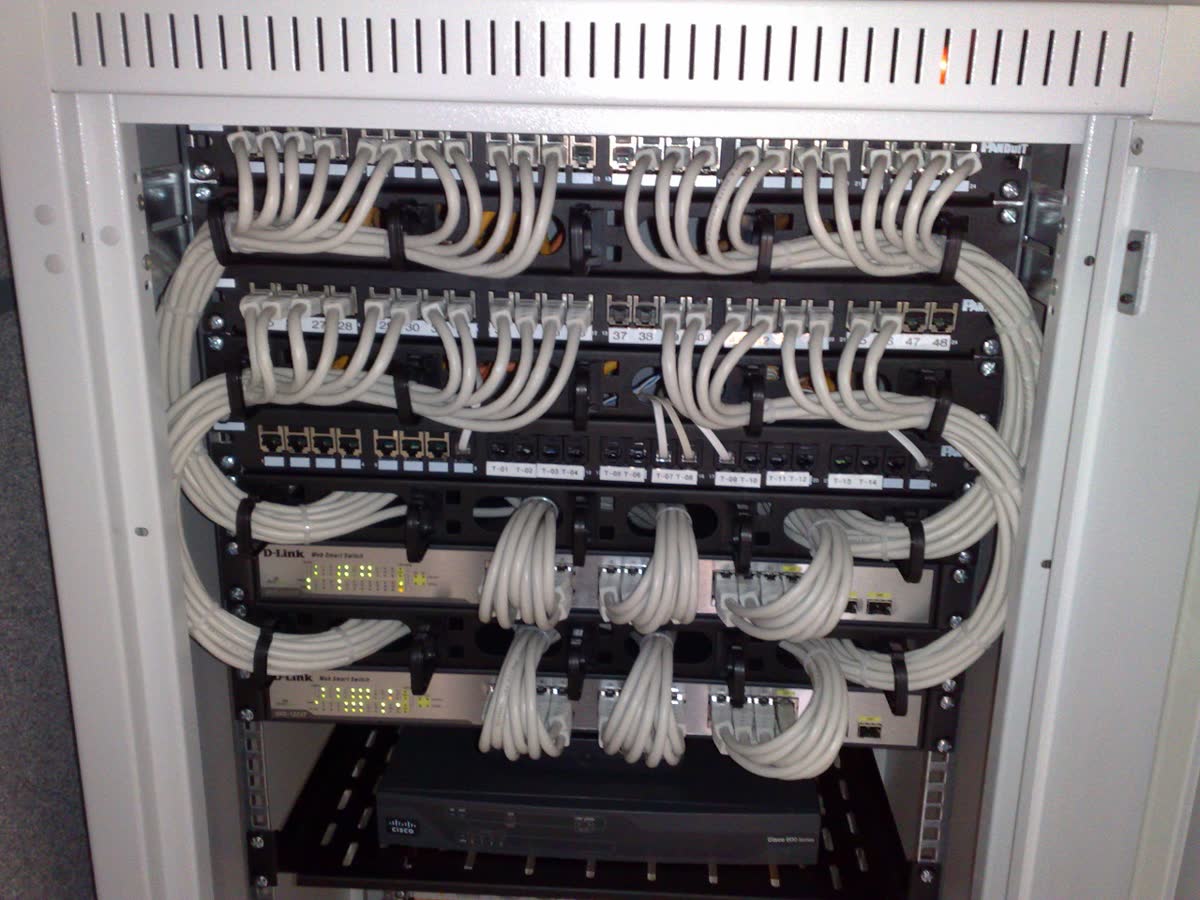
Photo: RobH, CC BY-SA 3.0, via Wikimedia Commons.
Align the Scope First: Your Three Numbers Are Not the Same Thing
The most common confusion is “A quotes 180,000, B quotes 410,000 - which do I believe”. Look at the scope before you look at who is cheap.
| Scope | What is included | What is not included | Who usually quotes it | Main risk |
|---|---|---|---|---|
| Materials / equipment landed | Equipment + cable + racks, delivered to a named port or warehouse | Installation, commissioning, programming, wastage, consumables | Exporters / trading companies | Looks cheapest, but it is only 50-70% of the total |
| Equipment package + training | The above plus on-site guidance and basic configuration | Cable tray and trunking, cable pulling, lifting to upper floors, commissioning time | Chinese suppliers | Site labour varies widely; a dragged schedule doubles the cost |
| Turnkey (supply and install) | Hardware + cable + installation + programming + acceptance | Civil works provisions, comms room fit-out, mains supply | Local main contractor / integrator | Most expensive, but one party is responsible; suits a tight schedule |
The conclusion is simple: get all three to quote the same scope before you discuss price. If one quotes FOB, one DDP and one turnkey, at least half of the 2-3x spread is scope, not price. That is why we ask buyers to state how far the price is quoted - half of the common traps in sourcing quotations start right here.
Split an ELV Quotation into Five Cost Blocks
Do not split by system (CCTV, access control, network…), that is a technical view; split by who supplies it and how it is measured, so it can be checked.
| Cost block | Unit | Who supplies | What the quotation must state |
|---|---|---|---|
| 1 Active equipment | unit / channel / door / point | Usually China | Model, resolution or specification, brand tier, warranty |
| 2 Cable, tray, trunking and consumables | metre / reel / length | China or local | Category (Cat6 / Cat6A), conductor material and gauge, whether tray and cable pulling are included |
| 3 Racks, power distribution and backup | unit / set / kVA | China | Rack size and quantity, UPS capacity and runtime, whether the battery cabinet is included |
| 4 Software, licences and programming | channel / seat / point | Supplier or local | Is the licence perpetual, integration depth (BMS/PMS), commissioning man-days |
| 5 Installation, commissioning and acceptance | point / man-day / item | Local | Who lifts equipment upstairs, who terminates, who produces the acceptance report, schedule milestones |
In the quotations we handle, the typical shares are: active equipment 40-55%, cable and consumables 12-20%, racks and power 5-10%, software and programming 5-12%, installation and commissioning 20-35%. The last two blocks together are often 30-45%, and they are not inside a China supply quotation - if all you hold is the Chinese supplier’s price, you hold 60-75% of the total.
Budgeting Without Drawings: A Three-Step Method
Before the drawings arrive and the BOQ is frozen, use point counts to get a range - more useful than waiting for quotations.
Step 1: count the points. Count by category, not by square metre: camera points, data (network) points, access-control doors, wireless AP positions, IPTV outlets, PA/intercom points, rack count. The numbers come from room count x points per room, plus public areas.
Step 2: give each point a “range including consumables”. Do not ask for a unit price; ask three questions and the range halves: how far does the run go (average cable length), does it need conduit or tray, and what grade of device sits at the end.
Step 3: add the hidden costs as factors. Cable wastage and slack (typically add 8-15%), rack and distribution routing, programming and commissioning man-days, local installation rate.
A real sense of scale: 2,000 ELV points at an average 50 m run is 100 km of cable on its own. The price gap is not in the words “Cat6 or Cat6A” but in the conductor: Cat6 is 250 MHz and runs 10G to 55 m, Cat6A is 500 MHz and runs 10G to 100 m; two reels both labelled “Cat6”, one copper-clad aluminium (CCA) and one solid copper, behave completely differently on long PoE runs - which is why a 12% cost block can eat the rework cost of the next few years.
Why the Same BOQ Differs 2-3x: Six Variables
Ordered by their effect on the total price, largest first:
- Brand tier. The equipment gap between tier-one, tier-two and white-label can reach 1.5-2.5x. The question is not which brand, but what is the test for an acceptable equivalent.
- Cable category and conductor. Cat6 / Cat6A / shielded and unshielded, solid copper and CCA: the price of a kilometre of cable can double, and it decides whether PoE and 10G are usable.
- Video specification and retention days. The most under-estimated item: one 4MP camera at 8 Mbps is 86.4 GB a day; 600 cameras retained for 30 days is 1,555 TB. At 4 Mbps the same 30 days drops to 778 TB. Storage and bandwidth cost far more than the cameras themselves - which is why hotel CCTV storage needs an article of its own.
- Racks, distribution routing and backup runtime. UPS runtime is quoted in hours, and depending on the discharge rate used the battery capacity can differ by more than half; UPS capacity and battery sizing is the clearest example.
- Programming and integration depth. 60 cameras and 600 cameras are not the same workload; whether the system has to talk to BMS and PMS, and whether licences are sold per channel or per seat.
- Who owns installation and commissioning. China supply with local electricians, or the whole package to a local main contractor, can swing more than 20% of the total.
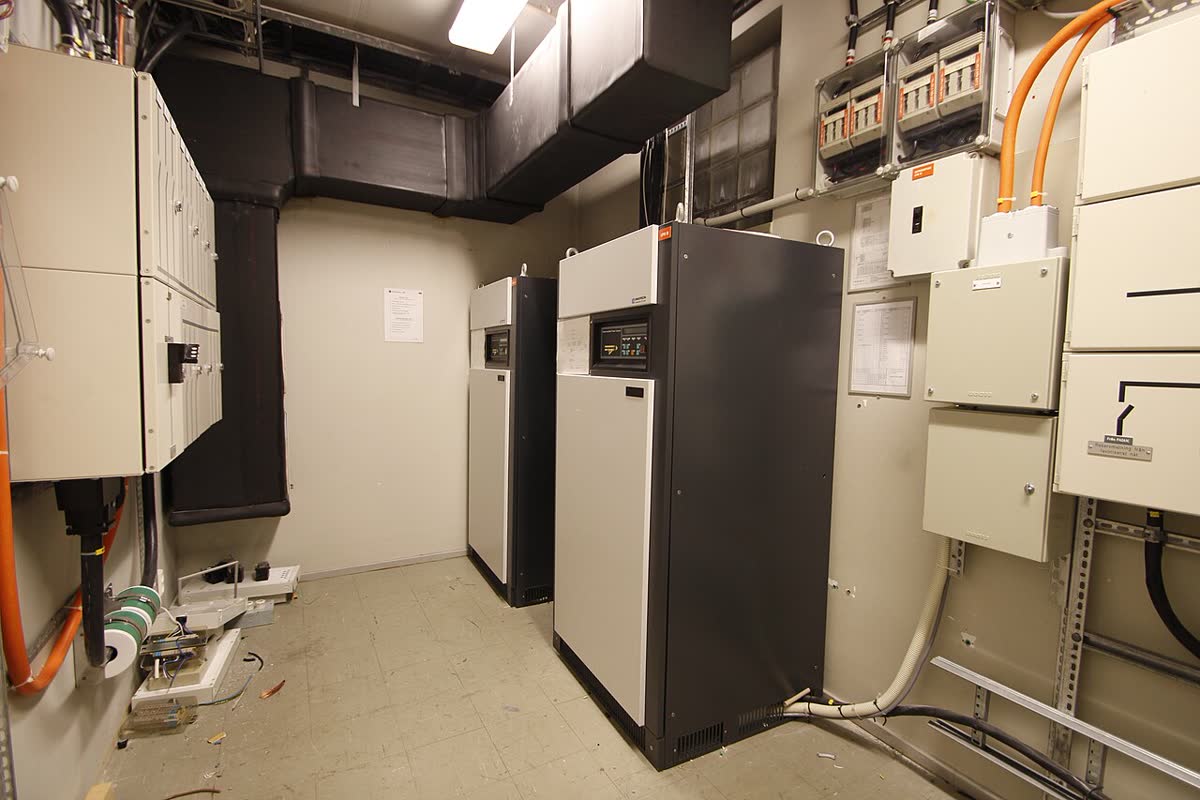
Photo: Mark Yeomans, CC BY-SA 4.0, via Wikimedia Commons.
The 12 Points You Must Nail Down on the Quotation
| # | Question to ask | What happens if you don’t |
|---|---|---|
| 1 | How far is the price quoted (FOB / CIF / DDP / installed) | The three numbers are not comparable |
| 2 | Is the cable solid copper or CCA, and what gauge | PoE drops out, 10G cannot run at rate |
| 3 | Are tray, trunking, conduit and consumables included | Site buys them as extras, spend outside the budget |
| 4 | What percentage is allowed for cable wastage and slack | Short at settlement, price goes up |
| 5 | Camera resolution, bitrate, retention days and number of drives | Not enough drive capacity, acceptance stalls |
| 6 | UPS VA/W, runtime at which discharge rate, battery cabinet included or not | Backup shrinks by half |
| 7 | Rack quantity, size and number of distribution circuits | They do not fit in the room, second purchase |
| 8 | Software licensed per channel / seat / point, perpetual or not | Renewal argument in year two |
| 9 | Commissioning man-days, on-site guidance and training included | Schedule slips, labour billed separately |
| 10 | Who owns the interfaces to BMS/PMS and the fire alarm | Blame passed back and forth at the interface |
| 11 | Which standard acceptance follows (cabling ISO/IEC 11801, EN 50173; surveillance EN 62676 series) | Argument at acceptance, final payment held |
| 12 | Payment milestones and the deliverable attached to each | Money is all paid and nobody has arrived |
If four of these 12 are missing from the quotation, price comparison loses its meaning. Our practice is to turn them into an RFQ template and send it out with the BOQ, so what comes back is the same table, compared row by row.
Six Pitfalls That Push the Cost Up
- Treating a per-point unit price as the total: a low unit price is usually achieved by leaving out consumables and commissioning.
- Comparing equipment but not cable: the 12-20% block is where the water hides, and the hardest to redo.
- Forgetting the cost of lifting and tray: vertical risers and moving the comms room are the most common reasons for a site-time price increase.
- Treating programming as a free gift: a programming promise without man-days is not integration.
- Same name, different material: the same Cat6, the same 4MP, can be 2x apart, and you find out at acceptance.
- Comparing different currencies and different trade terms in one table: this one manufactures a “15% cheaper” illusion every year.
Tie the Money to the Milestones
A workable payment structure (unlocked by deliverable, not by date): 20-30% advance with the contract, 30-40% after pre-shipment inspection of the main equipment, 20-25% on arrival, counting and installation, and a 10-15% balance after joint commissioning, acceptance and handover of documents. Each step needs something you can actually accept: the inspection report, the packing list, the point test records, the acceptance report.
Reports have to be agreed in advance, not on site. There is a pre-shipment inspection report template and an AQL sampling table on this site you can use directly; arrival checks and sampling of ELV equipment follow the same logic.
ELV System Cost: FAQ
Q1: How much does a hotel ELV system cost per square metre? Nobody can answer that honestly. In the same 500-key hotel, point density, retention days, whether BMS/PMS is integrated, and the local labour rate will each move the total by a factor of two. The workable approach is to budget a range from the point list, then price row by row once the BOQ is frozen.
Q2: Why are Chinese suppliers much cheaper than a local integrator? Because the scope is different. Chinese suppliers usually quote equipment and cable FOB; a local integrator quotes turnkey including installation, commissioning and responsibility. Convert both to the same scope and the gap usually returns to a sensible band - the genuine advantage is the gap on the equipment portion supplied from China.
Q3: Can cable and consumables be cut? They can be optimised, not removed as a line item. Cable is a 12-20% cost block but it decides whether PoE power and 10G work, and one rework usually costs more than the cable itself. The evaluation points are in structured cabling sourcing and acceptance.
Q4: Is cutting the camera unit price the most effective saving? No. Storage, bandwidth, racks and switch ports are often more expensive than the cameras themselves: 600 x 4MP cameras at 8 Mbps for 30 days needs 1,555 TB raw. Designing the bitrate and retention policy correctly saves far more than squeezing the camera price. Switch port count and total power budget are cost variables too - see PoE switch sourcing.
Q5: Once the quotations are compared, how do I confirm the supplier can deliver? Three things: a point-level list from a comparable project, an inspection and sampling process, and a willingness to write the acceptance standard into the contract. Equipment can be retained and burn-in tested through the factory audit and PTZ camera sample process; responsibility at system level has to be written into the contract with a named interface owner.
Q6: When do I need a technical sourcing agent rather than an ordinary trading company? When the scope contains interfaces, protocols or point-level acceptance. An ordinary trading company quotes by model; a technical agent has to align the design, the BOQ and the supplier tiers together - fees and the split of work are set out in technical sourcing agent for hotel ELV.
Having Someone Read the BOQ Beats Squeezing the Price
Send us the BOQ, the drawings or the point list, and the first thing we do is not quote - it is to go through the scope line by line and tell you what can be optimised, what cannot be cut, and the price range at a single scope. For hotel and commercial ELV packages we return a blocked-out quotation and a responsibility boundary within 48 hours; the full scope of supply for an ELV system is here.
WhatsApp or email both work - just send the list: contact us · how we work.