Three factories quote an identical description: “24-port Gigabit, PoE+, 370W, rackmount, managed.” The prices come back at USD 85, USD 115 and USD 176.
The difference is not the number of ports. It sits in four places you cannot see on the quotation sheet: whether the total PoE budget actually holds at 45C under full load, who wrote the management firmware, whether it can still be upgraded in three years, and which batch of switch silicon and power supply went into the box. For how to set the specification itself, see the 24-port PoE switch sourcing guide; this article covers only the buying actions - how to tell the three supplier types apart, where the cost actually sits, the 12 points to lock into the RFQ, what to test at acceptance, and the five pitfalls buyers fall into most often.
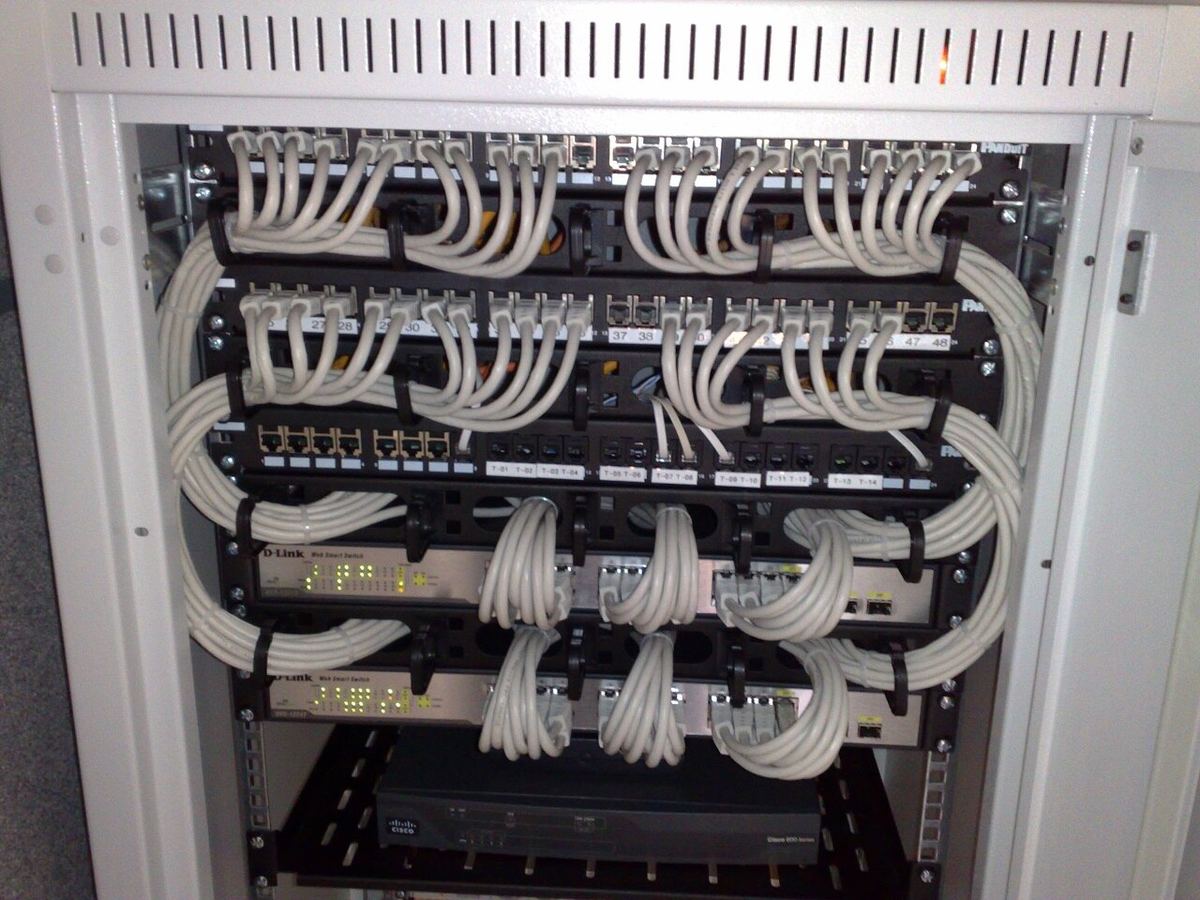
A PoE switch is the item inside a hotel ELV system most often bought as a “generic network box”, yet it powers cameras, wireless APs, access control, IP phones and PA endpoints at the same time - when it drops, an entire floor of low-voltage systems drops with it.
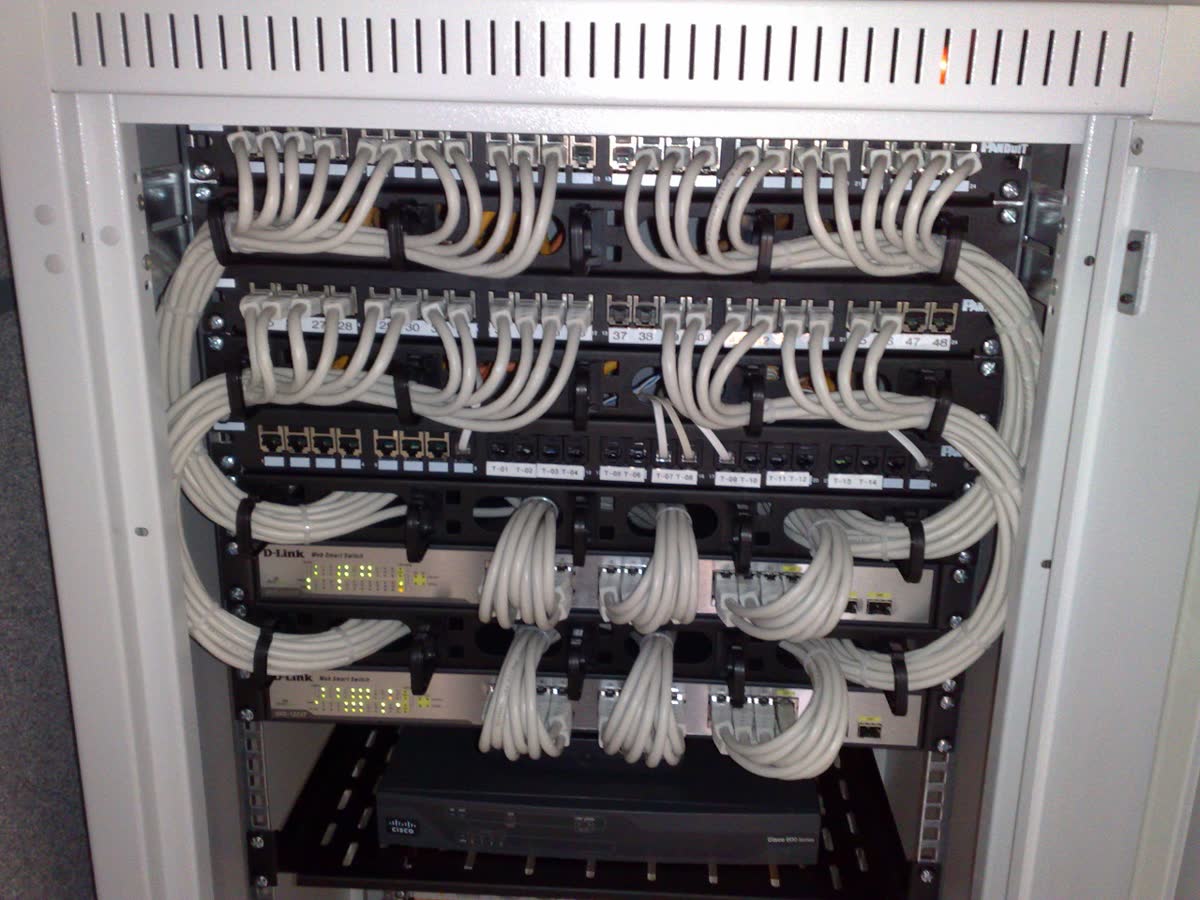
Photo: Dsimic, CC BY-SA 4.0, via Wikimedia Commons.
Separate the Three Supplier Types Before You Compare Price
The three types have completely different capacity, firmware capability and markup models. Putting them into a single comparison table is the most common first mistake.
| Supplier type | Typical signs | Strengths | Risks | Best for |
|---|---|---|---|---|
| Network equipment manufacturer / solution house | Own or heavily customised firmware, own SMT line and test stations, can produce full-load PoE and temperature-rise test reports | Traceable parameters, firmware maintained long term, certification filed under their own entity | High MOQ, long lead time, firm pricing | 500+ units, own brand or long-term projects |
| OEM / private-label house | Buys a mature platform, owns the housing and assembly line, fast on silk print and colour changes | Flexible, works from a few dozen units, quotes quickly | Firmware follows the platform vendor and management features may be cut down; certification may be borrowed | First trial order, e-commerce and small volumes |
| Trading company re-selling | Can quote any brand or model | Easy communication, lowest price | When something goes wrong you cannot trace it back to a line; inspection and warranty chain breaks | Very low volume, non-project use |
The test is a single question: will it give you the full-load PoE test report plus the firmware version and upgrade history? Overstatement on network gear lives in the software and the power supply. A supplier willing to hand over both, and to let you open one power module, is the one that can carry project responsibility; if all you get is product photos and a promotional video, the price has to be negotiated on private-label or trading terms.
For the full picture on specification and OEM arrangements, see how we run the checks in ICT equipment BOQ quality control.
Cost Structure of a 1,000-Unit Order: Where the Money Goes
The same “24-port Gigabit PoE+” description can differ two to three times in price. The difference concentrates in this table:
| Stage | Share of cost | What the buyer should watch |
|---|---|---|
| Switch chip + PHY | 20-30% | Line-rate forwarding depends on it; white-label chips often cut packet buffer and queue depth - fine in the lab, dropping packets at full load |
| PoE controller + power supply | 20-30% | The physical ceiling of the total PoE budget; power supply quality directly decides temperature rise and derating at full load |
| Mainboard and components | 10-15% | Whether surge and lightning protection devices are really fitted - the most failure-prone spot in cabinets and outdoor enclosures |
| Thermal design (fans / airflow / heatsinks) | 5-10% | 8-16 ports can be fanless; 24 ports and above need a real over-temperature strategy at full load, not just vent holes |
| Management and firmware | 5-15% | VLAN, QoS, loop protection and SNMP are software features; white-label platforms commonly show “menu present, function inactive” |
| Housing and structural parts | 5-8% | 1U sheet metal versus plastic differs noticeably in load bearing, heat dissipation and shielding |
| Certification and test amortisation | 2-4% | CE (EMC / LVD), FCC, RoHS - and whose name is on them |
| Factory margin | 10-20% | A margin below 10% usually means one of the lines above was substituted |
As a price anchor, typical FOB quotes on public sourcing platforms at 1-10 unit quantities are roughly:
| Model | Typical FOB range (1-10 unit basis) |
|---|---|
| 8-port Gigabit PoE (802.3af, 60-120W budget) | about USD 25-60 |
| 16-port Gigabit PoE+ (802.3at, 150-250W) | about USD 55-120 |
| 24-port Gigabit PoE+ (802.3at, 370W) | about USD 85-180 |
| 24-port Gigabit PoE+ with 4x10G uplinks + management | about USD 150-320 |
| 48-port Gigabit PoE+ (at / bt, 600W and above) | about USD 260-600 |
Use this table only to judge whether a quote is an outlier, not as a basis for enquiry: volume pricing typically runs 10-25% below the 1-unit basis, and a quote more than 30% below the bottom of the range almost always means the power supply, the switch chip or the management firmware has been swapped out.
The 12 Points Your RFQ Must Lock Down
Every dispute at acceptance and in after-sales traces back to the RFQ. A PoE project RFQ should specify at least:
| # | Parameter | What “locked down” looks like | The vague version you will receive |
|---|---|---|---|
| 1 | Port configuration | Number of Gigabit / 2.5G copper ports, how many are PoE and how many are not, optical port type and speed | “24-port Gigabit” with no word on whether fibre is 1G or 10G |
| 2 | PoE standard | Maximum output per port: af 15.4W / at 30W / bt 60-90W | “Supports PoE” |
| 3 | Total PoE budget | Total wattage plus the ambient temperature at which it is sustained (state 45C or your site temperature) | A 25C laboratory figure only |
| 4 | Uplink ports | SFP / SFP+ count and whether they are shared with copper ports | “Supports optical ports” with no sharing detail |
| 5 | Switching capacity and forwarding rate | Stated on a line-rate basis (Gbps / Mpps) | A single number with no basis given |
| 6 | Packet buffer | Buffer size in Mb; anything under 0.5Mb needs assessment in multi-camera scenarios | Not mentioned at all |
| 7 | Management features | VLAN (802.1Q), QoS, STP/RSTP, link aggregation, SNMP v2c/v3, cloud / web management | “Managed” |
| 8 | PoE behaviour | PoE watchdog, perpetual PoE, port priority - each stated supported or not | “Stable PoE” |
| 9 | Firmware | Current version number, how it is upgraded, whether a licence is required, how many years of future versions are supported (3+ recommended) | “Firmware upgradeable” |
| 10 | Environment | Operating / storage temperature, humidity, surge protection rating | “Industrial grade” |
| 11 | Certification | CE, FCC, RoHS report numbers and the entity they are issued to | A picture of a DoC |
| 12 | Commercial terms | MOQ, lead time, warranty months, replacement versus repair, who pays freight, spare ratio | “One-year warranty” |
Items 3, 8 and 9 are where the time is best spent in this purchase: the PoE budget decides how many PTZs and high-density APs you can connect, PoE behaviour decides whether a firmware upgrade momentarily cuts power to a whole floor of cameras, and the firmware support horizon decides whether the model is still serviceable in three years. For the camera side of the PoE requirement, see the CCTV camera sourcing guide; for AP power and bandwidth sizing in a hotel, see the 500-room hotel wireless network design.
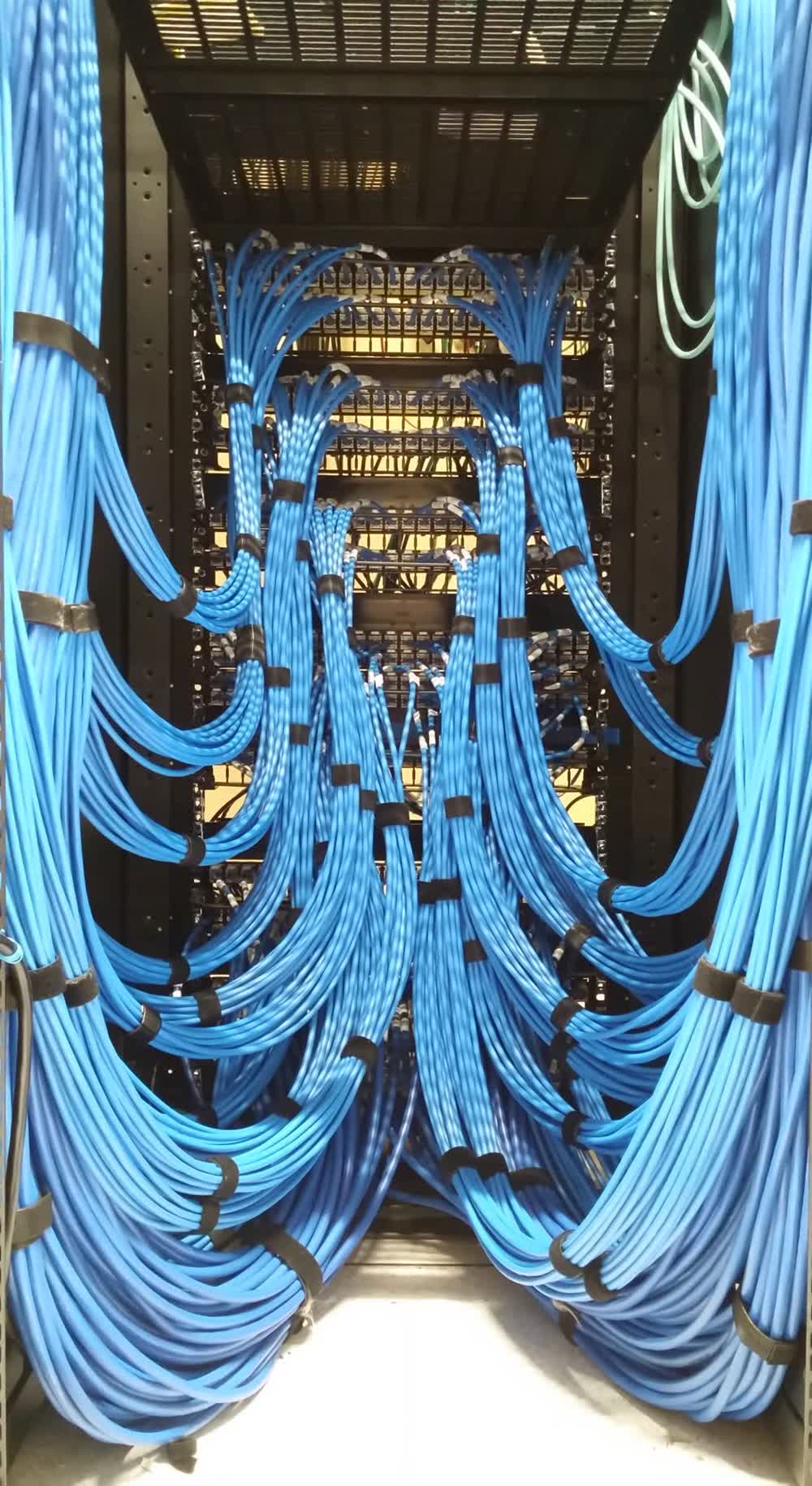
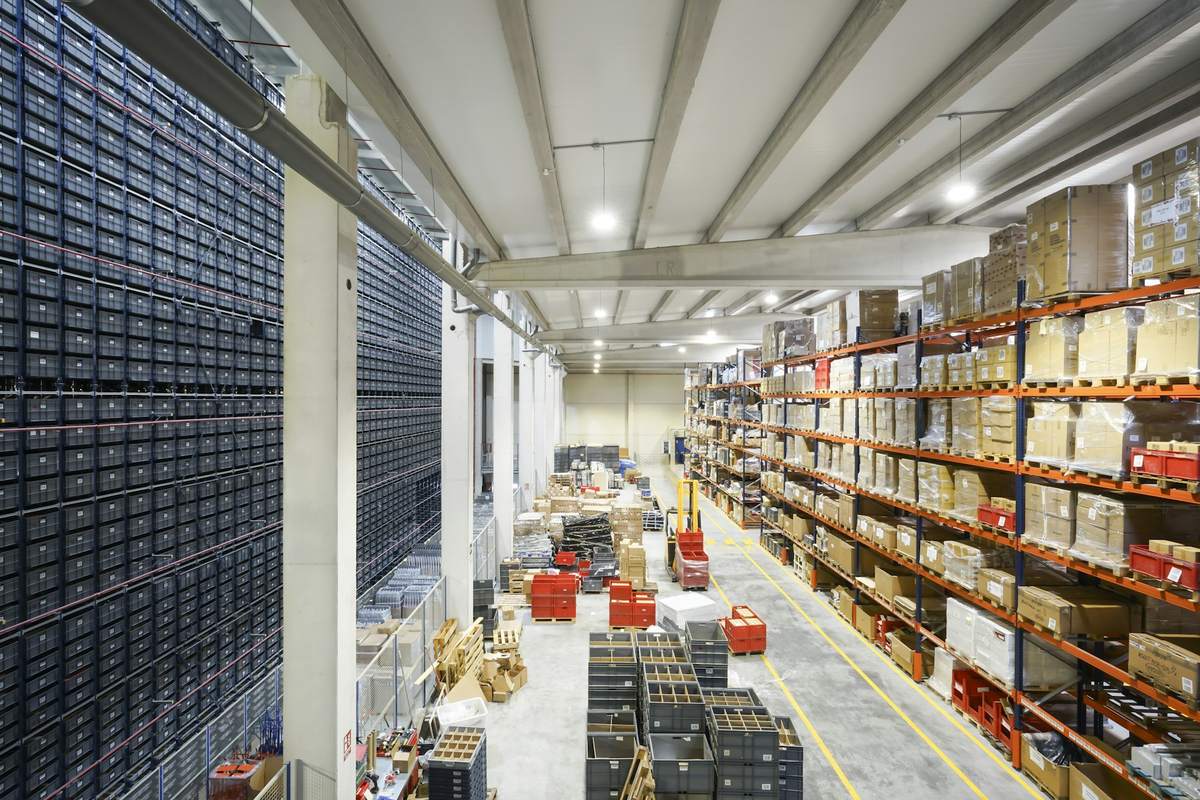
Photo: Kbh3rd, CC BY 4.0, via Wikimedia Commons.
Five Acceptance Tests You Must Run
Run these on the sample and on the incoming batch; the first two decide whether you can accept the goods.
| # | Test | How to run it | Failure signals |
|---|---|---|---|
| 1 | Full-load PoE burn-in | Fill the ports with the project’s actual device mix (or an equivalent electronic load) and run continuously for 4-8 hours at the maximum operating temperature | Ports dropping, unit rebooting, thermal derating kicking in |
| 2 | Line-rate throughput | Saturate both directions with a traffic generator or iperf3 and watch packet loss and forwarding rate | Packet loss, forwarding rate below the stated figure (overstated buffer) |
| 3 | Temperature rise | After 2 hours at full load, measure case temperature and input power against the specification | Abnormally high case temperature, inflated input power (poor supply efficiency) |
| 4 | Management spot checks | Actually create VLANs, induce a loop to see whether protection engages, read SNMP values, bring it up in cloud management | “The menu is there but it does nothing” |
| 5 | Firmware upgrade test | Perform one upgrade and watch for reboots, PoE interruption or lost configuration | Configuration wiped, all ports power-cycled (perpetual PoE not implemented) |
This is the same set we run during ELV equipment factory audits and pre-shipment QC on surveillance cameras - switches usually fail by degrading slowly rather than going dark, and if it is not tested before shipping, the whole batch surfaces during commissioning.
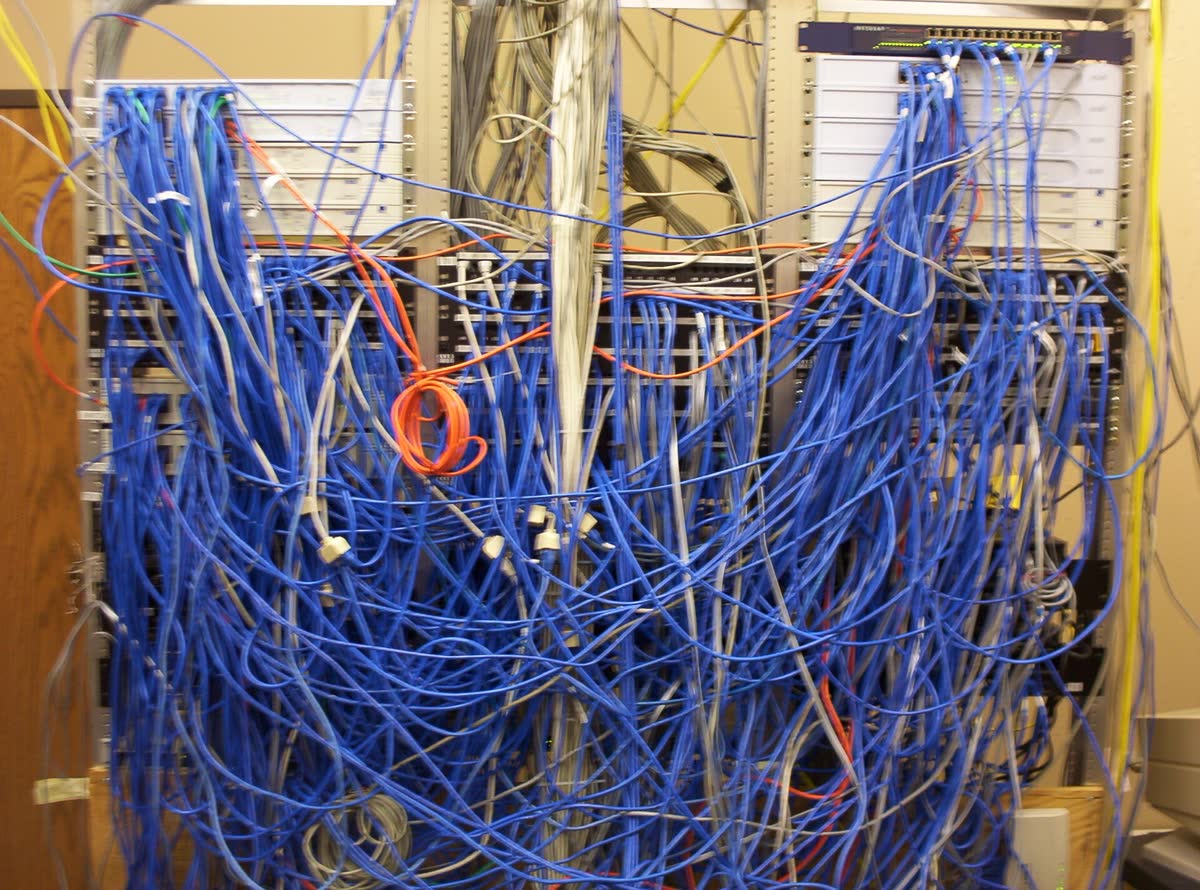
The Five Most Common Pitfalls
- Overstated PoE budget: 370W on the label, under 250W measured at 45C under full load - the gap is in the power module and the thermal design. Accept against the sustained budget at maximum operating temperature, not the laboratory number.
- White-label management firmware: VLAN and loop protection menus are all there, but testing shows they do not work and there is no upgrade path. Write the firmware version and upgrade method into the order and have the factory demonstrate it.
- Refurbished power supplies and PoE controllers: invisible from the outside; check batch consistency, serial numbers and incoming material records, and keep one batch of spares from the first order for long-term comparison.
- Cut-down thermal design: a small fan, or no fan at all, struggling with 24 ports of 802.3at - normal at 25C in the lab, dropping offline at 45C in the equipment room. Choose the temperature grade for the actual install location (comms room, outdoor enclosure, non-air-conditioned plant room).
- Vague warranty terms: “12-month warranty” with no statement of replacement versus repair, who pays freight, or the spare ratio. On an ELV package, the return freight on a single switch often approaches the cost of the unit itself.
MOQ, Lead Time and Payment
| Item | Typical terms | Negotiation point |
|---|---|---|
| Standard 24-port managed PoE+ | MOQ 20-50 units | Push the first order down by keeping the platform and changing only the silk print |
| Housing colour / silk print change | 100-300 units | Silk print and gift box costs are one-off; negotiate sharing them |
| Custom firmware / private management UI | 200-500 units | Write the firmware customisation fee into the contract and agree the support horizon |
| Samples | 7-15 days | Sample fee can be credited against the bulk order |
| Payment | 30% deposit + 70% against B/L copy, or sight L/C | Hold 5-10% retention on the first order, paid after acceptance |
| Warranty | 12-36 months | State replacement / repair, freight responsibility, 1-3% spares |
The single most valuable thing to do at the sampling stage: have the factory send you the management interface screenshots, the full-load PoE test report and the firmware version number of the sample unit, and bind them to the contract terms for mass production. Samples and production units from different batches, or on different firmware versions, are the most common hidden downgrade in ELV packages.
FAQ
Q1: How do I calculate a sufficient PoE budget for a PoE switch? Add up the power draw of every device the switch will power and leave headroom: fixed cameras typically 4-8W (802.3af class), PTZ and heated models 15-30W (802.3at class), high-density wireless APs up to 40-60W (802.3bt class). Allow at least 30% headroom, and confirm the total is a sustained budget at the maximum operating temperature, not a laboratory peak. Port-by-port and total budget sizing is covered in the 24-port PoE switch sourcing guide.
Q2: What is a reasonable price for a 24-port Gigabit PoE switch sourced from China? Take a 24-port Gigabit PoE+ (370W) unit: common FOB quotes on public platforms at 1-10 unit quantities run about USD 85-180, and about USD 150-320 with 4x10G uplinks and full management. A quote more than 30% below the bottom of the range will almost always trace back to the power supply, the switch chip or the management firmware.
Q3: How do I verify the PoE budget is not overstated? Two steps: ask the factory for the full-load test report for that model and confirm the ambient temperature it was measured at; then run your own 4-8 hour full-load burn-in, or have a third party run it, at the site temperature and watch for dropped ports or derating. A power-on test with a single device connected is not a test.
Q4: Which management features are essential? VLAN segmentation, loop protection (STP/RSTP), SNMP and web or cloud management are essentially baseline; QoS is essential in ELV packages carrying IPTV, PA and voice. Features like Layer 3 routing and stacking should not be paid for if the project has no use for them - they push unit price up by more than 20%.
Q5: Can you do only the inspection or the factory audit, without taking part in the purchase? Yes. Inspection is priced per order at RMB 700-2,000 depending on city and product complexity, with a report containing photos and measured data; a factory audit is RMB 1,500-3,500 per factory and covers the production line, incoming inspection and certification documents. Sampling follows AQL sampling general inspection level II, and the fee structure is set out in sourcing agent costs in China.
Next Step: Send Us the Model, Port Count and Site Conditions - 3-5 Factory Quotes in 48 Hours
If you have a switch requirement in hand - whether a 20-unit branch refresh or a hotel or campus ELV package that includes switches - send us these: port count and speed (8/16/24/48 ports, Gigabit or 2.5G), PoE standard and budget, uplink optical requirements, installation environment (comms room / plant room / outdoor enclosure and summer temperature), whether management is needed, quantity and destination port. Within 48 hours we will send you a formal quotation comparison from 3-5 factories, itemised by switch chip and power supply scheme, PoE budget and test basis, firmware version and upgrade commitment, certification entity, packing and lead time - and tell you plainly which parameters can be trimmed and which ones break the project the moment you touch them.
For a full ELV package (cameras + NVR + switches + cabling + access control + PA + power backup), see hotel ELV system integration; the process and division of labour for product sourcing services is on the service page.
Templates you can download directly: the free RFQ template and the quotation comparison template - fill them in and send them over.
WhatsApp / Phone: +86 139 2270 2227 (Guangzhou team, Monday to Saturday 09:00-19:00 GMT+8, replies within 12 hours including weekends) | Email: sales@cantonmade.com | Or leave your port count, PoE budget and installation environment through the contact form.