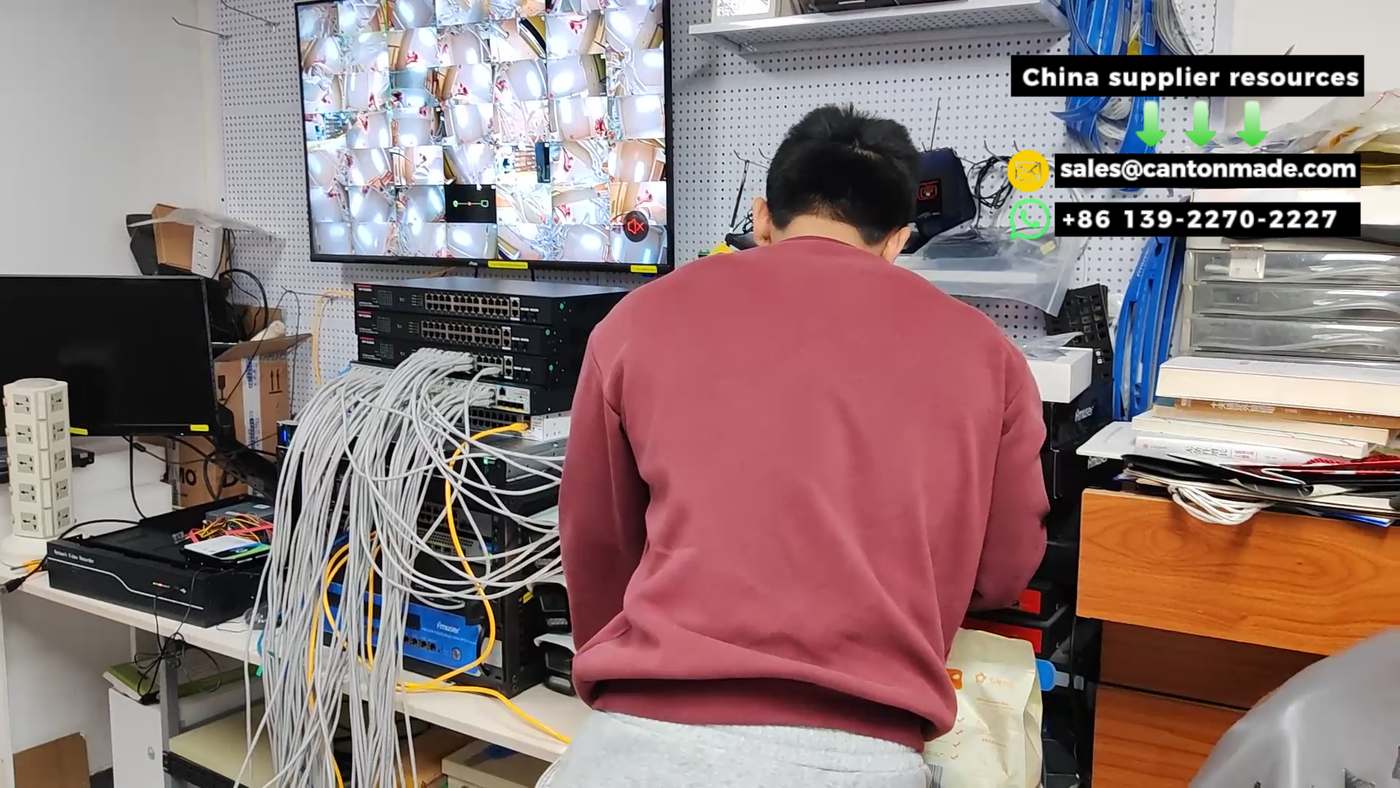
Inspection
Pre-Shipment Inspection in China: Full Guide
What PSI covers, how AQL sampling works step by step, and what the report should show.
Read guide
The exact sampling table importers use for factory inspections in China — batch sizes, sample sizes, Accept/Reject numbers (ISO 2859-1), plus the 4 inspection stages and how to read a result.
Get the Free Excel TemplateFind your order size in the table → read the sample size (n) and Ac/Re numbers for AQL 2.5 and 4.0.
The inspector draws a random sample and checks the 6 final checkpoints: packaging, appearance, function, dimensions, quantity, labeling.
Count defects by severity and compare with Ac/Re: defects ≤ Ac → ship. Defects ≥ Re → rework and re-inspect.
AQL (Acceptable Quality Level, ISO 2859-1) is the international sampling standard used for factory inspections. Instead of checking every unit of a 5,000-piece order, you sample 200 units and pass or fail the batch on the number of defects found. This table tells you exactly how many to sample and how many defects are allowed — the same numbers professional inspection companies use.
| Batch size | Sample (n) | AQL 2.5 Major (Ac/Re) | AQL 4.0 Minor (Ac/Re) |
|---|---|---|---|
| 91 – 150 | 20 | 1 / 2 | 2 / 3 |
| 151 – 280 | 32 | 2 / 3 | 3 / 4 |
| 281 – 500 | 50 | 3 / 4 | 5 / 6 |
| 501 – 1,200 | 80 | 5 / 6 | 7 / 8 |
| 1,201 – 3,200 | 125 | 7 / 8 | 10 / 11 |
| 3,201 – 10,000 | 200 | 10 / 11 | 14 / 15 |
| 10,001 – 35,000 | 315 | 14 / 15 | 21 / 22 |
PPI, DUPRO, PSI and loading supervision — when each happens and what gets checked.
Pass / Pass with Condition / Fail — and exactly what to do for each outcome.
4 worksheets, colour-coded, with step-by-step usage instructions included.
AQL (Acceptable Quality Level) is an international sampling standard (ISO 2859-1) used to decide how many units to inspect in a batch and how many defects are allowed. Instead of checking every unit, an inspector draws a random sample and the batch passes or fails based on the number of defects found compared to the Accept (Ac) and Reject (Re) numbers.
It depends on your batch size and inspection level. Under General Inspection Level II: a 91-150 unit order → sample 20; 501-1,200 → sample 80; 3,201-10,000 → sample 200; 10,001-35,000 → sample 315. Use the lookup table in the free Excel template for the full range.
AQL 2.5 is a stricter limit typically used for major defects (function, safety, wrong specification) — fewer defects are allowed. AQL 4.0 is looser and typically used for minor defects (cosmetic issues). Many buyers use Major 2.5 / Minor 4.0 as the industry default.
Ac = Accept number: if defects found are ≤ Ac, the batch passes. Re = Reject number: if defects found are ≥ Re, the batch fails. For example, AQL 2.5 on a 200-unit sample shows Ac/Re = 10/11: 10 or fewer major defects pass, 11 or more fail.
No. AQL is not a simple percentage like "2.5% defective allowed". It is a sampling-and-judgment rule: based on batch size and inspection level you look up how many units to sample and how many defects are allowed, then the batch passes or fails on those exact numbers.
A standard pre-shipment inspection in China typically costs $150-$400 per day depending on location, product category and inspector seniority, with volume discounts for regular orders. It is roughly 1% of a typical order value — far less than a rejected container.
The buyer decides, and the values should be written into the contract or order confirmation BEFORE inspection day. Factories often suggest a looser standard. If unsure, use the industry default: Major AQL 2.5 / Minor AQL 4.0.
For a mature supplier and a stable product you have ordered repeatedly, PSI alone is usually enough. For a first-time factory, large order, or safety-related product, consider PPI + PSI, or add DUPRO during production.
Enter your details and the Excel file will download automatically. We only use your email to send sourcing resources — no spam.
Want to make sure you apply it correctly on your next inspection — and catch issues before they cost you?
Already have an order? Send us your product & quantities and we'll advise on inspection.
Prefer to talk? Chat on WhatsApp — free inspection quote within 12 h.
Your figures are ready to send — reply within 12 hours with a factory price and a freight estimate. No obligation.
Your numbers
The AQL table is the first step. Here's what our buyers read next to make sure the inspection actually protects their order.
What PSI covers, how AQL sampling works step by step, and what the report should show.
Read guide
How to verify a factory is real before you send a deposit — the red flags that catch fakes.
Read guide How we stress-test hardware for days to catch defects that a one-off inspection can't.
Read guideThe AQL table tells you how many units to inspect. The inspection report template is where you write down what you found — the RFQ template is what you send before any of it starts, and the certification lookup tells you what the goods must be certified to.
The 51 checks to work through on site, in order — before you write the report. Free and printable.
Open the checklistThe fill-in report: 6 checkpoints, defect log, photo index and a signed PASS/FAIL.
Get the templateSend the same inquiry file to every supplier and get comparable quotes.
Get the templateWhat the goods must be certified to before they ship — by category and market, with the citation.
Check your productInspect before you ship: the 51 checks our inspectors work through on site — cartons, appearance, function, labels and sampling. Free and printable.
Price a shipment to EuropeThe inspection ends on the factory floor — the container is loaded after. 63 checks for container condition, the carton count, dunnage and the seal record.
Get the loading checklistBefore the first order: 84 checks on licences, machines, real capacity, QC records, testing, safety and the red flags — with an automatic audit score.
Open the audit checklistBecause it is the tool our own inspectors work from. Every number — lot size, sample size, and the Accept/Reject pair at AQL 1.5, 2.5 and 4.0 — matches ISO 2859-1, the sampling standard factory inspections are run to worldwide. No signup, no email wall: use it on your next order whether you ever work with us or not.
Source and date: published by the QC team at Sourcing Agent China, Guangzhou; last reviewed in September 2026 against ISO 2859-1 (GB/T 2828.1). The team has worked 13 years in the Pearl River Delta, verified 2,000+ suppliers and inspected for 3,000+ buyers.
Our inspectors in Guangzhou apply this table on site and send photo and video evidence with an Accept/Reject result in a written report. Send us the product and quantity — you get a quote within 12 hours.