Most overseas buyers hear “Dongguan” and think: that is Shenzhen’s subcontracting belt — and move straight on.
That assumption is out of date. Public statistics show Dongguan’s 2025 GDP at RMB 1,276.02 billion and foreign trade at RMB 1,579.43 billion, up 13.8% year on year — a record for the period. The city is home to 210,000 industrial enterprises, more than 13,000 of them above designated size. And three lines the trade keeps repeating: Dongguan produces roughly one third of the world’s designer toys; one in six smartphones made in China comes from here; and about 90% of the components in a smart device can be sourced inside a one-hour commuting circle.
For a buyer those three facts add up to one thing: if you need tooling, sampling, engineering support and repeatable reorders, Dongguan deserves the flight more than most cities. But Dongguan has a quirk — there is no big sample market like Yiwu’s. You source by walking into the factory, looking at the line and checking the machines. That is why a sourcing agent here is not paid to “ask for a price” but to “see the factory clearly for you”.
What is Dongguan actually good at? Three sets of numbers
| Dimension | Public data | What it means for you |
|---|---|---|
| Economic scale | 2025 GDP RMB 1,276.02bn; foreign trade RMB 1,579.43bn (+13.8%) | A mature, export-oriented manufacturing base — not an emerging belt |
| Electronics | One in six smartphones made in China is made here; 30,000+ enterprises in the smart-device cluster | The deepest support network for structural parts, modules and whole-unit assembly |
| Tooling | Moulds are a designated priority industry locally, with support policies aimed at shortening tooling lead times | Capacity for “the mother of industry” is genuinely abundant — you are not queueing three months for a mould |
| Support radius | About 90% of smart-device components are available within a one-hour commuting circle | Change a structure or top up material without waiting a week for another province |
Dongguan’s industrial belt map: pick factories by town, not by the word “Dongguan”
Dongguan is classic “one town, one product”. The first question to ask an agent is which towns they actually know:
| Town / district | Speciality | Typical products | Who it suits |
|---|---|---|---|
| Songshan Lake / Chang’an | Electronics, smart devices | Whole-unit assembly, modules, structural parts, charging products | Electronics brands, smart hardware, projects that need engineering liaison |
| Chang’an / Hengli | Hardware moulds, precision machining | Injection, stamping and die-casting moulds, hardware parts, CNC parts | Buyers who need tooling, structure changes or their own visible parts |
| Houjie | Furniture | Panel and upholstered furniture, hotel furniture projects | Home channels, property and hotel project procurement |
| Changping / Tangxia / Qingxi | Toys, designer toys, baby & child | Plastic toys, blind-box collectibles, baby products | Designer-toy brands, e-commerce sellers, IP merchandise |
| Dalang / Humen | Textiles and apparel | Knitwear, garments, cross-border apparel | Apparel brands, Amazon apparel sellers |
| Chashan / Shipai | Packaging and printing | Colour boxes, paper goods, premium packaging | Private-label clients needing custom packaging |
One warning: furniture is in Houjie, toys in Changping and Tangxia, moulds in Chang’an and Hengli. If you say “I want to find a furniture factory in Dongguan” and they point you towards an electronics town, they have most likely just searched up a list of factory addresses for you.
How do Dongguan, Shenzhen and Guangzhou divide the work?
From Guangzhou, Dongguan is a 40-70 minute drive away, and Shenzhen is just over an hour. The real division of labour along this corridor looks like this:
| City | Its role | Good for | Not good for |
|---|---|---|---|
| Shenzhen | The “front line” of electronics | Components, fast prototyping, design houses, hardware-software integration | High-volume structural tooling, furniture, toys, textiles |
| Dongguan | The “production line” of electronics and light industry | Tooling and injection moulding, structural parts, whole-unit assembly, furniture, toys, hardware | Small urgent component buys, trend-led ready stock |
| Guangzhou | The “hub” of sourcing | Multi-category consolidation, inspection coordination, documents and shipping, cross-city scheduling | Large-scale manufacturing of a single category |
Our own practice is two cities in one day: in the morning the mould shop and the injection-moulding machine count in Chang’an, in the afternoon components and sampling in Shenzhen; or Houjie’s furniture lines in the morning and consolidation planning back in Guangzhou in the afternoon. That route is not a pretty line on an itinerary — it decides how much of your quotation has actually been checked by someone standing on the floor.
What does a sourcing agent actually do in Dongguan?
A proper Dongguan agent is essentially your on-the-ground sourcing + engineering + QC team in China:
| Stage | What the agent does | The gap when you do it remotely |
|---|---|---|
| Belt positioning | Picks 3-5 candidate factories in the right town for the product (moulds in Chang’an, toys in Changping…) | Guessing from 1688 photos, and often in the wrong town |
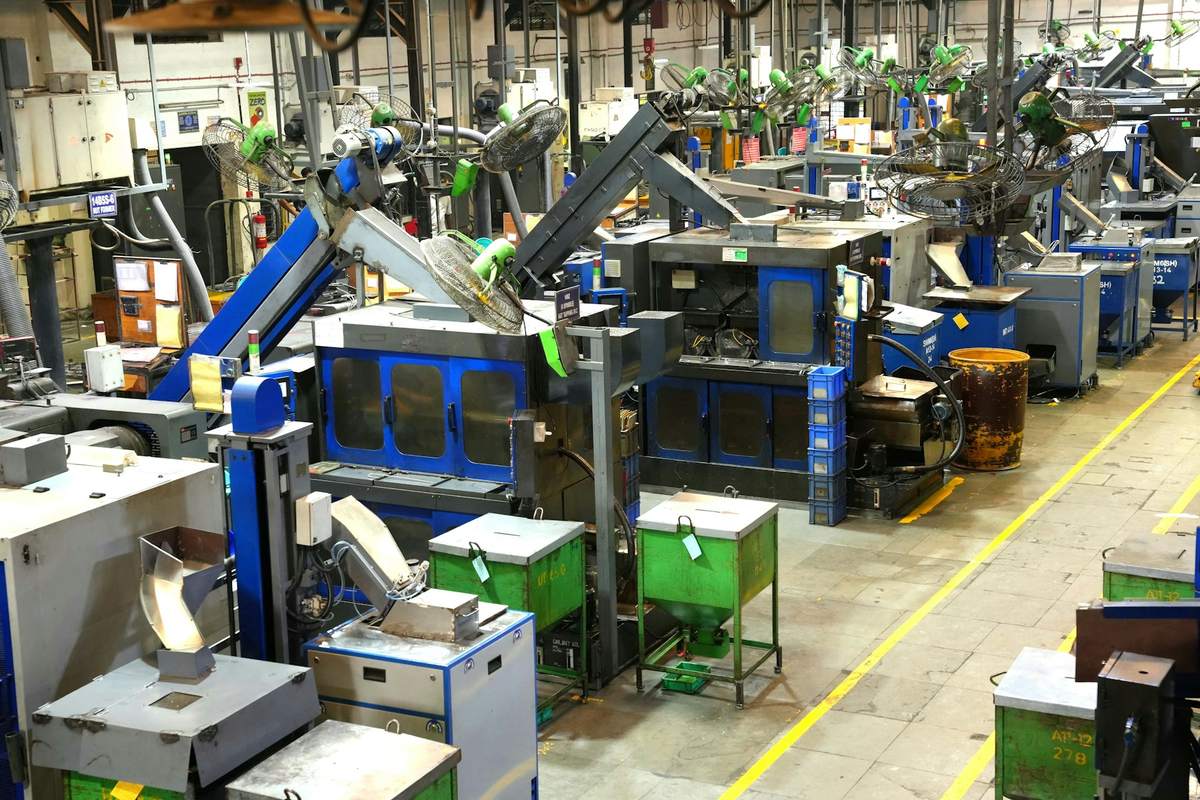
| Factory vs trader | Counts injection machines and tonnage on the floor, looks at the mould room, the SMT line and the burn-in room | Cannot tell a plant from a trading company that outsources after taking your order |
| Tooling and sampling management | Issues DFM comments, chases T1/T2 trials, rules on sample dimensions and appearance | You only discover parts do not fit when the samples arrive — with the mould already signed off |
| Levelled quotations | Breaks the quote down to part-number level (resin grade, copper specification, regrind ratio) | One lump sum, with no way to see which layer was swapped |
| Audit and inspection | Pre-production audit + pre-shipment AQL sampling, with a written report | Nothing but the factory’s verbal assurance |
| Consolidation and shipping | Receives from several suppliers, merges, supervises loading, handles customs documents | Small volumes shipped separately, with freight eating the whole margin |
In one line: you are not buying “a batch of goods”, you are buying the outcome of “it arrives at your warehouse, the quality holds, and it reorders cleanly”.
Tooling and sampling: how are the fees actually calculated?
This is where Dongguan sourcing gets blurred most often. Break it down first:
| Cost item | Common basis | Notes |
|---|---|---|
| One-off mould cost | Quoted on structural complexity, cavity count, steel grade and precision — from a few thousand RMB (simple part, single cavity) to over RMB 100,000 (multi-cavity precision or two-shot moulds) | Industry practice; insist on an itemised mould quotation from the factory, not a single packaged number |
| Sampling fee | Usually a few hundred to a few thousand RMB per round, including trial moulding and samples | Refundable against a mass-production order if agreed up front |
| Trial rounds | T1 → T2 → T3, each checked for dimensions, assembly and appearance | Do not skip T1 and sign off on mass production |
| Mould modification | Priced on the scope of change; large changes are re-quoted | Agree “no modification charge within N rounds” in advance for safety |
Two rules you cannot skip:
- Put mould ownership in the contract. A mould you paid for should belong to you; who stores it, whether you can take it back and whether you can move production must all be in writing. Otherwise, the day you want to change factories, you discover the mould “cannot leave”.
- Pay the mould fee to the factory, on the company account. An agent may pay on your behalf, but keep the voucher and the invoice. If the money goes to a personal account with nothing but a WeChat transfer screenshot, the risk is yours.
What does a Dongguan sourcing agent charge in 2026?
Fees in Dongguan work the same way as in Guangzhou and Shenzhen — this is the industry’s standard pricing, not a city difference:
- Commission (most common): 5%-8% of the factory order value, with the rate falling as order value rises.
- Fixed project fee: for single tasks (one inspection, one factory search), priced per job.
- Separately billed items: audits around RMB 1,500-3,500 per factory visit, inspections around RMB 700-2,000 per order or RMB 900-1,999 per person-day, warehousing and consolidation by volume or weight — normally cost-plus, and not rolled into the commission.
- Small trial orders: on a first order of low value, many agents quote a minimum service fee. That is normal commercial logic — just ask up front.
One hard standard: ask the agent to show you the factory invoice (or the factory’s original quotation). The commission should sit on top of a verifiable factory price. If the other side only gives you one packaged number and refuses to show the factory layer, you are quite likely paying an invisible 10%-30% markup.
The three most common Dongguan traps
- A trading company posing as a factory. The claim is “we have our own plant”, the reality is outsourcing after taking orders. The test is crude but effective: count the injection machines and their tonnage, look for a mould room and CNC; for electronics, look for the SMT line and the burn-in room. A real injection plant does not have just a few desks in the workshop.
- No ownership clause on the mould fee. The money is paid, but whose mould it is was never written down. When pricing breaks down and you want to move, the mould is in someone else’s hands.
- Materials quietly swapped inside the price. The usual suspects: plastic parts switched to regrind, cable dropped in specification (thinner copper), power adapters switched to an uncertified design. The only counter is writing part numbers, resin grades and specifications into the contract, and checking item by item at inspection.
6 things to verify before you hire a Dongguan agent
- Can they visit the factory the same day? Dongguan is within an hour of both Guangzhou and Shenzhen. If a same-day visit is impossible and “next week” is the answer, they are taking orders from another city.
- Can they name three real factory addresses in your category? Being able to name them — and willing to take you there — is what “familiar with the belt” means.
- Will they show you the factory invoice? Transparent commission is the hard standard; refuse packaged all-in pricing.
- Is the tooling process documented stage by stage? DFM comments, T1/T2 trial reports, sample acceptance criteria — miss one and the risk stays with you.
- Is inspection tied to payment? Pre-shipment AQL sampling plus a report, written into the contract, with the balance released only after inspection passes.
- Can they give you a reference customer? Ideally in your category, so you can hear a real buyer’s experience.
FAQ: Dongguan sourcing agent questions
Q1: Dongguan or Shenzhen — which should I choose?
It is not either/or. Components, fast prototyping, hardware-software integration → Shenzhen; tooling and injection moulding, structural parts, whole-unit assembly, furniture, toys and hardware → Dongguan. The two cities are an hour apart, and in practice one team can hand work over between them — you do not need to hire two agents for this.
Q2: How much does tooling cost, and how long does it take?
Mould cost is quoted on structure, cavity count, steel grade and precision: a simple single-cavity mould starts at a few thousand RMB, while a precision multi-cavity mould can reach over RMB 100,000. On timing, simple structures commonly produce T1 in two to three weeks; precision and multi-cavity moulds often take 4-8 weeks. The key is not to ask only “how much”, but “how many cavities, which steel, how many trial rounds, and who owns the mould”.
Q3: My product is not electronics or furniture — is a Dongguan agent still useful?
Check the category first. Plastic parts, hardware structural parts, toys, baby products, packaging and furniture have very complete support in Dongguan. For whole-package building-services work, lighting, or multi-category consolidation, a Guangzhou hub agency usually coordinates more efficiently. Category fit matters far more than a city’s reputation — if you are unsure, send the product over and ask for a straight answer.
Q4: How do I confirm a Dongguan supplier is a real factory, not a trading company?
Four checks in parallel: ① look at the core equipment in the workshop (injection machine count and tonnage, mould room, SMT line); ② compare the business licence’s scope and address with the actual site (checkable on China’s National Enterprise Credit Information Publicity System); ③ ask the agent for a live video of the workshop filmed that day, not retouched photos; ④ ask what the inspection report from their most recent shipment in your category actually looks like.
Q5: Is a Dongguan agent more expensive than going direct to the factory?
The 5%-8% commission sits on a verifiable factory price; it is not an invisible spread buried inside the goods price the way a trading company’s is. The real arithmetic is this: what the extra 5%-8% buys is a lower probability of one scrapped mould, one reworked batch, or one shipment rejected at the destination port. On small orders look at the service fee; on large orders look at the cost of risk.
If you are about to do tooling, sampling or find a furniture, toy, hardware or electronics structural-parts supplier in Dongguan, send us your product specification (or BOM), target retail price, quantity, whether it is private label, and destination country. We have sourced in Guangzhou for 12 years, and suppliers in Dongguan, Shenzhen, Foshan and Zhongshan are all within a 1-2 hour drive. We will start with a free specification and industrial-belt review, then bring back real quotes and tooling/sampling plans from 3-5 matched factories — replied within 48 hours.
👉 WeChat / WhatsApp: +86 139 2270 2227 | Email: sales@cantonmade.com (Send your sourcing requirement together with your message.)
Related reading: Shenzhen sourcing agent guide | Guangzhou sourcing agent guide | Guangzhou vs Shenzhen: choosing for electronics | OEM/ODM and private label | Sampling process and cost | How sourcing agent fees work | Audit and inspection fees | AQL sampling table (free tool)
Statistics quoted in this guide are public municipal, customs and industry-association data; figures change every year, so verify the current number before you rely on it for a decision.
Related: aluminium windows, doors and curtain wall — the building-materials side of what we source across the Pearl River Delta (Foshan extrusion, Zhongshan hardware, Dongguan surface treatment).