For most overseas buyers, Dalian is a blank spot on the China sourcing map.
The reason is simple: Dalian does not make consumer goods — it makes the things buyers use themselves — machined parts, bearings, shipbuilding and marine equipment, chemical raw materials, cold-chain food, and export apparel. If you buy industrial spares, equipment components, building materials or cold-chain products and you only visit Guangzhou, Yiwu and Ningbo, you are skipping an entire northern supply base.
This article covers five things: Dalian’s real numbers, where the five industrial belts are, why inspection here works differently from the south, how export and logistics run, and agency fee ranges plus a verification checklist.
Start With Six Numbers: Is Dalian Worth the Trip?
| # | Fact | Figure | Source / Basis |
|---|---|---|---|
| 1 | Dalian GDP (2025) | RMB 1.00021 trillion (CNY 10,002.1 bn), +5.7% — Northeast China’s first trillion-RMB city | Dalian Municipal Government Information Office briefing, January 2026 (unified accounting by Liaoning Province) |
| 2 | Secondary industry value added (2025) | RMB 353.25 billion (CNY 3,532.5 bn), +7.7% (tertiary industry RMB 580.42 billion (CNY 5,804.2 bn), +4.8%) | Same as above |
| 3 | Industrial enterprises above designated size (2025) | Value added +11.7%, of which equipment manufacturing +15.4% | Xinhua, “Three ‘300,000s’: A New Look at Trillion-RMB Dalian,” 2026-02-10 |
| 4 | Scale of three major industrial clusters | Green petrochemicals around RMB 400 billion; shipbuilding and marine equipment RMB 80 billion; high-end bearings, CNC machine tools and advanced rail transit equipment RMB 58 billion | Dalian Development and Reform Commission (Xinhua, same as above) |
| 5 | Foreign trade and port (Q1 2026) | Imports and exports +3.1%, exports +15.5%; cross-border e-commerce RMB 6.78 billion, +79.6% (exports RMB 6.6 billion, +87.9%); container throughput 1.323 million TEU, +2.3%; sea-rail intermodal +26.8% | Dalian Daily, 2026-04-24 |
| 6 | Dalian Port | World Bank and S&P Global Container Port Performance Index: No. 2 globally in 2025; more than 90% of Northeast China’s foreign-trade containers move through Dalian Port | World Bank/S&P Global CPPI 2025; public port data |
Three numbers should be read together:
- Industry is accelerating, not contracting. Secondary industry growth (+7.7%) outpaces overall growth (+5.7%), and in 2025 value added by industrial enterprises above designated size rose 11.7%, with equipment manufacturing up 15.4%. The implication for buyers is direct: capacity is expanding, factories want overseas orders, and there is still room on lead times and pricing.
- Exports are more active than domestic trade. Q1 2026 exports rose 15.5%, far above the +3.1% for total imports and exports — Dalian’s export lines are running, and cross-border e-commerce nearly doubled in a year. A second route to market is emerging beyond the southern ports.
- The port is not a bottleneck. No. 2 globally in container port performance, plus more than 90% of Northeast China’s foreign-trade containers shipping from here, makes container schedules and space availability the city’s strong suit.
The Five Industrial Belts: Dalian Is Organized by Factory Zone, Not by Market
Dalian has nothing like Yiwu’s “one market you can walk for three days.” It is a ring of industrial zones, and understanding this table can save you half your wasted travel:
| Industrial belt (district/park) | Main categories | Who should come |
|---|---|---|
| Changxing Island / Xizhong Island | Integrated refining and chemicals, PTA and polyester, new chemical materials; large shipbuilding and marine engineering (Hengli Heavy Industries) | Chemical raw material and resin buyers, marine equipment, steel and castings/forgings |
| Jinpu New Area (Development Zone, Shuang D Port, Dayaowan) | Equipment manufacturing, complete vehicles and auto parts, semiconductor packaging and testing, bonded warehousing, cold-chain logistics | Machinery parts, complete vehicles and CKD kits, bonded and transit business, cold-chain food |
| Wafangdian (Bearing Industrial Park) | Bearings and components: rings, cages, rollers, forgings; wind power, machine tool and metallurgical bearings | Industrial spares, agricultural machinery and wind power components, equipment repair parts |
| Ganjingzi / Lüshun / High-Tech Zone | Shipbuilding and marine equipment, marine crankshafts, precision machined parts, rubber, plastics and petrochemical equipment | Marine parts, precision machined parts, complete equipment components |
| Pulandian (textile and apparel cluster) | Export apparel processing, custom suits, workwear and uniforms | Apparel brands, custom and workwear buyers |
Three key differences:
- Bearings can be sourced in one stop. Wafangdian is known as the “Bearing Capital of China,” with more than 800 bearing and component manufacturers and a cluster worth tens of billions of RMB; in 2023 local bearing manufacturers recorded revenue of RMB 16.29 billion, accounting for 30.8% of the city’s industrial enterprise revenue. Rings, cages, rollers, forgings and finished bearings are all supplied in the same city — you can negotiate complete machines and spares in one trip, which is hard to do elsewhere.
- Shipbuilding, marine equipment and heavy machinery dictate the sourcing method here. Shipbuilding and marine equipment output is worth RMB 80 billion, and high-end bearings plus CNC machine tools plus rail transit equipment add RMB 58 billion; marine crankshafts, wind turbine main bearings and gas carrier components all sit on this line. There are many large, one-off and non-standard parts, so the inspection method has to change (see the next section).
- Petrochemicals and cold chain are the heaviest of the heavy. The green petrochemical cluster holds steady at around RMB 400 billion, with a complete refining and polyester chain on Changxing Island; Dalian Port has dedicated cold-chain terminals and cold storage clusters, and Jinpu New Area is building itself into a Northeast Asia cold-chain hub (the 18th International Cold Chain Conference was held here in June 2026). Frozen goods, seafood and temperature-controlled chemicals ship out of Dalian with one less domestic land leg than from the south.
- Apparel is the light-goods complement here. The Pulandian textile and apparel cluster is a national-level cluster, where about 90% of apparel companies do export processing; the leader is Dayang Group. Custom suits, workwear and uniforms can be placed here and consolidated with heavy cargo.
Why Inspection Here Cannot Copy the Guangzhou Playbook
This is the section that differs most from our other city pages, and it is where buyers slip up most often.
AQL sampling is often not enough here. AQL assumes “the batch is large enough to sample randomly”: pull 200 pieces and check 8. But the real scenario for machined parts, marine components and non-standard parts is an order of 20 or 50 pieces — sample 5 and find 1 defective, and the conclusion has no statistical meaning; meanwhile a single defective part can be worth thousands of dollars.
So for heavy industrial parts from Dalian, the right approach is process witnessing, not pre-shipment sampling:
| Control point | What to look at | Who provides it |
|---|---|---|
| Material | Material certificate (e.g. EN 10204 3.1 certificate), heat number traceability | Steel mill/foundry → machining plant |
| Heat treatment | Heat treatment curve records, measured hardness | Machining plant |
| Internal defects | NDT reports (UT ultrasonic / MT magnetic particle), third-party witness for critical load-bearing parts where needed | Factory + third party |
| Dimensions and geometric tolerances | First article inspection report, CMM data, item-by-item check of critical tolerances | Machining plant |
| Dynamic balancing / trial run | Dynamic balancing report, no-load and load trial run records | Machining plant |
| Surface treatment | Coating thickness, salt spray testing (outdoor parts) | Factory/lab |
| ITP witness points | An Inspection and Test Plan (ITP) agreed with the factory in advance, specifying “who watches, at which step” | Buyer/agent + third party |
Conclusion: an inspector for Dalian-bound heavy goods must be able to read drawings and material certificates, not just count boxes. Batch parts still use AQL sampling (see our free AQL sampling table), but heavy parts need “witness points” written into the purchase contract. For how to document inspection records, use our free inspection report template.
Certifications and documents must also be discussed early: for machinery, look at CE (Machinery Directive, Low Voltage Directive), welding systems (WPS/PQR) and 3.1 material certificates; for electrical parts, UL/ETL; for chemicals and cold-chain goods, MSDS, food registration and full temperature-control records. As in any other city: whose name the certificate is under directly determines whether you can enter the market with your own brand.
Export and Logistics: Dalian’s Real Differentiator
| Route | Typical transit time | Best for |
|---|---|---|
| Dalian → Korea (Busan/Incheon) | About 1-3 days | Chemicals, frozen food, electronics, apparel, machinery |
| Dalian → Japan (Tokyo/Osaka/Nagoya) | About 3-7 days | Frozen seafood, apparel, food, furniture, machinery |
| Dalian ↔ Incheon ro-ro passenger ferry | About 16 hours at sea, 3 sailings per week (145 TEU cargo capacity per vessel) | China-Korea urgent shipments, small-batch replenishment |
| Dalian Port sea freight + sea-rail intermodal | Q1 2026 sea-rail intermodal volume +26.8% | Inland destinations, cargo consolidation for the Northeast hinterland |
Three practical points:
- Short-sea routes to Japan and Korea are Dalian’s natural advantage. If your market is Japan or Korea, or your order ships alongside Japan/Korea cargo, shipping from Dalian eliminates an entire domestic land leg compared with South China. Watch the documents: to use China-Korea FTA preferential rates for Korea you need a FORM K certificate of origin, and food products must be registered with Korea’s MFDS; food exports to Japan need composition analysis reports, and textiles must be labeled with fiber content.
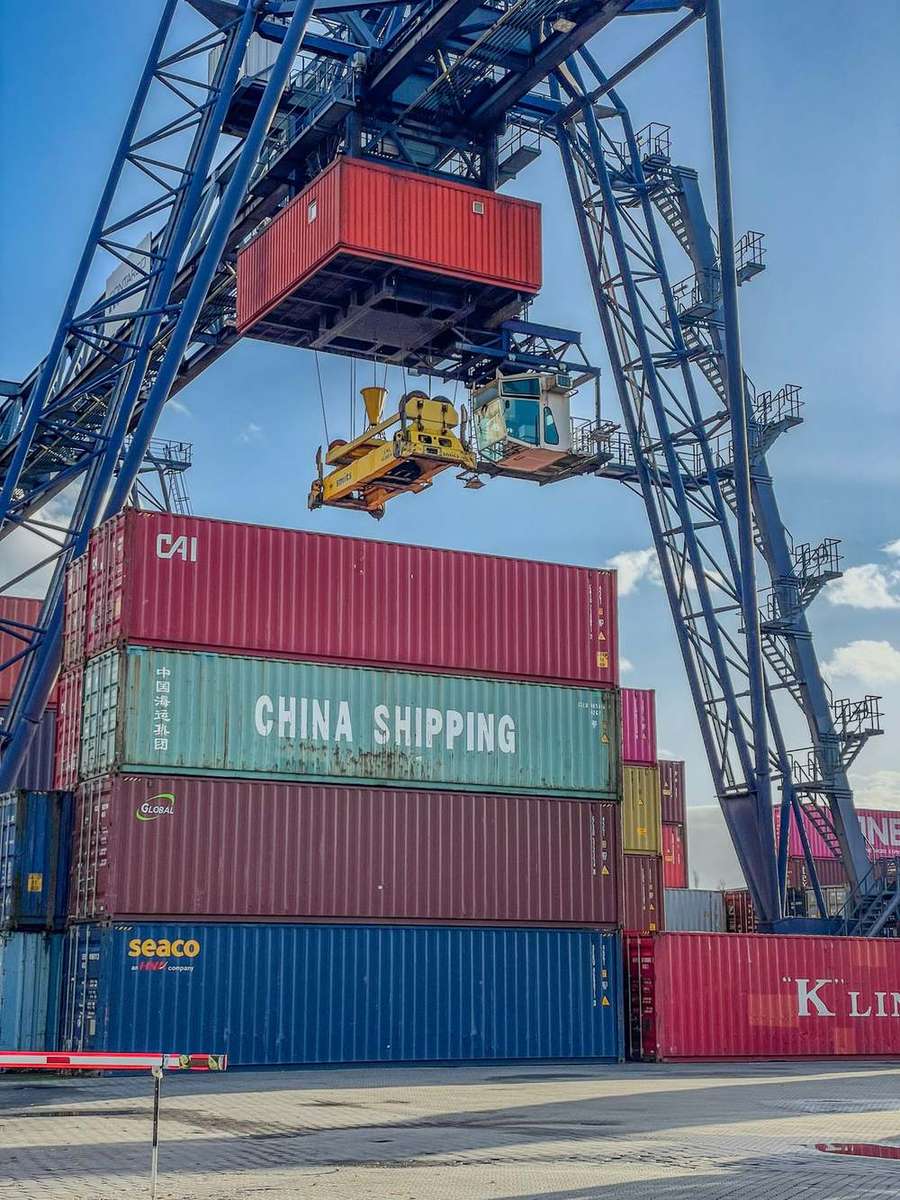
- Heavy cargo is not “if there’s a container, it fits.” Over-length, overweight and oversized items often need open-top containers, flat racks, or even breakbulk and ro-ro vessels, plus lashing and securing and out-of-gauge surcharges. Settle the container type and securing plan at the quotation stage — don’t discover it won’t fit the day before loading.
- North-south consolidation saves real money. If Dalian heavy cargo can ship on the same vessel or in the same container as consumer goods from southern suppliers, logistics costs drop noticeably — provided your agent has people at both ends.
Estimate freight yourself first with our free freight cost calculator.
Fee Ranges: Ask for a Written Fee Schedule First
| Fee item | Typical range | Notes |
|---|---|---|
| Sourcing agency commission | 5%-8% of order value | Covers factory search, price comparison, order follow-up, inspection and shipping coordination; negotiable toward the lower end for large order values or repeat orders |
| Factory audit | About ¥1,500-3,500 per factory per visit | Depends on factory location and audit depth; report included |
| Pre-shipment inspection | About ¥700-2,000 per order, or ¥900-1,999 per man-day | Batch parts use AQL sampling; heavy parts are billed per man-day |
| Heavy-industry parts special | Quoted separately per man-day | Witness point attendance, NDT coordination, trial run witnessing — this work is billed by the day, so don’t expect it to be “included in the commission” |
| Large-cargo logistics special | Quoted separately | Open-top/flat-rack/breakbulk vessels, lashing and securing, out-of-gauge surcharges |
| Sampling and tooling | At actual cost | Tooling and fixture costs are a high share for machined parts; negotiate “who pays and how it is amortized on repeat orders” |
| Certification and testing | Third-party lab quote | The agent should only coordinate, not mark up — write this into the written fee schedule |
Three pitfalls to avoid: ask for a written fee schedule (does the commission include inspection, travel, tax); beware of below 3% or “zero commission” (it will be recovered through unit price, tooling fees or logistics); for a full breakdown see How Sourcing Agents Charge and Inspection and Audit Fees Explained, or download our free sourcing agent cost guide.
6 Things to Verify in a Dalian Sourcing Agent
| # | What to verify | Why |
|---|---|---|
| 1 | Do they have on-the-ground staff in the north? | Guangzhou to Dalian is more than 2,000 km, and quotes and lead times for heavy parts move fast; remote factory monitoring rarely works |
| 2 | Can they read drawings and material certificates? | You need 3.1 material certificates, heat treatment curves and NDT reports, not “it looks fine” |
| 3 | How are witness points arranged? | Can they agree an ITP in advance and coordinate third-party (SGS/BV/TÜV, etc.) witnessing and trial runs |
| 4 | Large-cargo logistics capability | Who advises on flat-rack/open-top/breakbulk container types, who produces the lashing and securing plan, how out-of-gauge costs are calculated |
| 5 | Japan/Korea routes and sea-rail intermodal channels | If your destination is Japan or Korea, or you consolidate inland, the agent must be able to propose routes and container types |
| 6 | Can they consolidate north and south shipments? | Consolidating heavy cargo with consumer goods in one container or on one vessel is a real cost advantage — but it requires people at both ends |
For general red flags, see 6 Signs of an Unreliable China Sourcing Agent; for verifying factory identity, see our China Factory Audit Guide.
The Three Most Common Pitfalls
- Inspecting machined parts with a consumer-goods method. AQL sampling plus a visual check will completely miss material, heat treatment, geometric tolerances and NDT — which are exactly why heavy parts fail.
- Treating a trading company quote as a factory quote. Dalian also has trading companies taking orders under the guise of a “factory,” and heavy parts especially require verifying the production address and equipment: business license + production address + workshop video, and a factory audit where necessary.
- Costing large cargo like small parcels. Flat racks, open-top containers, breakbulk, lashing and securing, out-of-gauge surcharges — if these aren’t calculated at the quotation stage, the last step is a hard loss.
FAQ
Q1: How much do Dalian sourcing agents charge? The mainstream is still a 5%-8% commission on order value, covering factory search, price comparison, order follow-up, and inspection and shipping coordination. Dalian has two items rarely seen in southern cities: a heavy-industry parts special (witness point attendance, NDT coordination, trial run witnessing, billed per man-day) and a large-cargo logistics special (flat racks/open-top containers/breakbulk vessels, lashing and securing). Get a written fee schedule before you commit, and be wary of commissions below 3%.
Q2: What categories can I mainly source in Dalian? Not fast-moving consumer goods, but: machined parts and non-standard components, bearings and components (Wafangdian), shipbuilding and marine equipment, chemical raw materials and new polyester materials, cold-chain food and seafood, and export apparel (Pulandian). If your product list includes equipment spares, complete equipment components, industrial consumables or frozen goods, Dalian deserves a dedicated trip.
Q3: How do I inspect a small quantity of large parts? Not by sampling, but by witness points. The approach: agree an ITP (Inspection and Test Plan) with the factory before production starts, specifying who checks material certificates, heat treatment, NDT, first article and CMM dimensions, and dynamic balancing/trial runs at each stage; arrange third-party witnessing for critical load-bearing parts. Batch parts can still use the AQL sampling table, but “few and expensive” parts must be checked record by record and confirmed process by process.
Q4: I already have an agent in Guangzhou or Ningbo — should I still consider Dalian? It depends on what you buy. For consumer goods, electronics, hardware and home goods, the southern supply chain is more complete; for industrial spares, machined parts, bearings, marine equipment, cold-chain goods and chemical raw materials, the north is the main production base, and an extra production base means extra leverage on price and a backup on lead time. Also, if your destination is Japan or Korea, shipping from Dalian saves an entire domestic land leg.
Q5: How long does export from Dalian to Japan and Korea take? Short-sea routes: about 1-3 days to Busan/Incheon in Korea, and about 3-7 days to Tokyo/Osaka/Nagoya in Japan; the Dalian-Incheon ro-ro ferry takes about 16 hours at sea with 3 sailings per week, suitable for urgent shipments and small-batch replenishment. Don’t miss the documents: use FORM K for China-Korea FTA rates on Korea-bound goods, register food products with MFDS, and provide composition analysis reports for food exports to Japan.
Next Step: Send Us Your Dalian Sourcing Requirement
Send us your drawings or specifications + target quantity + target price, and within 48 hours you will receive a written plan:
- Industrial belt positioning — whether to go to Wafangdian, Jinpu New Area, Changxing Island or Pulandian, down to the specific park;
- Quote comparison on a like-for-like basis — 3-5 factories in the same category, with tax-inclusive/exclusive and FOB Dalian/ex-works prices leveled before comparison;
- Quality and witnessing plan — which processes need witness points for your category, which reports are required (material certificates/NDT/dimensions/trial runs), and how the costs are calculated;
- Export route — Dalian Port container type and securing plan, short-sea routes to Japan/Korea or sea-rail intermodal, and arrangements to consolidate shipments with southern suppliers.
Our Guangzhou head office has on-site scheduling and northern coordination capability for Dalian, and we specialize in shipping “northern heavy parts + South China consumer goods” as one consignment. For city and category comparisons, start with our Guangzhou Sourcing Agent Guide, Ningbo, Xiamen and Zhongshan; service pages: Product Sourcing, Quality Control, Supplier Audits, Warehousing & Consolidation, International Shipping.
Tell us your category and quantity by WhatsApp or email, and we will reply within 48 hours.