The quote is accepted, the contract is signed, and the factory says: “Let’s make samples first — once the sample is approved, we’ll start production.”
Many buyers treat sampling as “just sending a sample to look at.” In reality, the sample is the contract for the entire order: once the sample is approved, mass production must follow it. Get the sample wrong and inspection, returns and claims all go wrong with it. In ten years of running a sourcing agency in Guangzhou, we’ve seen too many orders die at the sampling stage: sample fee negotiations collapsing, approved samples not matching production, samples sent and never heard of again.
This guide covers the full sampling process: the four sample types, how to negotiate sample fees, how to verify an approval sample, what to watch when shipping samples, and the five pitfalls that trip up most buyers.
What are the four sample types at a glance?
Remember one principle first: a sample is not a one-time thing — it is the reference point for the whole order. Different stages use different samples, and mixing them up causes problems later.
| Sample type | When | Purpose | Key point |
|---|---|---|---|
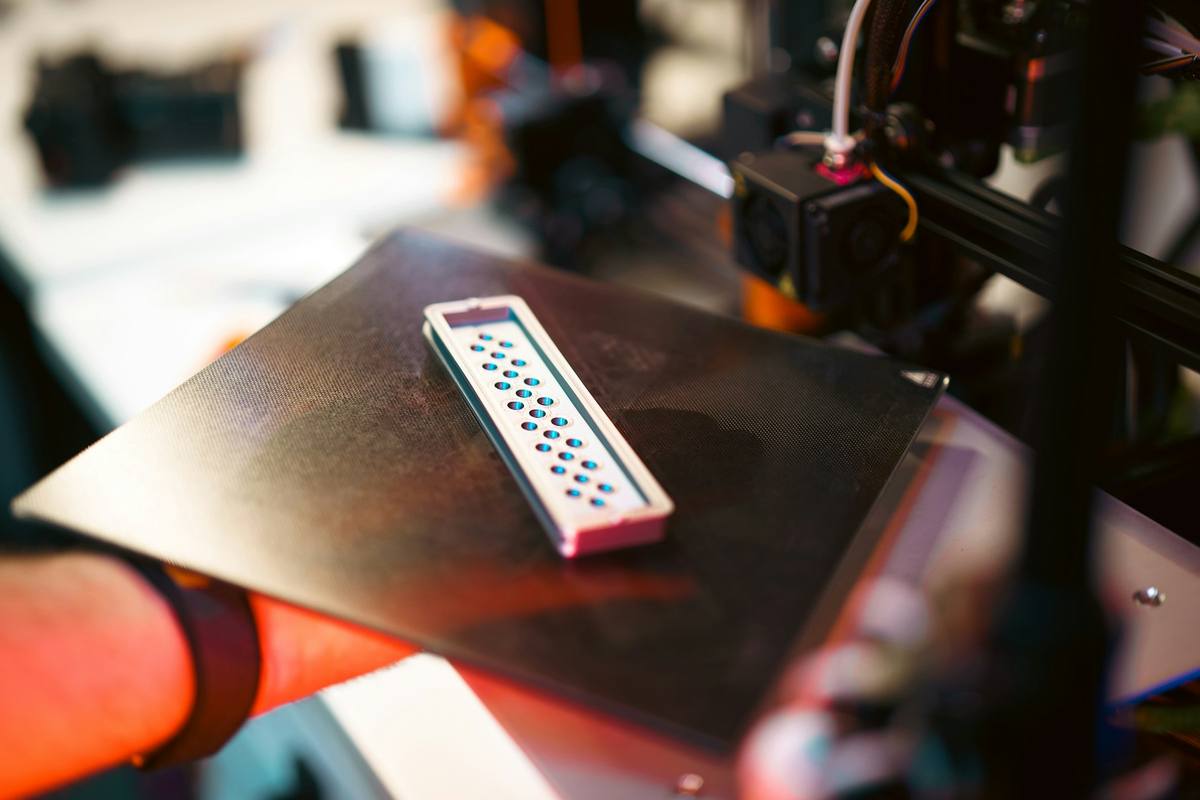
| Prototype / rapid sample | Before tooling / production | Validate design, feel, appearance | May be imprecise; only for direction confirmation |
| Pre-production sample | Before the official order | Confirm process, material, dimensions, color | Made to final spec; closest to mass production |
| Approved sample | After pre-production sample is confirmed | Both parties sign and keep it as the production standard | Must be kept + confirmed in writing |
| Shipment / production sample | During mass production | Spot-check that production matches the approved sample | Cross-check with inspection report |
Three rules of thumb covering 90% of cases:
- First cooperation, with modifications → prototype/pre-production sample first to confirm design, then talk order
- Standard product, no changes → go straight for the pre-production sample; once approved, keep it as the reference
- Repeat order → compare against the last approved sample and production sample to make sure nothing was “downgraded” before scheduling
Who pays for samples and what are the four arrangements?
Sample fees are the most common negotiation deadlock. Factories think “why should I make samples for free?”, buyers think “free samples show commitment.” There is no absolute standard — only arrangements that match the order value and cooperation stage:
| Arrangement | When it fits | Negotiation points |
|---|---|---|
| Sample + shipping fully free | Standard products, low sample value (<$10), repeat clients | Only for high-intent buyers; free samples most often vanish — confirm the need before sending |
| Free sample, shipping collect | Low sample value, clear buying intent | The most common arrangement; collect shipping is itself a filter for serious buyers |
| Charge sample fee, free shipping | Custom items, high sample production cost | Promise “sample fee deducted from order” — comfortable for both sides |
| Full charge (sample + shipping) | High-value custom, tooling items | Tooling quoted separately; sample fee offset against the first order is standard |
Three negotiation levers we use for our clients:
- Sample fee offset against the order: put it in writing in the PI (proforma invoice) — the most effective way to settle sample fees
- Sample fee as deposit: agree “order within X days of sample approval, sample fee fully offset” — turns the fee into a commitment
- Tooling cost sharing: for tooling items, amortize the tooling fee across order volume, refunding once volume is reached — factories accept this for large orders

What are the six steps in the sampling process?
Sample management is a closed loop — miss one step and something leaks later: requirements → sampling → shipping → verification → written approval → archiving.
Step 1: Written requirements list. Don’t use chat messages as your requirement. Put material, dimensions, color (Pantone), process, logo position and packaging requirements into a written list (Sample Request) and send it to the factory. The more specific the requirement, the fewer re-samples.
Step 2: Confirm the sampling lead time. Standard products 3-7 days; custom/tooling items 15-30 days. Get the factory to commit to a completion date in writing, and put it in the production schedule.
Step 3: Ship the sample. Use a trackable courier (DHL/FedEx/UPS) and keep the tracking number. Photograph the sample before shipping (front/back/detail/logo close-up) and email the photos to the client for comparison.
Step 4: Verify on arrival. Check the sample item by item against the requirements list (checklist below), with photos. Don’t just glance and say “looks good.”
Step 5: Written confirmation. Once approved, have the factory issue a Sample Approval Certificate or annotate the PI: “Sample approved (No. XXX), production to follow this sample” — signed/confirmed by email. This document is the arbitration basis for every later dispute.
Step 6: Archive the reference. Keep at least two copies of the approved sample: one at the factory, one in your hands. Label with sample number, approval date, supplier, and order number — pull it out during final inspection to compare.
What is on the nine-point approval sample checklist?
When the approval sample arrives, don’t rush to say “good quality” — go through this list item by item:
| Check | What to look at | Common problem |
|---|---|---|
| Material | Matches the requirement sheet? Density / feel / weight | Factory “downgrades” materials |
| Dimensions | Measure actual size against spec tolerance | 1-2mm off is a big deal |
| Color | Pantone / color card comparison in natural light | Color deviation is the most common dispute |
| Craftsmanship | Stitching / edges / printing / surface finish | Skimped process details |
| Logo / printing | Position, size, clarity, color match | Wrong logo position is the most common |
| Function | Opening / buttons / power / assembly test | “Sample works, production doesn’t” tricks |
| Packaging | Inner packaging / outer carton / markings | Shrunk packaging damages transport |
| Accessories | Manuals / screws / cables / spare parts | Missing accessories are the sneakiest |
| Consistency | Item-by-item vs the quotation description | What was quoted doesn’t match what was made |
What if it fails? Don’t just say “not good” verbally — send a written problem list (with photo references) to the factory, request a re-sample, and set a new deadline. Our experience: a written problem list + deadline gets rework done 3x faster than back-and-forth arguing.
What four things should you not skip when shipping samples?
The sample isn’t done when it leaves the factory. Manage this stage poorly and the sample is as good as wasted:
- Photo documentation before shipping: front/detail/logo close-ups, emailed to the client: “Sample shipped; photos attached; please verify against them.”
- Tracking number the same day: send the tracking number and estimated arrival on the shipping day — don’t wait for the client to ask.
- 48-hour follow-up after delivery: proactively ask for test results after sign-off; if there’s no reply in over a week, the deal is probably off.
- Log the shipment: sample number, client, courier, cost, result — one entry per record, ready to pull up on repeat orders.
What are the five most common sampling pitfalls?
| Pitfall | Consequence | How to avoid |
|---|---|---|
| Ship a sample without approval | Sample shipped = “done”; production follows the factory’s own interpretation | Written approval + archived sample, both required |
| Free samples everywhere | Sample fees wasted; recipients disappear after receiving | Use collect shipping / fee offset as a commitment filter |
| Approved sample ≠ production | Discovered at final inspection; returns and claims put you on the defensive | Cross-check the inspection report against the approved sample item by item |
| Verbal approval treated as final | He-said-she-said when problems arise | Everything confirmed in writing / email |
| No sample archive | No reference on repeat orders; factory calls the shots again | Number + photograph every sample and archive it |
FAQ
Q: Can the sample fee be fully waived? A: Yes, with conditions. Standard products, low value, repeat clients — fully free is fine; for custom/tooling items, offsetting the sample fee against the order is the standard arrangement both sides accept. Never treat “free samples” as the norm — it attracts inquiries with no real commitment.
Q: Can the approved sample and mass production be guaranteed identical? A: “Identical to the approved sample” can be guaranteed as the standard, but production has reasonable tolerances. So we recommend: ① keep the approved sample; ② during inspection, compare random production units against it; ③ write the tolerance range into the contract. Do all three and production can’t drift far.
Q: How long does sampling usually take? A: Standard products 3-7 days, custom items 15-30 days, tooling items 30-60 days (including tool making). Peak season (Sep-Nov) adds 5-10 days — plan sampling early.
Q: The factory says “sample free, we’ll send it over”? A: Acceptable for standard products; be cautious with custom items — a “free” sample may not be made to your spec (generic sample passing for yours). On arrival, verify against the requirements list, and only discuss the order once it’s confirmed to be made to your spec.
Q: Can I switch suppliers if the sample is not good? A: Yes — and you should. The sample is the true test of a supplier’s capability; if they can’t make a good sample, mass production is even less guaranteed. Before switching, recover the sample fee / ask for a refund — don’t let sunk cost drive the decision.
Sampling is the first quality gate of the whole order, and the cheapest moment to correct mistakes — a problem found at the sample stage takes days to fix; a problem found at mass production is a container-sized loss.
Our team in Guangzhou has spent ten years managing the full process from sampling to inspection for overseas buyers: approved-sample archiving, sample inspection reports, and cross-checking production against the approved sample — everything documented in writing. If you have a new product to sample, or you’re unsure about a current supplier’s samples, send us your requirements list and we’ll reply within 48 hours.