The most common cross-discipline dispute is not that the job is expensive. It is that the same cable tray gets counted twice, both quotations leave out the end power boxes, and commissioning fees land on three parties with nobody owning them. The root cause is almost always the same: the boundary between low voltage (LV) and extra low voltage (ELV) is not written on the drawings or in the quotation. It is also the part of hotel low-voltage system integration most people handle by feel: everyone can say “ELV means the low-voltage systems”, but nobody can answer “then does this 100 V constant-voltage amplifier count”.
This article is not an electrical primer. It gives verifiable actions only: how to read the boundary in the standards, why voltage is the wrong classification, why only one of four supply arrangements may be chosen per system, what segregation actually checks, which of eight actions belongs to whom, the eight questions to nail down at RFQ, and the five checks at acceptance.
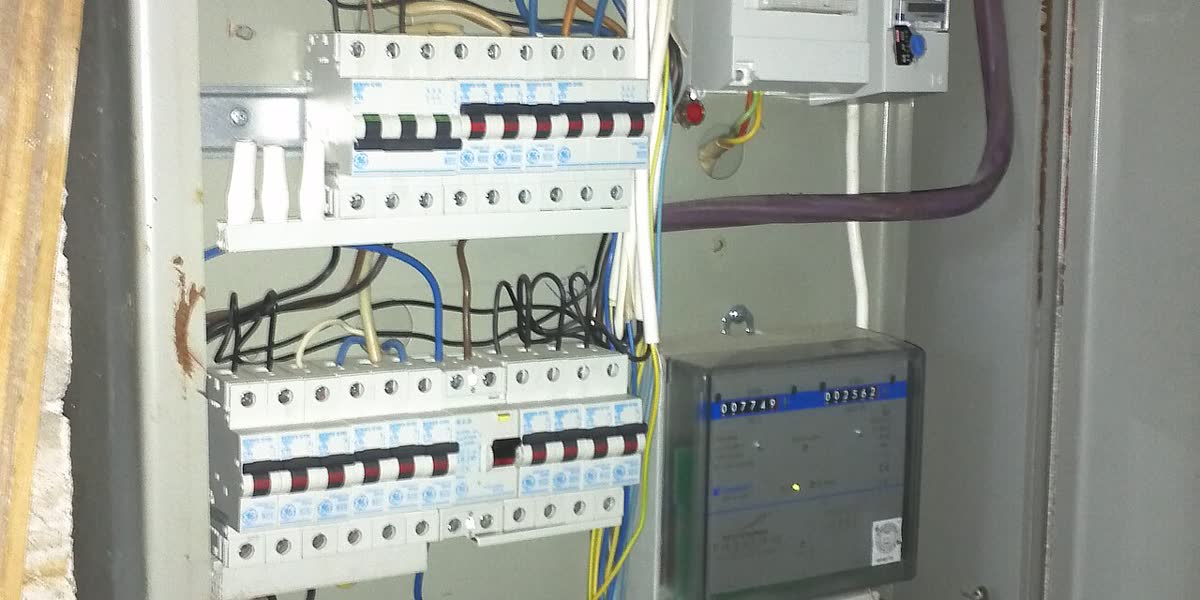
Photo: Dmitry G, CC BY-SA 3.0, via Wikimedia Commons.
1. Three terms to pin down first: LV, ELV, and the trade’s “low voltage package”
| Term | Boundary | Source | What it means for buying |
|---|---|---|---|
| Low voltage (LV) | AC 50–1000 V (national LV ceilings) | IEC 60038 voltage bands / national wiring rules | Lighting, sockets, power, distribution boards — usually one electrical contract |
| SELV/PELV | AC ≤50 V, DC ≤120 V (ripple-free) | IEC 60364-4-41 | Safety voltage; some works may not require a licensed electrician (per local rules) |
| Functional extra low voltage (Band I) | AC ≤50 V | UK BS 7671 | Band I and Band II (LV) wiring must be segregated |
| Remote control and signal circuits Class 1/2/3 | Class 2 power-limited (about 100 VA) | US NEC Article 725 | Decides the cable type and whether it may share a conduit with mains |
| ELV (trade usage) | AC ≤50 V | Australia/NZ AS/NZS 3000 | Close to the SELV definition |
| “Low voltage package” | Not a voltage concept | Trade division of labour | CCTV, access control, cabling, PA, IPTV, BMS, fire alarm can all sit inside it |
The key sentence: what the trade calls “weak current” is not the same as “low voltage”. A camera on PoE is 48 V DC, but the UPS feeding the rack outputs 230 V AC; a PA amplifier outputs 100 V constant voltage, already above 50 V, yet it still sits in the ELV package; a magnetic lock is 12 V and an electric strike 12/24 V, while the controller’s power box is often tapped straight off a lighting circuit. Classify by voltage and you will fail on at least one system. Buyers should classify by power source plus interface point.
2. Classify by power source, not by equipment name
| System | Supply | Which package | Most common dispute |
|---|---|---|---|
| Video surveillance | PoE (802.3af/at/bt) or 12/24 V DC adapters | ELV | Who calculates and who checks the PoE switch power budget |
| Access control and intercom | Controller 12 V DC or PoE; locks 12/24 V | ELV | Where the access power box draws from, and whether it sits in the LV package |
| Structured cabling / network | PoE or rack PDU | ELV | Who owns the interface between rack PDU and UPS output |
| Public address | Amplifier input 230 V AC, output 100 V constant voltage | Boundary at the amplifier input | The “is 100 V strong or weak current” argument |
| Fire alarm | Dedicated fire supply (EN 54-4), independent circuit | Separate package | Sharing a supply with general ELV is rejected at acceptance |
| IPTV / guest room TV | Head-end 230 V, terminals 12 V | Boundary at the head-end rack | Nobody owns head-end power and cooling |
| Building automation (BMS) | DDC 24 V, actuators 24 V or 230 V | Boundary at relay/contactor | Who wires the 230 V actuators |
| ELV equipment room | UPS input 230/400 V, output to the ELV distribution board | Boundary at the ELV board incoming terminal | Who is responsible above and below the incoming terminal |
This table converts directly into an RFQ annex: four columns per row — power source, tap point, supplier, installer — and the right-hand “dispute” column becomes the checklist. For the layered point schedule on a hotel project, see 500-room hotel ELV floor design.
3. Four kinds of double pricing — count how many are in your quotation
- Cable tray and conduit billed twice: the LV contractor prices the main run as “electrical tray”, the ELV contractor prices the same route again as “ELV tray”. If the contract does not say “main tray in the LV package, ELV prices only barriers and branch runs”, both sides believe they are right.
- End power boxes missing: access control power, camera central power boxes, PA zone power — the name says ELV but the item is a distribution board. LV says “that is ELV”, ELV says “we do systems”, and the site buys it urgently with no price benchmark.
- Earthing and equipotential bonding overlooked: rack earth bars, tray bonding, shield earthing. All three get dropped, then get added on site at per-point rates.
- Commissioning fees on two quotations, or on neither: a factory’s “commissioning” usually stops at equipment self-test, while cross-system interlocks (access release, lift homing, PA zoning) are on nobody’s sheet. This is an acceptance blocker in both fire alarm sourcing and access control sourcing.
4. Where ELV power comes from: four tap arrangements, pick one and mark it on the drawing
| Tap arrangement | Suits | Advantage | Cost |
|---|---|---|---|
| A. Dedicated ELV distribution board (fed from the UPS board) | Racks, centrally powered access control and cameras | One point of control, can be monitored | Board position and circuit count fixed on drawings; expensive to change later |
| B. PoE from the switch | Cameras, APs, IP phones, some access control | No local power supply, remote reboot | Switch power budget and cable temperature rise must be calculated |
| C. Local adapter per device | Scattered points, retrofit projects | Fastest and cheapest | Many units, hard to track, sockets and service access still need an owner |
| D. Dedicated fire supply (EN 54-4) | Fire alarm | The only compliant option | Must not be shared with other systems; standby duration quoted separately |
There is exactly one red line: no tapping “a spare way off the lighting circuit”. It is the most common reason a system fails site acceptance and the most common warranty dispute — the circuit is not on the drawings, so afterwards nobody accepts it. For PoE budgets and cable sizing see the PoE switch sourcing guide, and for standby capacity see the UPS sourcing guide.
5. Cable segregation: 300 mm and 90° crossings are the common rule, but the matrix is what matters
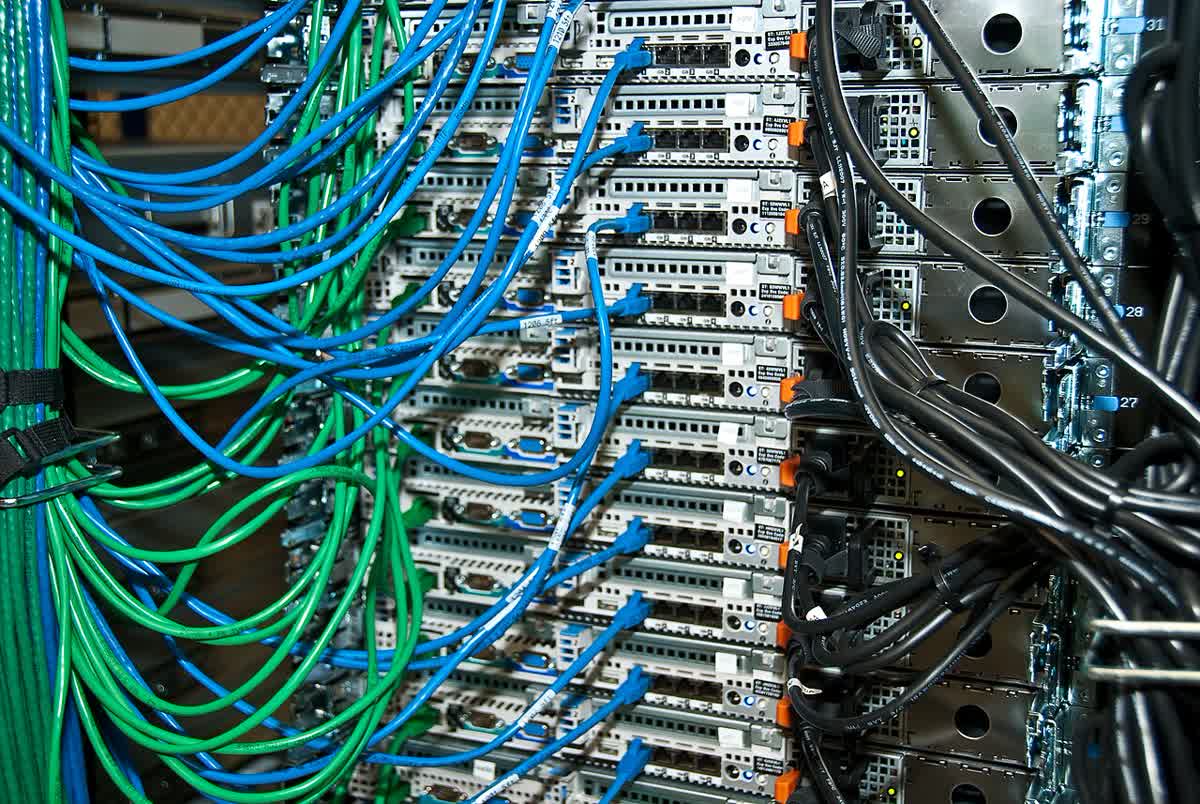
- Parallel runs: without a metal barrier, keep mains and ELV cables at least 300 mm apart as the common industry rule; where that is impossible, separate them with a metal barrier or metal conduit.
- Crossings: cross at 90° wherever possible and avoid long parallel runs.
- Shields: earth at one end only. Earthing both ends creates a ground loop that injects interference into the system.
- Tray layering: mains above, ELV below or behind a barrier, with room for service access and heat dissipation.
- References: EN 50174-2 (IT cabling installation and EMI), TIA-569 (pathways and spaces), BS 7671 regulation 528 (separation of circuits of different voltage bands). The actual figures change with shielded or unshielded cable, metal barriers and supply type — do not treat “300 mm” as the whole answer.
For cable selection itself (Cat6/Cat6A/fibre, CCA fake copper, LSZH and CPR classes) see the structured cabling sourcing guide; for cable quantity traps in the BOQ see Cat6 and BOQ traps.
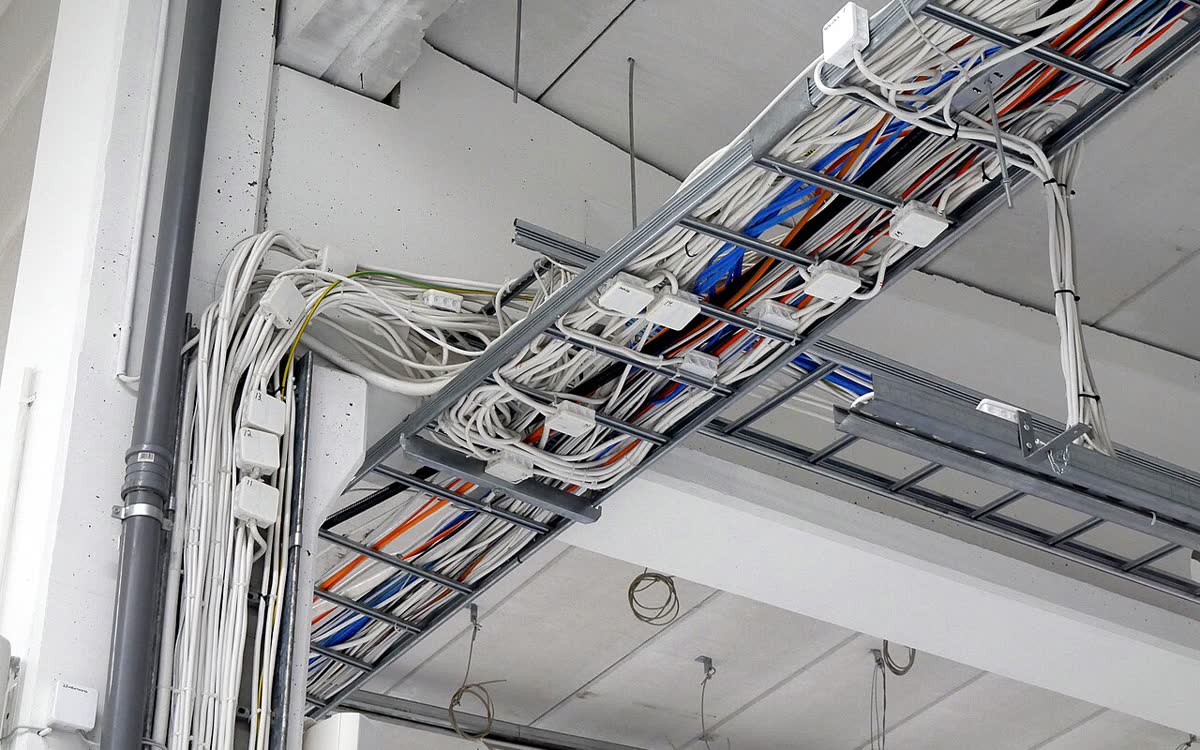
Photo: Santeri Viinamäki, CC BY-SA 4.0, via Wikimedia Commons.
6. Responsibility matrix: assign all eight actions to a named party, never “coordinate”
| # | Action | Usually owned by | Deliverable |
|---|---|---|---|
| 1 | Main tray, risers, sleeves and openings | LV main contractor | Route drawing + layering detail |
| 2 | ELV distribution boards and circuits | LV main contractor (ELV states the requirement) | Single-line diagram + circuit schedule |
| 3 | End power (adapters / central supply) | ELV contractor | Point schedule + supply method |
| 4 | ELV cable installation | ELV contractor | Installation record + segregation photos |
| 5 | Termination, labelling, test | ELV contractor | Permanent link test report |
| 6 | Single-system commissioning | Equipment factory or ELV | Commissioning record |
| 7 | Cross-system interlock testing | Integrator (must be named) | Interlock test sheet |
| 8 | As-built drawings and training | ELV contractor | As-built set + training attendance |
“Coordinate” is the most expensive word in a contract, because it means nobody is responsible. If item 7 has no named party, acceptance stops at the last minute.
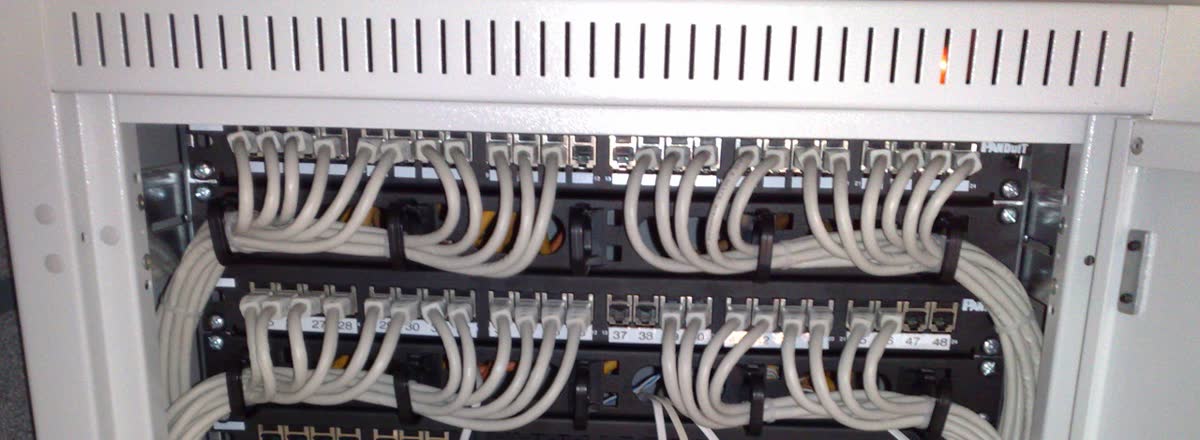
Photo: Dsimic, CC BY-SA 4.0, via Wikimedia Commons.
7. The eight questions to nail down at RFQ
- In this quotation, is the cable tray main run, branch run, or both? Does it duplicate the tray in the LV package?
- Are the end power boxes (access control / cameras / PA zones) in your price, and which distribution point do they tap?
- Who owns the rack PDUs, earth bars and tray bonding?
- Which standard do you follow for mains/ELV segregation, and what is the alternative when 300 mm cannot be achieved?
- How far does commissioning go: equipment self-test, system integration, or cross-system interlocks? How many man-days on site?
- Who issues the permanent link test report, on which tester model, against which pass criteria?
- What duration is the standby (UPS or central power) sized for, and does it include expansion headroom?
- Are site works (core drilling, wall penetrations, sealing, scaffolding) in your scope or the builder’s?
8. Five acceptance checks (including one red line on power taps)
- Walk every ELV distribution board circuit and confirm not a single one is tapped from a lighting or socket circuit.
- Sample the spacing on parallel mains/ELV runs against photos and measured records, not just the as-built drawing.
- Measure rack earth resistance to the local code (commonly 4 Ω, tighter on data-centre type projects) and record the measured value.
- Sample-test permanent links (per the AQL sampling table); failing links send the whole batch back.
- Run every interlock item individually: access release, PA zoning, fire interlock, lift homing — signed off by name.
For sampling procedure see pre-shipment inspection; for a full on-site audit of an ELV package see how a technical sourcing agent takes over hotel ELV.
FAQ
1. Is ELV the same thing as the low voltage package on a project? No. ELV is a voltage class (AC ≤50 V), while the “low voltage package” is a trade split that contains 48 V PoE, 100 V constant-voltage PA, and 230 V UPS and amplifier feeds. Buyers must split by power source and interface point; splitting by voltage will fail.
2. Is a 100 V PA line strong current or weak current? By voltage class, 100 V is above 50 V and therefore not ELV; but in trade practice the whole PA package (amplifier, zone selector, speakers) is supplied by the ELV contractor. Do not argue the label — fix the boundary on the quotation: the split point is the 230 V feed at the amplifier input.
3. Can the fire alarm system be tendered inside the general ELV package? Technically yes, contractually not advisable. Fire detection has its own supply requirement (EN 54-4), its own certification regime and its own acceptance authority; once merged into general ELV, shared power and commissioning responsibility are where it breaks. The same supplier may deliver both, but separate quotation section and separate acceptance records are mandatory.
4. Does PoE need an electrician? It depends on local regulation and cable route. PoE itself is extra low voltage, but cables run through ceilings and risers, which in many markets requires a licensed installer or a licensed sign-off. Confirm local requirements before buying rather than assuming “48 V means anyone can connect it”.
5. The electrical contractor says he builds the cable tray. Do I still need an ELV tray price? Yes, but only the part he genuinely owns: branch tray, segregation barriers, bonding and penetrations. In the RFQ, ask both parties to quote “main run” and “branch run” as separate lines and cross-check the totals — the fastest way to expose double pricing.
Next step: send the drawings and BOQ, get a boundary-split quote structure in 48 hours
Send us the single-line diagram, point schedule or BOQ (WhatsApp or email) and we return a structure note within 48 hours: which items are equipment, which are distribution and tray, which must be done locally on site, and which items the two contractors are likely to price twice. What we do sits on the sourcing and inspection side: supplier screening and audit through supplier audit, sampling before shipment through the quality control process, and the full comparison workflow for an ELV package (CCTV, access control, cabling, PA, fire alarm, IPTV, standby power) is described in how it works.