Scams in the China sourcing space are rarely dramatic. Nobody steals your deposit with a gun; they take it with a friendly WeChat message, a polished website, and a price that’s just low enough to be tempting. By the time you realize the “factory” is a trading desk or the inspection report was written in an office that has never seen your goods, the money is usually gone — and recovering it from another country is nearly impossible.
The good news: almost every scam follows the same pattern, and the pattern is visible before you pay. This guide gives you the 8 red flags that expose an unreliable China sourcing agent, plus a 5-step verification method and the payment rules that keep your deposit safe.
This article is the defensive companion to our China sourcing agents comparison guide — use that one to run a structured comparison between candidates, and this one to quickly eliminate the dangerous ones.
Why does the sourcing agent space attract scams?
Three structural facts make this industry a hunting ground for bad actors:
- Information asymmetry. You are 5,000 miles away, the agent is in Guangzhou or Yiwu, and everything you know about the “factory” comes through them. That gap is where the scam lives.
- Cross-border recovery is nearly impossible. A $5,000 deposit sent by T/T to a Chinese bank account is effectively unrecoverable if the recipient disappears. Local courts exist, but the cost of pursuing a foreign judgment usually exceeds the loss.
- Payments are irreversible. Wire transfers and most bank payments have no chargeback mechanism. Once the money leaves your account, the only leverage you have is the relationship — which is exactly what the scammer is about to end.
None of this means you shouldn’t use a sourcing agent. It means you should verify like a professional, and walk away at the first red flag.
What are the 8 red flags of unreliable sourcing agents?
1. They refuse to show the factory invoice
A transparent agent earns a disclosed commission on top of the real factory price. If the agent insists on quoting a single “all-in” price and won’t show you the underlying factory invoice, they are making money on the markup — and you have no way to know how much. The invoice test is the single most powerful check in this industry: an agent who shows it proves they work for you; an agent who hides it is working for themselves.
2. They charge for the initial factory audit “quote”
Legitimate agents build factory audits into their service fee or charge a modest, pre-agreed rate. A deposit up front for every supplier visit is a common way to extract money without delivering results — you pay for three “audits,” get three forwarded photos, and never hear about the factories again.
3. They promise any factory, any product, no problem
No agent is strong in every category. A credible agent will tell you honestly which categories they know deeply and which they don’t. If everything is “easy” and “no problem,” your product will likely become their first learning experience — at your expense.
4. They communicate only by WeChat with no written documentation
You need written specs, written quotes, and written inspection reports — in English. An agent who works only in WeChat voice notes and “trust me” messages is setting you up for disputes later. Every agreement should be confirmable in writing, because when something goes wrong, a voice note is not evidence of anything.
5. They can’t show you a single verifiable client case study
Anyone can claim “trusted by 1,000+ clients.” Ask for one named, checkable example — a product, a factory, a timeline. Real agents have case studies with photos and inspection reports; paper tigers have testimonials with first names only and no details you can check.
6. They’re not in China, or their “office” is a forwarding address
Your agent’s entire value is physical presence in the supply chain. If they’re a middleman re-brokering to another middleman, you’re paying for distance, not service. Verify the office with a live video call — if the agent can’t or won’t walk you around their own floor, that’s a red flag in itself.
7. They guarantee 100% defect-free inspection
No one can guarantee that. What a professional does is agree a clear AQL standard before production, inspect against it, and report honestly — including the defects. A “100% pass” guarantee is usually the sign of a report written to please the client, which is worse than no report at all.
8. They push you to pay the factory directly “for a better price”
A common scheme: the agent disappears after the factory deposit is paid, or the “factory” turns out to be a shell company controlled by the same person. Always agree the payment structure in writing before you start, and keep your payments on traceable, contract-backed channels.
Bottom line: one red flag is a warning, two is a reason to stop, three means you’re already in the middle of the scam. Trust the pattern, not the charm.
What is the 5-step verification method for sourcing agents?
Red flags tell you who to eliminate. This method tells you who to trust. Run every candidate through all five steps — including us.
Step 1: Video-call the agent inside their office
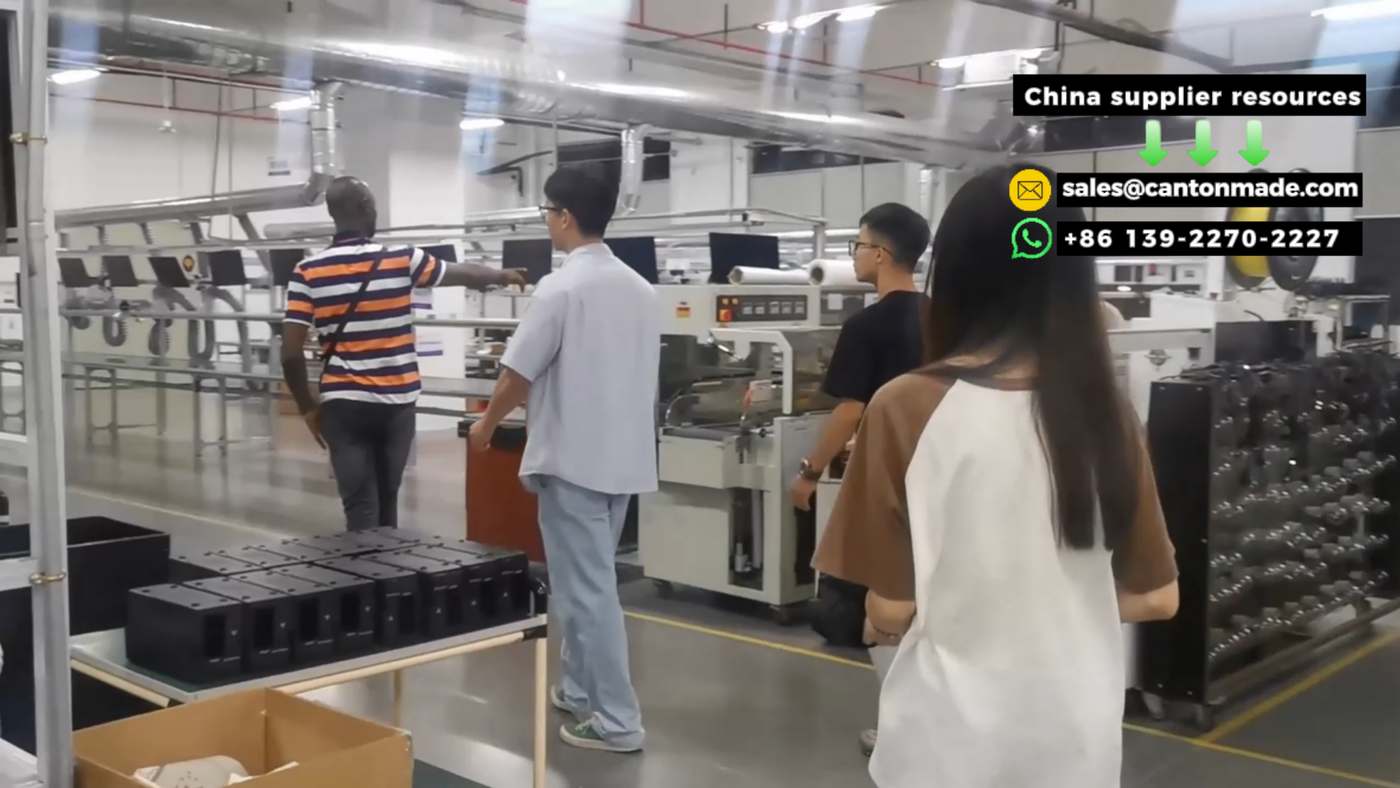
A live walkthrough of the office floor — desks, staff, inspection tools, samples — is impossible to fake at scale. Ask to see where inspection reports are written and where samples are stored. If the agent offers a “call” from a cafe or a blurred background, treat that as a failed check.
Step 2: Verify the business registration
A Chinese company has a unified social credit code (统一社会信用代码). Look it up on the National Enterprise Credit Information Publicity System (国家企业信用信息公示系统). Check the registration date — a company registered six months ago is a risk, not a partner — and confirm the registered name matches the contract and the invoice. This takes twenty minutes and eliminates entire categories of scams.
Step 3: Ask for a factory invoice and a sample inspection report
From a recent order, not a template. The invoice should show factory name, product, quantity, and unit price. The inspection report should show photos, AQL levels, defect counts, and a signature. Compare the two: does the factory on the invoice match the product you’re sourcing? Is the inspection methodology real?
Step 4: Run a small paid trial order
Before any large commitment, place a small order through the agent — a few hundred dollars’ worth of your actual product. Watch how they handle it: response speed, documentation, inspection, delivery. A trial order is the cheapest insurance policy in this industry, and a legitimate agent will welcome it.
Step 5: Get everything in writing
The fee structure line by line, the factory invoice policy, the inspection standard, the payment schedule, the liability for defects. If an agent hesitates to put their terms in writing, you have your answer. Our how to pay Chinese suppliers safely guide covers the payment-side checklist in detail.
Which payment rules protect your deposit with a sourcing agent?
- Never pay 100% upfront. Industry norm is 30% deposit with production, balance against inspection report or BL copy.
- Never wire to a personal account. The payee should be the registered company — verify the name matches the registration from Step 2.
- Prefer traceable channels. Bank T/T to the company account, or secure platforms with dispute mechanisms. Avoid cryptocurrency and cash-equivalent transfers.
- Structure payments around evidence. Deposit on contract, progress payment on production photos, balance on inspection report and shipping documents.
How do we hold ourselves to this standard?
Full disclosure: we’re Cantonmade, a Guangzhou-based sourcing agency, and we publish this guide as the standard we expect to be measured by. Our 15-step sourcing process is documented end to end, we show the factory invoice on every project, our inspection reports follow the AQL standard with photos, and our case studies name real clients — including the Aya Sophia hotel project in Tanzania. If you run the five verification steps on us and we can’t produce the evidence, you should walk away from us too. That’s the point of this article.
For the full landscape, see our ranking of the best China sourcing agents in 2026 and the complete sourcing agent guide — then use the comparison guide to structure your final decision.
Frequently Asked Questions
How do I avoid scams when hiring a China sourcing agent?
Avoid scams by verifying before paying: ask for the factory invoice from a recent order, video-call the agent inside their office, check their business registration against the National Enterprise Credit Information Publicity System, and start with a small paid trial order instead of a large deposit. Never pay the full amount upfront, never wire to a personal account, and insist on a written contract with the fee structure stated line by line. An agent who stalls on any of these checks is the answer itself.
How to find a reliable sourcing agent in China?
Find a reliable sourcing agent in China through referrals from other importers, trade platforms like Alibaba and Global Sources, and trade shows like the Canton Fair — then verify every candidate with the same rigor you would apply to a factory: ask for the factory invoice, request a live video walkthrough of the agent’s office, check their business registration, and run a small trial order before committing. Reliability is proven by evidence, not by a polished website or a WeChat personality.
What does a China sourcing agent do?
A China sourcing agent works as your local buying team: they vet and visit factories, negotiate prices and payment terms on your behalf, manage production, run quality inspections against an agreed AQL standard, and coordinate shipping. The value is physical presence — the agent walks factory floors, speaks the language, and catches problems at the source before goods leave China.
How much does a China sourcing agent charge?
Most China sourcing agents charge 5-8% commission on the factory order value, or a flat per-project fee for simple tasks, with shipping and inspection billed separately at cost. A transparent agent shows you the factory invoice so their fee sits on top of a verifiable factory price — if an agent quotes a single all-in price and refuses to show the invoice, you are likely paying a hidden 10-30% markup.
What is the difference between a sourcing agent and a freight forwarder?
A sourcing agent handles everything before and during production: supplier discovery, factory audits, negotiation, and quality control. A freight forwarder handles transportation: booking cargo, customs clearance, and delivery. Full-service agents coordinate both, but they are distinct jobs — if you only need shipping, use a forwarder; if you need a factory found and quality controlled, use a sourcing agent.
How do I check if a China sourcing agent is legitimate?
Check legitimacy four ways: verify the business registration (a Chinese company has a unified social credit code you can look up on the National Enterprise Credit Information Publicity System), video-call the agent inside their office to confirm it is real, ask for a factory invoice and a sample inspection report from a recent client, and talk to a named reference in your product category. Any of the four that an agent can’t produce is a reason to walk away.
What is the bottom line on unreliable China sourcing agents?
The difference between a great sourcing partnership and a costly scam is visible before you pay — if you know what to look for. Eight red flags to eliminate, five verification steps to confirm, three payment rules to protect your deposit. Run every candidate through this filter, including us, and the industry’s risk profile changes from scary to manageable.
If you’d like to put our team through the verification, we’ll make it easy: send us your product spec, and we’ll respond within one business day with a transparent, line-by-line quote — and the evidence to back it up. Or message us on WhatsApp — real people in Guangzhou, not a chatbot.