You’ve paid the 30% deposit. The delivery date comes and goes. The factory’s phone stops being answered. Every year in foreign trade, this story repeats itself.
The problem almost always traces back to the same step: no factory audit before you ordered. Is that business license real? Are those workshop photos the factory’s own — or borrowed? Does the line that promised 5,000 units actually run on ten machines? Questions you can never answer from an office chair and a screen — one on-site audit answers all of them.
This guide draws on ten years of working as a sourcing agent in Guangzhou and auditing well over a thousand factories. It covers the four types of factory audit, how audits differ from product inspection, the six-step audit process, how factories should prepare, how buyers should use the audit report — and the five pitfalls we see most often.
What is a factory audit actually?
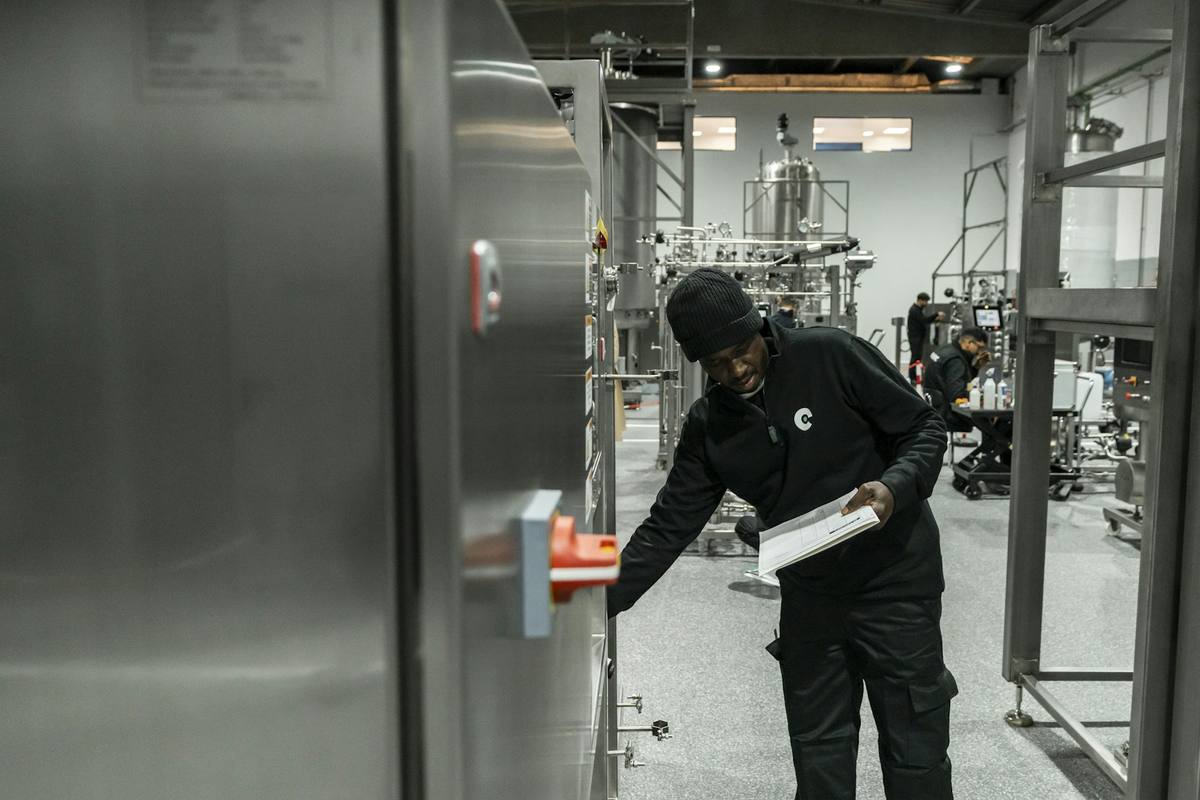
A factory audit (also called supplier audit or supplier verification) means sending someone to the factory site to verify the supplier’s real situation first-hand. It isn’t desk review — it’s a person standing in the workshop, counting machines one by one, checking documents line by line, asking questions face to face.
An audit answers three questions you can never get answered across a screen:
- Does this factory actually exist? — Does the name, address, and legal representative on the registration match the business actually operating?
- Can this factory really make your product? — Do the equipment, production lines, and workforce have the capacity to take your order?
- Can this factory consistently produce conforming goods? — Is there a quality system, QC staff, and test equipment — or is everything down to “master craftsman’s feel”?
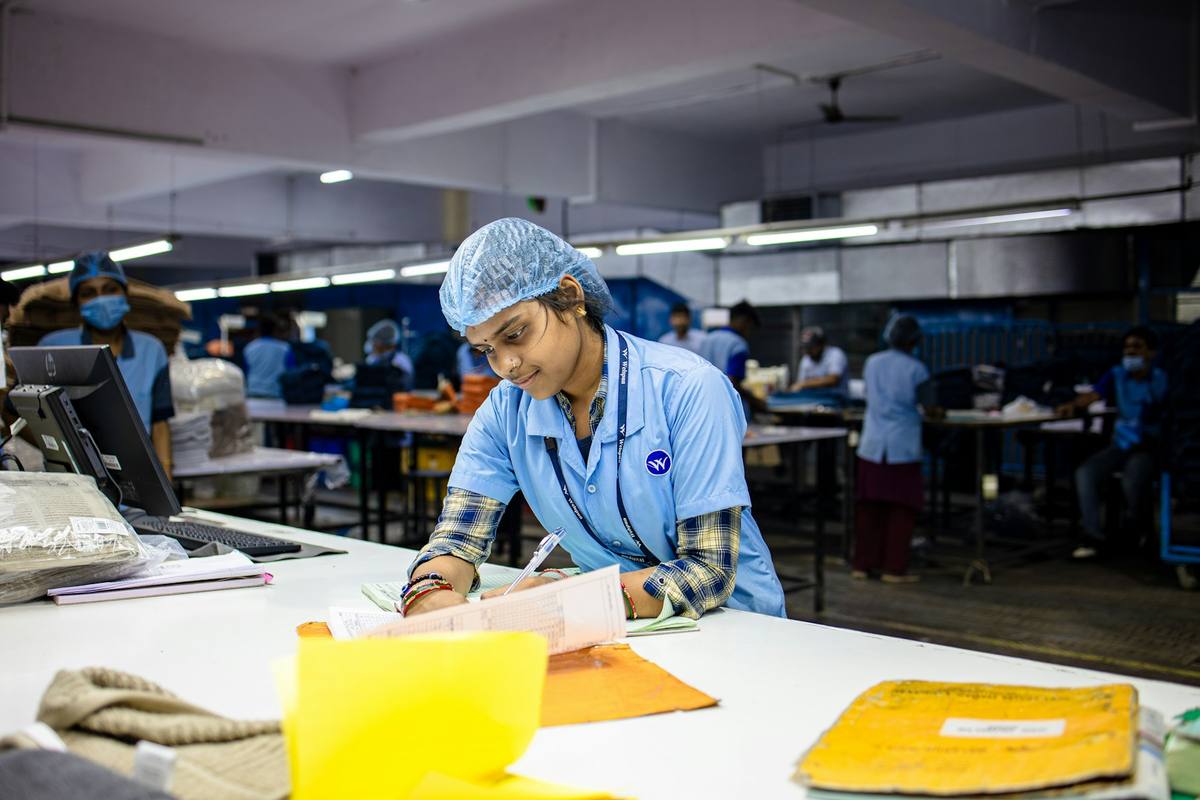
If you remember one sentence, make it this: inspection checks the goods; the audit checks the factory. Product inspection (such as a pre-shipment inspection) happens after the goods are made, checking whether this batch is acceptable; a factory audit happens before you order, checking whether this factory is worth working with at all. Both buy peace of mind — but at completely different moments in the transaction.
What are the four types of factory audit?
Many buyers assume there’s only one kind of audit. In practice, by purpose, there are four. Which one your order needs depends on your product, your market, and your customer’s requirements:
| Audit Type | What It Checks | Who Needs It | Common Standards |
|---|---|---|---|
| License / registration audit | Business license, corporate bank account, legal representative identity, business scope, export qualifications | Every new first-time supplier | No fixed standard; verifies that registration matches on-site reality |
| Quality audit | Production equipment, line capacity, QC staff, test equipment, quality records | Buyers ordering custom parts, OEM, or large-volume orders | ISO 9001 system logic |
| Social compliance audit | Working hours, social insurance, fire safety, underage workers, payroll | Suppliers to Western brands and chain retailers | BSCI, SEDEX (SMETA), SA8000 |
| Anti-terrorism (security) audit | Access control, surveillance, cargo loading security, personnel background management | Suppliers exporting to the US or taking Walmart / Home Depot big-box orders | GSV, C-TPAT |
In practice, the most common combination is license audit + quality audit: first confirm the factory is real, then confirm it can do the job. If you sell through Western retail channels, customers will demand a BSCI or SEDEX report, so the audit has to follow those standards. One important note: passing a BSCI audit does not mean the factory is high quality — it certifies social compliance, not your product’s quality. That’s a misunderstanding we see constantly among buyers new to China.
What is the difference between factory audit and product inspection?
This may be one of the most asked questions in foreign trade, so straight to the table:
| Comparison | Factory Audit | Product Inspection |
|---|---|---|
| What it checks | The factory itself: credentials, capacity, quality system, compliance | The goods: quantity, appearance, function, specifications |
| When it happens | Before ordering / before paying the deposit | After production, before shipment (or mid-production) |
| Who shows up | An auditor on site at the factory | An inspector sampling goods to a sampling standard |
| Output | Audit report (with on-site photos / video) | Inspection report (with AQL results) |
| What it decides | Whether you can work together | Whether this batch can ship |
| Typical duration | 1–2 days | Half a day to 1 day |
An analogy: a factory audit is checking a potential partner’s credit record and assets before you commit; inspection is checking the goods before you hand over the money. Skip the background check and pay up anyway, and you’re in for a long argument later.
We covered the complete pre-shipment inspection process (AQL sampling) in the previous article in this series; this one covers the audit. When you need the exact pass/fail numbers for your batch, grab the free AQL sampling table. Read them together, and both ends of the sourcing chain — selecting the factory and checking the goods — are covered.
What are the six steps of the factory audit process?
Using the standard audit we run for our clients as an example, here’s how one complete audit goes:
Step 1: Document Pre-Review (half a day)
No site visit needed yet. First ask the factory to provide: business license, legal representative ID, bank account opening permit (proof of corporate account), ISO certificates, and invoices from the last 3 months. The auditor then verifies the registration against the public business registry — in particular, whether the license’s registered business scope covers your product category. This single step filters out a large share of trading companies operating under a false front. Licenses that read “daily necessities wholesale” while the company claims to make steel products — we’ve seen plenty.
Step 2: On-Site Verification (1 hour)
The first thing at the factory isn’t the workshop — it’s the address: GPS coordinates vs. the registered address. Same place or not? Then check the signboard, the company nameplate, and the fire exits. This step exists to catch “borrowed sites” — traders who take you to someone else’s factory and present it as their own.
Step 3: Production & Quality System Check (half a day)
Count the equipment and walk the lines: workshop area, number of machines, number of production lines, workers actually on site (count heads — don’t trust the roster). Are the key machines running? A cold, idle workshop is a red flag — it may be a borrowed site. Then QC records, test equipment, calibration labels, recent inspection sheets. Whether there’s a dedicated QC person, and where they sit in the process — these details reveal whether quality management is a real system or window dressing.
Step 4: Interviews (1 hour)
Talk separately to the owner, the QC lead, and the workshop supervisor. Ask the same question to all three; answers that don’t match mean there’s a problem. For example, “how many countries did you export to last year?” — the owner says 12, the supervisor says 6. You know exactly who’s lying. Casually ask a worker “how many days of wages were paid last month” — it tells you more than any payroll sheet.
Step 5: Report (2–3 business days)
Back at the office, the auditor compiles the photos and records into a written report: factory identity, GPS coordinates, scale, equipment list, estimated monthly capacity, key customers and export markets, certificate validity check, and on-site photos and video. The conclusion comes in three tiers: Pass / Conditional Pass / Fail. A conditional pass comes with a list of corrective actions.
Step 6: Corrective Action & Re-Audit (1–4 weeks)
A “conditional pass” factory receives a corrective action plan (CAP) and is re-audited once the items are fixed within the deadline. Re-audits are typically spot checks: only verify that the flagged issues were resolved — no need to re-run everything. This step looks simple, but it filters out factories with the wrong attitude — a factory that won’t even do the corrective actions is not one you can rely on for delivery dates and quality later.
How do factories prepare and how do buyers use the report?
An audit isn’t an interrogation. Done well, it’s a tool both sides use to keep risk out of the order before it’s placed.
If you’re the factory: organize your license, certificates, equipment list, and QC records before the audit; make sure the signboard matches the license name (many factories lose points on this one); and keep workshop aisles and fire exits clear. Getting findings is normal — the attitude you bring to corrective actions matters more than a perfect first pass. In fact, buyers are more wary of the factory that “comes up with zero findings.”
If you’re the buyer: the audit report isn’t just a comfort certificate — it’s negotiating leverage. The factory’s monthly capacity, equipment counts, and customer structure directly determine how much room you have to negotiate price and what order size makes sense. The report shows the factory’s capacity utilization at only 40% in the off-season? You have real room to negotiate lead times. Its main customers are European retailers? Then compliance is probably solid — safe to place large orders on the BSCI track.
What are the five most common factory audit pitfalls?
| # | The Pitfall | How to Avoid It |
|---|---|---|
| 1 | Fake factory: a trader shows you someone else’s factory and calls it their own | Compare the license address against the actual address (GPS); check whether the signboard matches the license name |
| 2 | Doctored documents: photoshopped licenses, expired certificates | Verify the license online in the business registry; check certificates against the issuing body’s website for validity and scope |
| 3 | Staged video audits: the workshop you see on a video call was rehearsed | Use video only as an initial screen; do an on-site audit before any large deposit; ask for a live time stamp during the video call |
| 4 | The too-good-to-be-true price: a “factory” quoting absurdly low prices is usually a trader | When a quote is far below the market, audit first, then negotiate; traders aren’t the problem — paying factory prices for a trader’s goods is |
| 5 | Inspection but no audit: the goods pass, so you repeat the whole painful cycle with the next supplier | The audit is the first gate of supplier management; inspection guards every shipment. You need both |
How Much Does a Factory Audit Cost and How Long Does It Take?
Fees vary with the factory’s distance, size, and product complexity — but hold on to one principle: compared with the loss it prevents, the audit fee is the cheapest money on the entire sourcing chain.
- A typical foreign trade order: US$5,000–50,000
- One standard on-site audit: 1–2 days, usually well under 1% of the order value
- The cost of skipping the audit: a 30% deposit (US$1,500–15,000) written off, or the full value of a shipment lost
If you work through a sourcing agent on a full-service basis, the audit is usually included in the service fee (the industry norm is a 5–8% commission), so there’s no separate charge. Before engaging any agent, get the audit process and fees in writing — that request alone is a mini “agent audit.”
FAQ
Q: Do small first orders also need a factory audit? A: Trial orders under US$1,000 can be simplified (verify the license + corporate bank account + a video walkthrough), but the larger the order, the less you can skip it. Audits scale with risk, not order size — the higher your deposit, the more the audit is worth it.
Q: What’s the typical audit pass rate? A: There are no official statistics, but in our experience fewer than half of factories pass on the first audit; most get a “conditional pass” and need corrective actions. That’s normal — and actually a good sign. It means the audit was real.
Q: If the factory passed BSCI, does that mean it’s reliable? A: BSCI only covers social compliance (working hours, fire safety, social insurance, and so on) — not product quality or delivery capability. Your big customer wants BSCI; you want a quality audit. Two different things.
Q: Can I audit a factory myself? A: Yes — you can verify the license, the corporate bank account, and do a video walkthrough yourself. But a buyer based overseas pays a lot to travel, can be shown a staged show, and lacks the objectivity of a third-party report. A middle path: self-audit small orders, and bring in a professional team for the big ones.
Q: How long is an audit report valid? A: Generally 6–12 months. A factory’s capacity, staff, and address can all change, so re-audit after a year. Customer-mandated BSCI/SEDEX reports follow the customer’s requirements — usually 12 months.
Next Steps
The factory audit is the first gate in the entire sourcing process: choose your sourcing city (Guangzhou or Yiwu) → factory audit → sampling → payment → inspection → shipping — each step covered in this article series.
We’re based in Guangzhou, and visiting factories is our daily work. If you need a new supplier audited, or you’d rather hand the whole sourcing process to a local team, contact us — we’ll reply within 48 hours with a written audit plan and fees.
Related: auditing a CCTV and PTZ camera factory — the same audit logic applied to a security-camera supplier.