Two travelers land in Guangzhou with six factory appointments in five days. The meetings go well — and then the invoice arrives with four hours of overtime, two airport transfers and a second vehicle nobody budgeted for. The factory quotes were never the problem. The day rate was.
Here is how sourcing support in China is actually priced, what the day rate does and does not cover, and the questions that decide the total before anyone gets on a plane.
What does a sourcing day consist of?
Three elements, quoted separately:
| Element | How it is quoted | What to ask |
|---|---|---|
| Interpreter + negotiation assistant | Per person, per working day | How many hours the day covers; the hourly overtime rate; whether the rate is per person or per team |
| Vehicle | Either a metered ride-hailing fare at actual cost, or a 7-seat van with driver at a fixed day rate | How many hours the vehicle day includes; overtime; whether fuel, tolls and parking are inside it |
| Transfers and extras | Separate lines | Airport transfer price; staff hotel on overnight trips; meals |
The number most providers quote first is per person, not per group. A trip with two travelers and two accompanying staff is therefore two staff-days plus one vehicle-day — not “one day rate”. That single misunderstanding is behind most of the invoice arguments we get asked to referee.
Why the base day rarely covers a factory day
Factory days start early and end late. A 09:00 departure for Foshan, two factories, a sample review and the drive back is a 10-hour day before anyone has eaten. The billing structure looks like this:
| Working day | How it is billed |
|---|---|
| 8 hours | One staff-day per person + one vehicle-day |
| 10 hours | One staff-day + two extra staff hours per person (the vehicle is usually still inside its day rate) |
| 12 hours | One staff-day + four extra staff hours per person + a small vehicle overtime charge |
| 14 hours | One staff-day + six extra staff hours per person + vehicle overtime |
Two consequences. Overtime is charged per person, so a long day scales with team size, not with the number of factories visited. And the vehicle’s overtime is a minor line compared with the staff hours — which is why adding a third traveler usually costs more than adding a second factory.
If your schedule runs on factory appointments rather than a fixed plan, agree a cap before the trip — “no day beyond 12 hours without written approval” — and the invoice cannot surprise you.
What is included, and what has to be confirmed
The interpreter rate covers the person’s working day; the vehicle rate covers the vehicle, the driver and fuel. Everything else should appear on the quotation as included or excluded. The six that cause arguments: staff meals; tolls and parking on the van; waiting time at a factory that runs long; airport transfers (Baiyun is about an hour from the city and is a separate job from a factory day); staff hotel if the itinerary needs an overnight outside Guangzhou; and sample courier — who pays and who books the account.
A quotation that lists these six is the difference between a budget you can control and one you cannot.
Ride-hailing or a private van?
Both work, for different itineraries.
Metered ride-hailing suits one or two travelers, meetings in the city, and short hops between showrooms. You pay the real fare, that fare includes fuel, tolls and parking, and there is no minimum charge. Guangzhou’s showroom clusters — furniture and building materials in Panyu and Tianhe, the Canton Fair complex in Haizhu — are close enough that a taxi between two stops is often ten minutes.
The 7-seat van suits three travelers, city-to-city days, and sample collection. Three reasons: seating — seven seats including the driver, so three travelers plus two staff leave two seats for sample cartons; continuity — the driver waits at the gate, you do not queue for a car in Shunde at 18:00; samples — cartons stay in the vehicle instead of being carried through every lobby.
A mixed itinerary is normal: ride-hailing in the city, van on the Foshan–Zhongshan–Dongguan days.
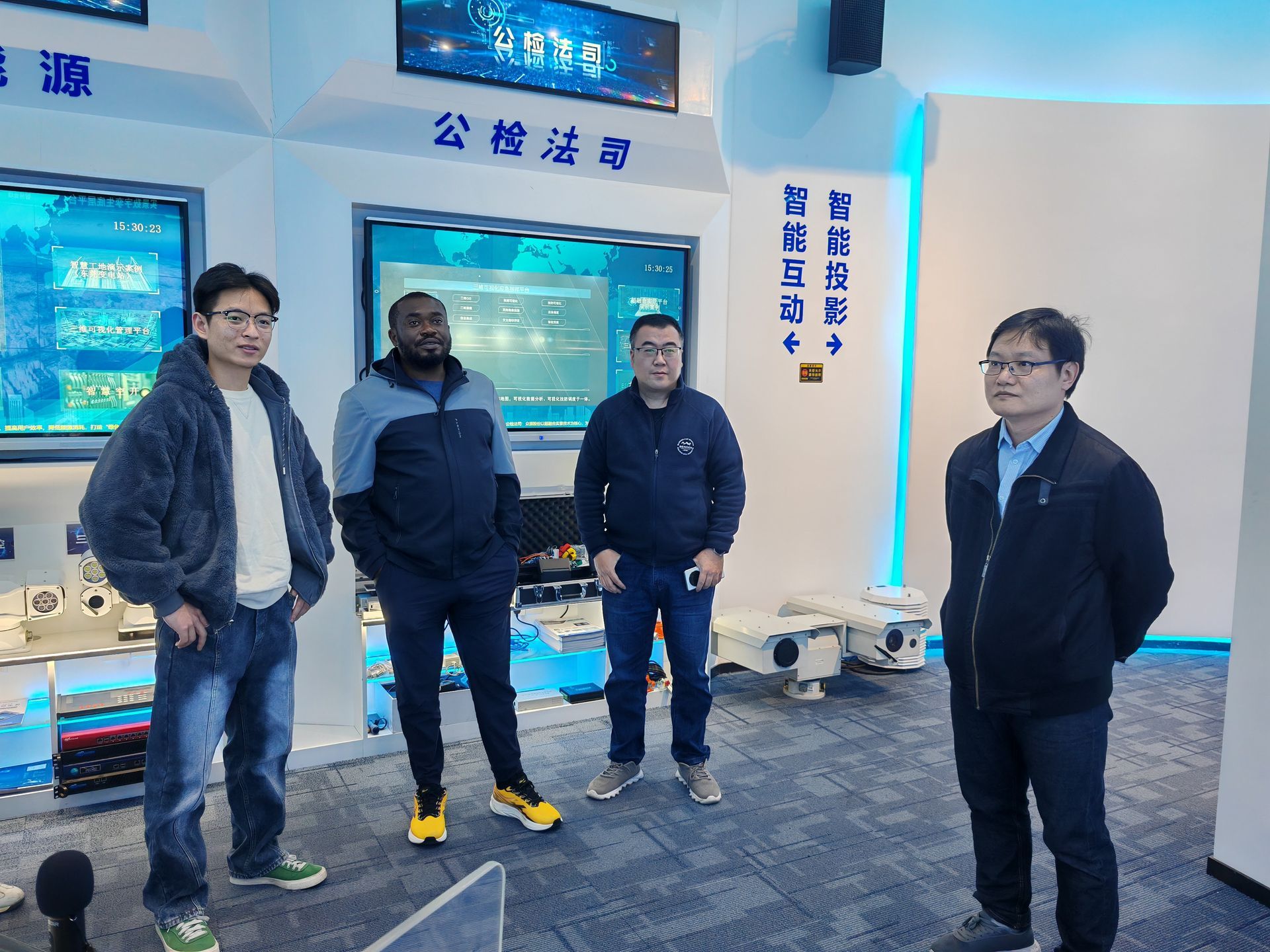
What the interpreter actually does in a negotiation
Interpreting is maybe half the job. In a factory meeting the interpreter is also the person who stops you signing a price you cannot compare.
They force the price apart. A Chinese quotation arrives as one number; the useful version separates material, labour, tooling, packaging and margin band, because that is the only way to compare two factories quoting “the same” product. The interpreter asks in the room, while the sales manager is still there.
They hear the difference between yes and maybe. Chinese suppliers answer “yes” to questions they have not understood, and 可以 / 应该没问题 / 差不多 are three different levels of certainty. Literal translation flattens them into “yes”. Telling you afterwards which commitments were real is part of the job.
They price the volume ladder. One visit should produce prices at 500, 1,000 and 5,000 pieces, not only the quantity you happened to mention. It costs nothing while you are sitting there, and it is the number you negotiate with later by email.
They test capacity, not promises. “Thirty days” from a factory running three shifts on your product is a different risk from “thirty days” from one fitting you in between hotel projects. Line count and current backlog are the questions that matter.
They label the sample. Your code, factory name, quoted price and date, written on the bag and photographed. Three weeks later, in your office, an unlabelled sample is worthless.
They write the summary before you leave the car park. What was quoted, what was promised, next step and date, sent to your WhatsApp group the same evening. Verbal agreements that nobody wrote down turn into a different price when the PI arrives.
Language: English–Chinese as standard, Spanish by arrangement
Our working pair is English and Mandarin. Spanish is available on request and depends on availability on your dates, so confirm it when you book — not on the morning of the first meeting. If your team travels from Latin America, send the specification, target price and sample requirements in writing before you fly: a written spec survives a bad interpreter, a spoken one does not.
Which cities are covered, and what about travel outside them?
| Area | Coverage |
|---|---|
| Guangzhou, Foshan, Zhongshan, Dongguan, Shenzhen | Same-day from our Guangzhou base; all within roughly one to two hours by road |
| Shanghai | Not covered by our team — engage a local team there |
| Other provinces (Fujian, Zhejiang, Jiangsu) | Possible as an out-of-town itinerary, quoted per day plus the crew’s travel and hotel |
The practical rule for travel outside the main city is one factory cluster per day. Foshan (ceramics, sanitaryware, doors, aluminium), Zhongshan (lighting, locks, hardware) and Dongguan (furniture, electronics) each justify a day; Foshan in the morning and Dongguan in the afternoon means four hours in the van and two rushed meetings.
Longer runs — two days in Fujian, or Chaozhou — push an 8-hour day to 12 or 14, which is exactly the overtime structure above. Two normal days with a hotel cost less than one heroic day.
For a trip split between Guangdong and Shanghai, the honest answer is two local teams: a Guangzhou crew flying to Shanghai burns a travel day each way and bills it at the same rate as a factory day.
What if the assigned person is unavailable?
A colleague takes the day, accompanied by an interpreter, and you get a written handover: confirmed appointments, prices already agreed, samples taken, questions still open. Two things make that work: everything agreed is written down the same day, and the WhatsApp group stays the same.
How to compare two quotes without an argument later
Quotes rarely arrive on the same basis, so normalise them before you compare totals. Convert both into these eight lines:
- Number of staff-days quoted, and whether that is per person;
- Hours included in one staff-day;
- Overtime rate, per person per hour;
- Vehicle type, hours included in the vehicle day, and its overtime rate;
- Whether fuel, tolls, parking and waiting are inside the vehicle rate;
- Airport transfers included or extra;
- Meals and staff hotel included or extra;
- Anything the provider lists as excluded.
Then divide each total by the number of factory days in your itinerary. Cost per factory day is the only figure worth comparing: a provider whose day rate looks higher but includes ten hours, the vehicle and the transfers is often the cheaper one once you count the overtime you would otherwise pay. Divide again by traveler headcount and you have cost per traveler, which is the number your board actually asks about.
Planning a cheaper trip without cutting the interpreter
- Cluster factories by district. One day in Foshan, one in Dongguan — the road time is paid either way, so do not pay overtime for it.
- Book meetings that start at 09:30 and finish by 16:30, so the day closes inside the base hours.
- Send the spec and target price in advance. A meeting that starts from zero runs into overtime; one that starts from a written page does not.
- Match the vehicle to the day: ride-hailing in the city, van when you are collecting samples or moving between cities.
- Keep the interpreter; drop the second assistant on days with one appointment and no negotiation.
Ten questions to ask before you book
- How many hours does the base rate cover, and what is the extra-hour rate?
- Is that rate per person or per group?
- What vehicle, how many seats, and how many hours are included?
- Are tolls, parking and waiting time in the vehicle rate?
- Who exactly will attend, and what is the backup if they cannot?
- Which languages, and can Spanish be confirmed for your dates?
- What is the policy for a day outside the main city, or an overnight?
- Are meals and staff hotel included or separate?
- Two references from similar assignments, with dates and sectors.
- Business licence number, and the company name that will invoice you.
We answer all ten in writing before a booking is confirmed, and provide two video references from recent accompanied trips (Tanzania and Nigeria) plus our business licence on request.
Next step
Send your dates, cities, number of travelers, product categories and how many factory appointments you expect per day. Within 24 hours you get a written day plan and a line-item cost table: staff-days, vehicle-days, expected overtime, transfers, and the items listed as excluded — so the invoice total matches the total you approved.
Still deciding whether to run factories yourself? Read how a sourcing agent works and the 2026 sourcing agent fee guide. For the Guangzhou-specific version, our Guangzhou sourcing services page covers what happens between factory visits.