Language barriers and vast distances can ruin your cross-border sourcing experience in China. Stop risking your purchasing funds on unverified vendors. Cantonmade provides the ultimate 15-step Standard Operating Procedure (SOP) designed specifically for international clients.
Why can cross-border sourcing be risky?
Global buyers face practical difficulties: the inability to verify the true situation of Chinese suppliers, a lack of on-site production supervision, and poor quality control. A single mistake can cost thousands in defective goods. Common failure points include:
- Deposit fraud — paying 30% upfront to a “factory” that turns out to be a trading company or disappears
- Quality drift — the sample looks perfect, but mass production uses cheaper materials
- Communication gaps — technical specs get lost in translation, and defects only surface at the port of arrival
- Hidden costs — unexpected freight, inspection, or compliance fees that blow the budget
A professional sourcing agent exists precisely to close these gaps. By being physically present in China, they turn a distant, high-risk process into a verifiable one.
What Exactly Does a Sourcing Agent Do?
A China sourcing agent is your on-the-ground buying department. Unlike a trading company that buys from you and resells (marking up 15-40%), a sourcing agent works on your behalf — you sign the factory contract, you pay the factory directly, and the agent earns a transparent commission (typically 5-8%) for managing the process. The incentives are aligned: the agent’s job is to get you the best factory price, not the highest markup.
This is the key difference from a trading company — see our buying agent vs sourcing agent comparison for the full breakdown.
The 15-Step Sourcing Workflow
Cantonmade’s dedicated local sourcing agents guide you from initially understanding your needs to safely shipping goods to your location:
- Receiving the Sourcing Task — Clear brief intake
- Communicating and Analyzing Your Needs — Deep dive into requirements
- Finding Potential Suppliers — Broad market search
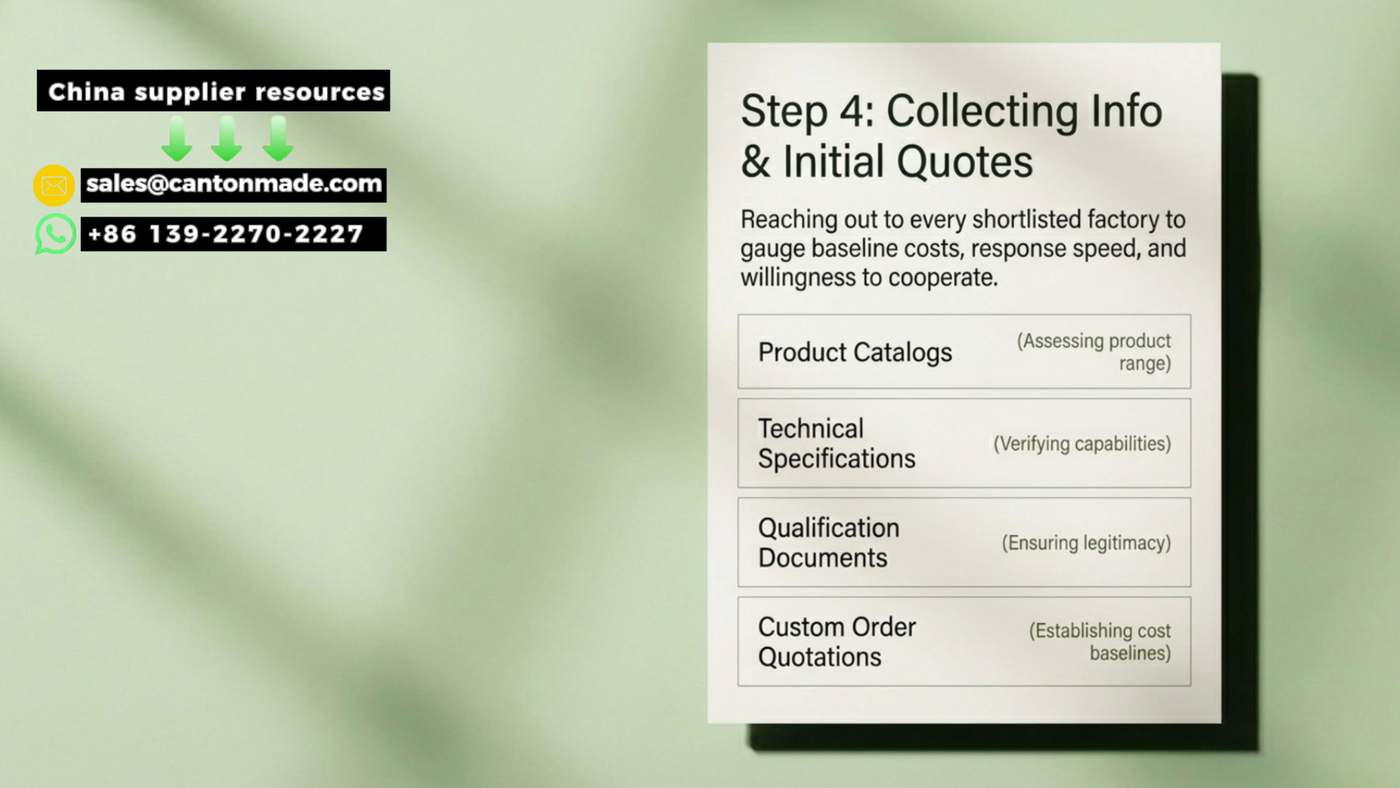
- Collecting Information and Initial Quotes — Data-driven shortlisting
- Precisely Screening Target Suppliers — License checks, factory verification
- Creating a Visit Itinerary — Efficient route planning
- Arranging All Travel Logistics — If you visit in person
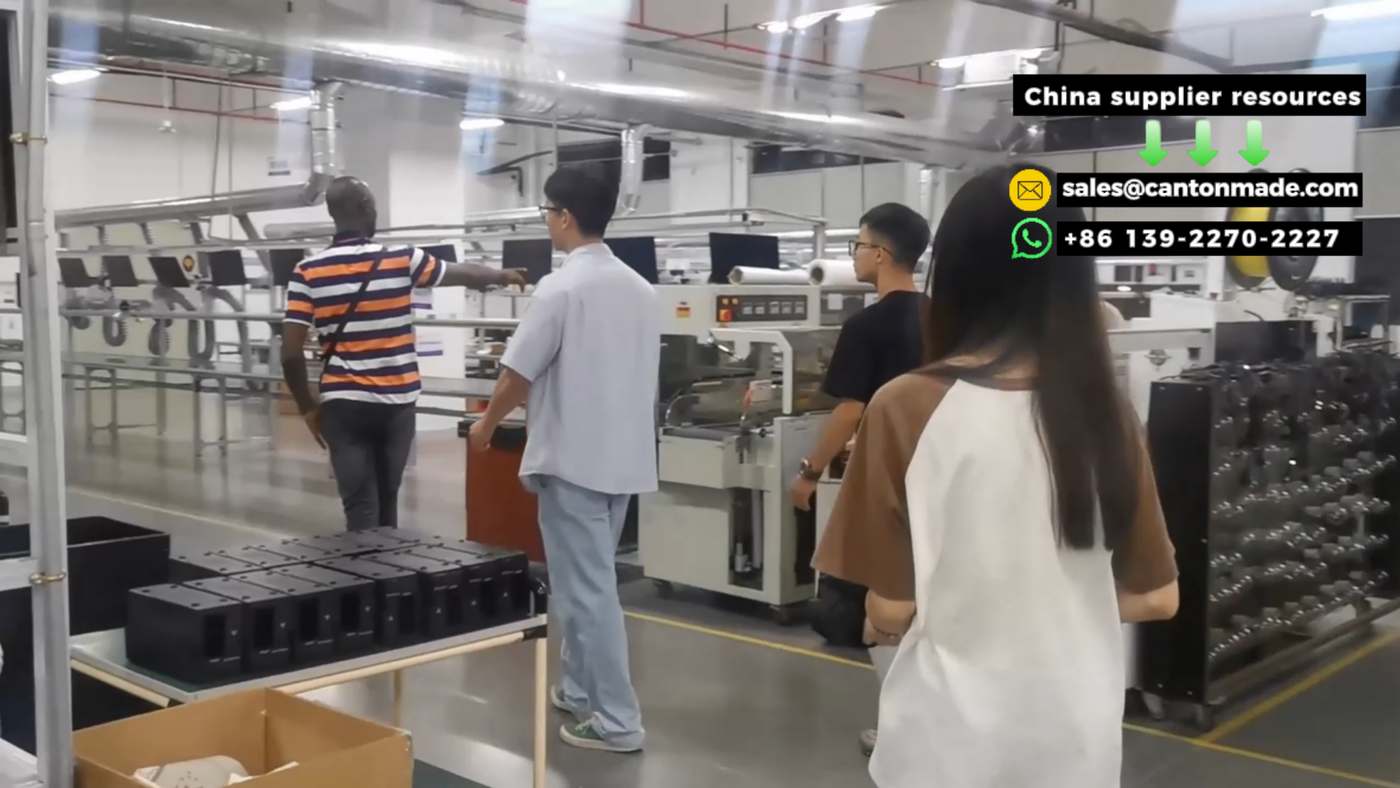
- Taking You on Company Tours — Or we go on your behalf
- In-Depth Business Negotiation — Price, MOQ, lead time discussions
- Signing the Chinese Contract and Paying the Deposit — Legal protection
- Quality and Lead Time Supervision During Production — Ongoing monitoring
- Production Completion and Final Payment — Verified before release
- Warehouse QC and Packaging Protection — Final inspection
- Shipping to Domestic Logistics — Warehouse receipt obtained
- Negotiating International Freight and Final Shipping — Door-to-door
Where is the real value in the sourcing workflow?
Most buyers assume the value of an agent is “finding factories.” In practice, the highest-value steps are the verification and supervision ones:
- Step 5 (Supplier Screening) is where factory audits happen — license verification against government databases, physical site checks, and red-flag detection. This is what protects your deposit.
- Step 11 (Production Supervision) is where quality drift is caught. An agent visits the production line, checks materials against the approved sample, and flags deviations while they’re still fixable.
- Step 13 (Warehouse QC) is the final gate before goods leave China — the pre-shipment inspection that verifies quantity, quality, and packaging.
Deploy this standardized checking system to eliminate blind spots caused by distance and language, ensuring a safe, high-quality purchasing experience for every task.
How Much Does a China Sourcing Agent Cost?
The most common fee model is commission-based: 5-8% of the factory price, paid on each order. Because you pay the factory directly, the commission is fully transparent — there is no hidden markup. Some engagements use a monthly retainer for ongoing sourcing support, and one-off tasks (a single factory audit or inspection) are quoted as fixed fees. Always get the fee structure in writing before starting.
How Long Does the Whole Process Take?
A typical order runs 30-60 days: 1-2 weeks for supplier discovery and screening, 1-2 weeks for sampling and negotiation, 15-30 days of production (product-dependent), then international shipping. An experienced agent will set realistic expectations up front and flag schedule risks early — a good process beats a rushed one.
How to Get Started
Send your product brief — drawings, photos, target price, quantity, and destination market. Within 48 hours you’ll receive a sourcing plan with a fee quote. For a deeper look at the entire agency landscape, our best China sourcing agents comparison and the sourcing agent guide cover how to pick the right partner.
Related reading: the sample process, step by step and how to compare factory quotes.
Related: if your project includes security cameras, access control, structured cabling or hotel low-voltage packages, start with our ELV systems sourcing hub.