
DDP and DAP differ on exactly one thing: who pays the import duty, the import VAT and the clearance at destination. Under DDP (Delivered Duty Paid) the seller pays them. Under DAP (Delivered at Place) you pay them. Everything before that — pickup, consolidation, export declaration, freight, the risk of loss in transit — is the seller’s job under both.
That split decides whether your landed cost is locked before you order or discovered after arrival — and the difference is rarely duty alone. It is the broker’s minimum fee and the storage invoice that starts the day cargo lands uncollected.
This guide compares the two terms point by point, shows what DDP from China costs into the US, UK, EU and Canada, and explains when DAP is the smarter choice — and when it is a trap.
What is the difference between DDP and DAP in one table?
| Point | DDP (Delivered Duty Paid) | DAP (Delivered at Place) |
|---|---|---|
| Main freight and delivery | Seller | Seller |
| Export declaration in China | Seller | Seller |
| Import clearance at destination | Seller | You |
| Import duty and import VAT | Seller | You |
| Importer of record | Seller’s import arrangement | You, with your own tax number |
| Risk transfers at | The named destination, goods not unloaded | The named destination, goods not unloaded |
| Your paperwork | None | Invoice, packing list, your EORI/VAT/BN, broker appointment |
| Cost certainty | One fixed door-to-door price | Freight fixed; duty and VAT unknown until clearance |
| Fits best | First orders, no forwarder, no VAT number abroad | Experienced importers with a number and a broker |
Two things surprise buyers. DAP is not “DDP minus duty” — the seller still owns the whole journey and delivers to your door; what changes is that your door is where responsibility stops. And risk transfer is identical under both: goods sit at your disposal at the named place.
Who pays duty and VAT under DDP vs DAP?
Under DDP we file the import entry and pay duty and import VAT, then deliver: you receive cartons, sign, and nothing else. Under DAP the carrier hands you documents and a bill — the entry must be filed by an importer of record, and that party is you.
No honest forwarder quotes the number from memory. Duty depends on the HS code of your product and the destination country; import VAT depends on the destination’s rules and your tax status. Both must be confirmed per shipment and per product — never estimated from a table someone posted online.
That is the practical argument for DDP on a first order: one number that already includes duty and VAT, so you can price your product for resale before you wire the deposit.
What does DAP require from you that DDP does not?
Three things, and all three are yours alone:
- An importer number in the destination country. Under DAP the buyer must clear the goods: a UK EORI number plus a VAT number for the UK, an EU EORI/IOSS registration for Europe, a BN or importer number for Canada.
- A customs broker. Someone must file the entry, classify the goods, and release them. DAP cargo does not self-clear.
- Cash flow for duty and VAT at arrival. There is no deferral unless you arrange it yourself. Cargo that lands with no one to clear it accrues storage costs from day one.
If you cannot tick all three, DAP in the strict sense is not available to you — and a supplier who quotes “DAP” without asking about your tax number has quoted something that will not work.
What does DDP shipping from China cost?
Our contract forwarder rates are indicative, in RMB per kg, from the rate card effective 2026-09-22. Ranges move with product type, destination postcode, weight and season, so treat them as a planning band, not a price:
| Destination and lane | Indicative range | Transit |
|---|---|---|
| US air (mainland China flights, DDP) | RMB54–66/kg (West), 55–67 (Central), 56–68 (East) | 6–8 working days to pickup |
| US air (Hong Kong or Korea flights, batteries accepted) | RMB57–69/kg (West), 58–70 (Central), 59–71 (East) | 7–9 working days |
| US sea LCL (express or standard service) | RMB13.5–20/kg express; RMB10.8–17/kg standard | — |
| UK air, own VAT or VAT deferred | RMB36–50/kg | 5–7 working days after clearance |
| UK air, duty paid and VAT paid | RMB38–53/kg | 5–7 working days after clearance |
| UK rail-truck (own VAT, deferred or duty paid) | RMB13–19/kg | 25–30 days after loading |
| Europe air | RMB30–41/kg; RMB33–44/kg with batteries | — |
| Europe sea LCL | RMB8–16.5/kg | 40–45 days |
| Europe rail-truck | RMB14–23/kg | 22–25 days |
| Canada sea LCL, Vancouver | RMB1,450–3,300 per CBM | 25–30 days to door |
| Canada sea LCL, Toronto | RMB1,550–2,250 per CBM | 35–40 days to door |
US air zones follow the ZIP code: 8–9 West, 4–7 Central, 0–3 East. Chargeable weight uses a volumetric divisor of 6,000, and above 100 kg actual weight half the volumetric weight can be split off. US air starts at 12 kg per shipment, with a 12 kg minimum per piece; commercial addresses add RMB1/kg, residential addresses RMB45 per piece.
A DAP quote is normally lower than the DDP line for the same cargo because duty and VAT are excluded — arithmetic, not savings. Every rate above is a band: send the product, weight, destination postcode and deadline for a firm figure, or sanity-check the door-to-door leg on our China–USA shipping cost calculator or China–Europe shipping cost calculator. Both work from the same forwarder rate card.
Which UK route replaces DAP, and which one do you want?
The UK is where DDP and DAP blur, because three import VAT treatments are routinely quoted and they are not the same product. If you are a UK company with a UK VAT number, the first two options below give you exactly the benefit DAP offers — your VAT stays yours — without you having to appoint a broker:
| Route | Who owns the VAT | Clearance fee | Notes |
|---|---|---|---|
| Own VAT | You — import VAT declared on your VAT number | RMB200 per shipment | No product surcharge; VAT usually recoverable in your quarterly return |
| VAT deferred | You — deferred through Postponed VAT Accounting | RMB200 per shipment | No cash outlay at import; VAT appears on your return |
| Duty paid | Seller — duty and VAT included | Surcharge by product category | Fully landed price; zero customs action for you |
A non-UK company cannot use the first two routes: they need a UK VAT number — the same place a plain DAP quote collapses, and why DDP is our default for first UK shipments. We go deeper in UK import VAT: own VAT vs deferred.
Is DDU still a valid term, and where does CIF fit?
No. DDU (Delivered Duty Unpaid) was replaced by DAP in the 2010 revision, and Incoterms 2020 contains no DDU entry. The two describe the same allocation, so anyone quoting DDU today means DAP — but the old name hides a useful question: who files the import entry?
CIF is different again: the seller pays freight and insurance to the destination port, and everything after the port — terminal charges, clearance, duty, delivery — is yours. For a side-by-side of all eleven rules, see Incoterms 2020 explained.
When is DAP the better choice?
DAP wins in four situations:
- You are a registered importer with your own broker and you want duty and VAT filed under your own number, so the VAT is reclaimable in your own return rather than buried in a seller’s price.
- You import regularly. Broker relationships and customs procedures amortise, and you stop paying someone else’s handling margin.
- You want to control the customs valuation yourself, for example because your product’s classification is contested and you want your own broker defending it.
- Your destination rules are complex enough that you want to own compliance — the EU’s IOSS/OSS treatment for low-value B2C consignments being the classic case, where a seller cannot easily stand in your shoes.
Every one of those assumes you already own the customs process.
What goes wrong under DAP that does not happen under DDP?
You are the one liable for a wrong declaration. Importers get prosecuted for under-declared values by US CBP, UK HMRC and Canada’s CBSA — penalties, seizure, and a compliance record that follows your company. Under DDP the declaration is built by us, honestly, which is why we refuse to under-declare on anyone’s behalf.
You inherit the duty bill on products with extra exposure. The US anti-dumping and countervailing watchlist covers 13 product groups we track, among them fasteners, steel nails, aluminium profiles, solar cells, bedroom furniture, laminate flooring, tyres, bicycles and honey. Duty on those is not a rounding error; it is the reason a DDP quote is the only figure worth budgeting from.
You own the claim window. Claims run on fixed clocks: within 20 days if cargo was not collected, within 60 days of the shipment date while in transit, and within 7 days after signed receipt. Air claims pay RMB40/kg without refunding freight, sea claims RMB20/kg, and the ceiling after handoff to last-mile delivery is USD100 per shipment. Delays between mid-November and February are excluded, as is breakage on fragile goods and partial loss. If you clear your own cargo under DAP, the handoff gaps widen — and a missed window is a dead claim.
FAQ
What is the difference between DDP and DAP in one sentence? Under DDP the seller clears the goods for import and pays duty and import VAT; under DAP the seller delivers to your door but you clear the goods and pay duty and VAT. Everything before the destination border is the seller’s job either way.
Is DDP more expensive than DAP? The DDP line is higher because it contains duty, import VAT and clearance. Your total is often close to DAP once your broker’s minimum fee, disbursement charges and per-shipment clearance costs land. Compare totals, never headline rates.
Who is the importer of record under DAP? You are. DAP requires your own importer number — a UK EORI plus VAT number, an EU EORI/IOSS registration, or a Canadian BN/importer number — plus a broker to file the entry.
Can I ship DAP if I have no VAT number or broker? Not in practice. Cargo that lands under DAP with no importer of record sits in storage or goes back. Choose DDP instead, or use our own-VAT and deferred routes, where we clear on your number for a RMB200 per shipment clearance fee.
Is DDU the same as DAP? Yes in practice, but DDU no longer exists: the 2010 revision replaced Delivered Duty Unpaid with DAP, and Incoterms 2020 has no DDU entry. Ask any supplier still quoting DDU who files the import entry.
Does a DDP price cover US anti-dumping duty? Only where we have quoted it for your product. Anti-dumping and countervailing exposure on fasteners, nails, aluminium profiles, solar cells, bedroom furniture and laminate flooring changes the landed cost materially. Send us the product and destination and we confirm per shipment.
What is the bottom line on DDP vs DAP?
Choose DDP for a landed cost you can bank on with no customs work: one price, duty and VAT inside, delivery to the door. Choose DAP when you own an importer number and a broker and want duty and VAT filed under your own name — and accept that the customs work, the liability and the claim windows become yours.
The failure mode is not picking the “wrong” Incoterm. It is quoting DAP without an importer of record, or comparing a DAP number against a DDP number and believing the gap is savings. Send us the product, weight, destination postcode and deadline and we will price both bases — our shipping service runs door-to-door DDP across the US, UK, EU and Canada, with US air lanes from 12 kg and sea LCL from RMB10.8/kg. Replies within 12 hours, 09:00–19:00 GMT+8, Monday to Saturday, on WhatsApp +86 139 2270 2227, or through the contact form.
Related Guides
- What is DDP shipping? — the term itself, what a DDP price includes, and what it does not.
- DDP shipping from China — lane-by-lane costs, chargeable weight, packaging rules and claims.
- Incoterms 2020 explained: EXW vs FOB vs CIF vs DDP — all eleven rules and who pays what under each.
- Shipping from China: sea vs air vs express — how to pick the mode before you pick the term.
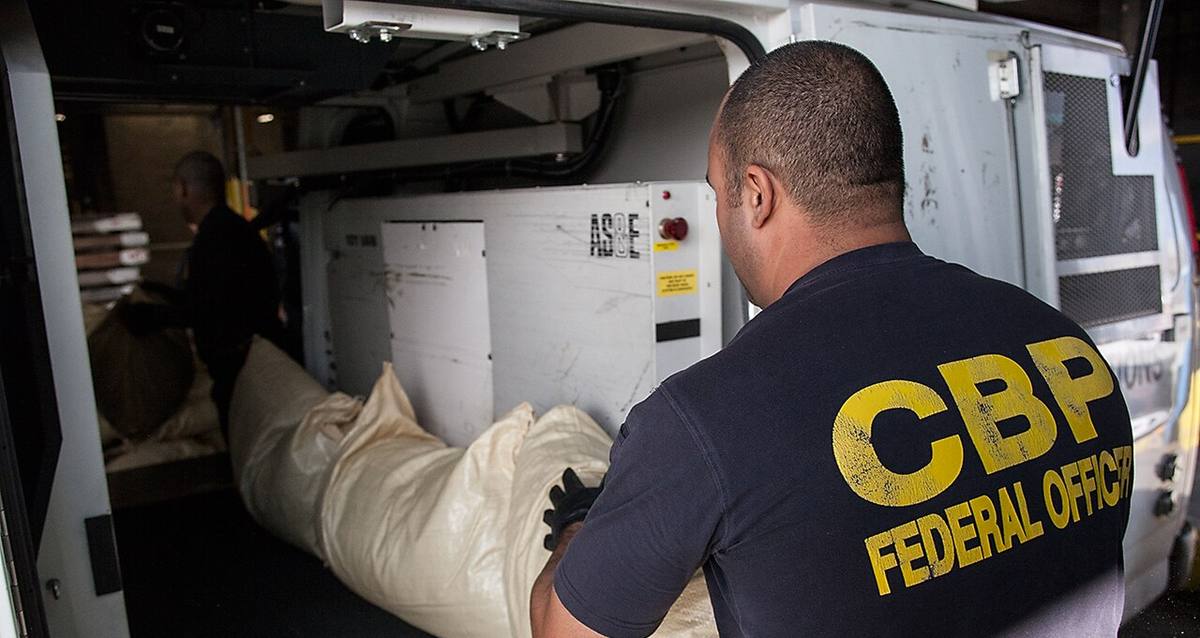
Photo credits: cover - U.S. Customs and Border Protection (public domain, via Wikimedia Commons).