
Incoterms 2020 decides two things the moment you agree a price with a supplier in China: who arranges and pays for each leg of the journey, and the exact point where the goods stop being the seller’s risk and become yours. Every quotation you receive — FOB Shenzhen, CIF Rotterdam, DDP Chicago — is one of 11 standard rules, and that rule decides whether an unexpected invoice lands on your desk after the ship arrives.
The same factory price becomes a very different landed cost depending on the rule. Under EXW you also buy the trucking in China, the export declaration, the ocean freight, clearance, duty and delivery. Under DDP the seller arranges all of it and hands you one door-to-door number. Most after-arrival disputes start with different assumptions.
Below: all 11 terms in tables, the four rules importers actually use (EXW, FOB, CIF, DDP), how to choose between them, and the eight questions buyers ask us most. For the transport side, see our shipping from China guide.
What are Incoterms 2020, in one paragraph?
Incoterms 2020 are the International Chamber of Commerce’s standard trade terms, in force since 1 January 2020 and built into contracts for goods crossing a border. They define who arranges and pays for carriage, export clearance, import clearance, insurance and delivery — and separately, the point where the risk of loss or damage passes from seller to buyer. They do not cover the price of the goods, payment terms, title or quality; those belong in your proforma invoice and sales contract.
There are 11 rules in two groups: seven that work with any transport mode (EXW, FCA, CPT, CIP, DAP, DPU, DDP) and four reserved for sea and inland waterway shipments (FAS, FOB, CFR, CIF). Two details: DAT was renamed DPU in 2020, and DDU was withdrawn years ago — a supplier quoting “DDU” means DAP, and DAP is not DDP.
What are the 11 Incoterms 2020 rules, and who pays what under each?
Two patterns are worth memorising. In the C-rules (CFR, CIF, CPT, CIP) the seller pays the carriage to destination, but risk still transfers at origin — if cargo is damaged mid-ocean the buyer carries the loss. And only DAP, DPU and DDP reach the destination; only DDP also clears the import and pays the duty and import taxes.
The seven rules that work with any transport mode
| Rule | Risk passes when | Seller arranges and pays | Buyer arranges and pays |
|---|---|---|---|
| EXW — Ex Works | Goods are placed at the buyer’s disposal at the named place (usually the factory), not loaded | Packing only | Loading, inland transport in China, export declaration, main carriage, insurance, import clearance, duty, delivery |
| FCA — Free Carrier | Goods are handed to the carrier the buyer nominated, at the named place | Delivery to the named place, export declaration | Main carriage, insurance, import clearance, duty, delivery |
| CPT — Carriage Paid To | Goods are handed to the first carrier | Carriage to the named destination, export declaration | Insurance, import clearance, duty, delivery from the named destination |
| CIP — Carriage and Insurance Paid To | Goods are handed to the first carrier | Carriage to destination, export declaration, insurance on Institute Cargo Clauses (A) | Import clearance, duty, delivery from the named destination |
| DAP — Delivered at Place | Goods arrive at the named place ready for unloading | Everything up to the named place, including main carriage | Unloading, import clearance, duty and taxes, delivery from that place |
| DPU — Delivered at Place Unloaded | Goods are unloaded at the named place | Everything including unloading at destination | Import clearance, duty and taxes, delivery from that place |
| DDP — Delivered Duty Paid | Goods are at the buyer’s disposal at the destination, cleared and ready for unloading | Everything: carriage, insurance, export and import clearance, duty, import taxes, delivery | Nothing beyond unloading and any later movement |
The four rules reserved for sea and inland waterway freight
| Rule | Risk passes when | Seller arranges and pays | Buyer arranges and pays |
|---|---|---|---|
| FAS — Free Alongside Ship | Goods are alongside the vessel at the named port of shipment | Inland delivery to the quay, export declaration | Loading on board, main carriage, insurance, destination charges, clearance, duty, delivery |
| FOB — Free On Board | Goods are on board the vessel at the named port of shipment | Getting the goods on board, export declaration | Main carriage, insurance, destination charges, import clearance, duty, delivery |
| CFR — Cost and Freight | Goods are on board at the port of shipment, exactly as FOB | On board, export declaration, ocean freight to the destination port | Insurance, destination charges, import clearance, duty, delivery |
| CIF — Cost, Insurance and Freight | Goods are on board at the port of shipment | On board, export declaration, ocean freight, minimum-cover insurance to the destination port | Destination charges, import clearance, duty, delivery |
Three notes matter more than the tables. FCA is the rule the ICC recommends for containers, because goods are handed to a terminal rather than loaded onto a ship; 2020 added an option where the carrier issues an on-board bill of lading to the seller, which keeps letter-of-credit paperwork workable. CIF insurance is minimum cover, on Institute Cargo Clauses (C), not a comprehensive policy. And DDP is the only rule where the seller pays the import taxes.
What do EXW, FOB, CIF and DDP look like side by side?
These four cover most of the quotations we see, and they sit at very different points on the chain.
| EXW | FOB | CIF | DDP | |
|---|---|---|---|---|
| Who books and pays the main freight | Buyer | Buyer | Seller to destination port | Seller, all the way to the door |
| Who files the export declaration in China | Buyer | Seller | Seller | Seller |
| Who clears the import and pays duty and import taxes | Buyer | Buyer | Buyer | Seller |
| Insurance | Buyer’s own | Buyer’s own | Seller, minimum cover (Clauses C) | Seller, inside the price |
| Risk passes | At the factory gate | On board at the Chinese port | On board at the Chinese port | At your door, cleared |
| What the buyer still has to organise | Freight, customs on both sides, duty, delivery | Destination charges, clearance, duty, delivery | Destination charges, clearance, duty, delivery | Nothing |
| Typical buyer | Has a China-side forwarder who can act as exporter of record | Has its own forwarder, broker and duty strategy | Shipping non-container bulk, or budgeting on the port-to-port number | Wants one landed number and no customs work |
The row that surprises people is the risk line: CIF looks hands-off because the seller pays freight and insurance, yet your risk starts when the goods go over the rail at the Chinese port. That is why our shipping service is quoted in two clear modes: door-to-door DDP, where dual clearance, duty, import taxes and delivery sit inside one number, and delivered-at-place arrangements for buyers who clear with their own customs resources.
How do you choose between EXW, FOB, CIF and DDP?
Choose DDP if you have no customs setup, or you want a predictable landed cost. One door-to-door number covers freight, dual clearance, duty, import taxes and delivery, and the seller produces the documents — the lowest-friction route for first orders and Amazon FBA restocks. US buyers can price that leg in our China–USA shipping cost calculator, built on a real forwarder rate card and your zip code; European buyers can use the China–Europe shipping cost calculator.
Choose FOB if you already have a forwarder and your own duty strategy. It is the most transparent rule we work with: you see the ocean freight, destination charges and duty lines yourself, and can consolidate several suppliers into one container. Your risk starts on board at the Chinese port, so compare total landed cost rather than the factory price.
Treat CIF as a port-to-port rule, not a door-to-door one. It is the middle option that traps first-time importers: the ocean freight is inside the quotation, which makes it feel close to DDP, but destination charges, clearance, duty, import taxes and delivery arrive later as separate bills, and the insurance is the minimum the rule allows.
Use EXW only if someone in China can act as the exporter of record. Under EXW the buyer files the Chinese export declaration, which is awkward without a Chinese entity, and owns the risk from the factory gate, loading included. FCA gets nearly the same commercial result with the seller declaring the export.
Two practical rules apply whichever you pick. Always name the place: “FOB” alone is incomplete, “FOB Yantian, Shenzhen” is a contract. And never declare below the real value — under-declaration is illegal at destination, and authorities can reassess the shipment and fine the importer later.
What are the 8 questions buyers ask us most?
What is the difference between FOB and CIF?
Under FOB the seller’s job ends when the goods are on board at the Chinese port; you book the ocean freight, insurance, clearance and delivery. Under CIF the seller also pays freight and minimum-cover insurance to the destination port, but risk still passes at origin and everything after arrival is yours.
Is DDP cheaper than FOB?
On paper no — a DDP price contains the freight, dual clearance, duty, import taxes and delivery that an FOB price leaves out. Compare total landed cost per unit. FOB is often genuinely cheaper if you have your own forwarder and duty strategy; if you do not, DDP usually is.
Who is the importer of record under DDP?
On a door-to-door DDP service the seller or the seller’s agent is the importer of record: we clear the shipment in the destination country and the duty and import taxes sit inside the quoted price. The buyer has no customs contact at all — no broker to appoint, no form to file at the border.
Who pays import VAT under DDP, and can I import on my own VAT number instead?
Under DDP the import VAT is inside the price. If you are registered at destination, importing on your own VAT number, or using postponed VAT accounting, can be more efficient: the tax goes on a return you were filing anyway. We quote both routes: duty paid, or delivered at place with clearance on your own VAT number.
Is the insurance included in CIF good enough?
CIF requires only minimum cover, on Institute Cargo Clauses (C), which leaves out many perils. The 2020 edition upgraded CIP to require all-risk cover on Clauses (A), but the CIF minimum stayed where it was. For valuable or fragile cargo, buy your own all-risk policy or ask for Clauses (A) in writing.
Can I use FOB for an air or rail shipment?
No. FAS, FOB, CFR and CIF are reserved for sea and inland waterway transport. Air, rail and courier shipments use FCA, CPT, CIP, DAP, DPU or DDP. Suppliers still write “FOB” on air quotations out of habit, so when the rule does not match the mode, ask which one the price is built on.
Does the Incoterm change the goods price, or who owns them?
Neither. Incoterms 2020 allocate cost and risk, not product price, payment terms, title or quality. Those live in the proforma invoice and the sales contract — which is why the trade term and the payment milestones should always be read together before a cent moves.
What is wrong with an Incoterm that names no place, or one that says DDU?
An Incoterm without a named place is incomplete: insist on “FOB Yantian”, “CIF Rotterdam” or “DDP Chicago 60607”, because the place is what fixes the cost boundary. DDU was withdrawn from the standard years ago and is an old label for what DAP does today, so a supplier quoting DDU has not said whether duty and import taxes are included.
What is the one-sentence takeaway?
The Incoterm is the line that decides where your cost and your risk start, and the cheapest-looking quotation is usually the one hiding the most behind that line. Without a customs setup, DDP keeps the total predictable; with a forwarder and a duty strategy, FOB keeps it visible; CIF sits in between and needs its destination charges budgeted separately.
Send the product, volume, weight and destination address and we will come back with a door-to-door number and an itemised cost sheet that names the Incoterm and delivery place in writing. Contact us or reach us on WhatsApp (+86 139 2270 2227) — most quotations go out within 12 hours.
Related Guides
- Shipping from China: sea vs air vs express, and what a freight bill is made of — the transport decisions underneath the trade term.
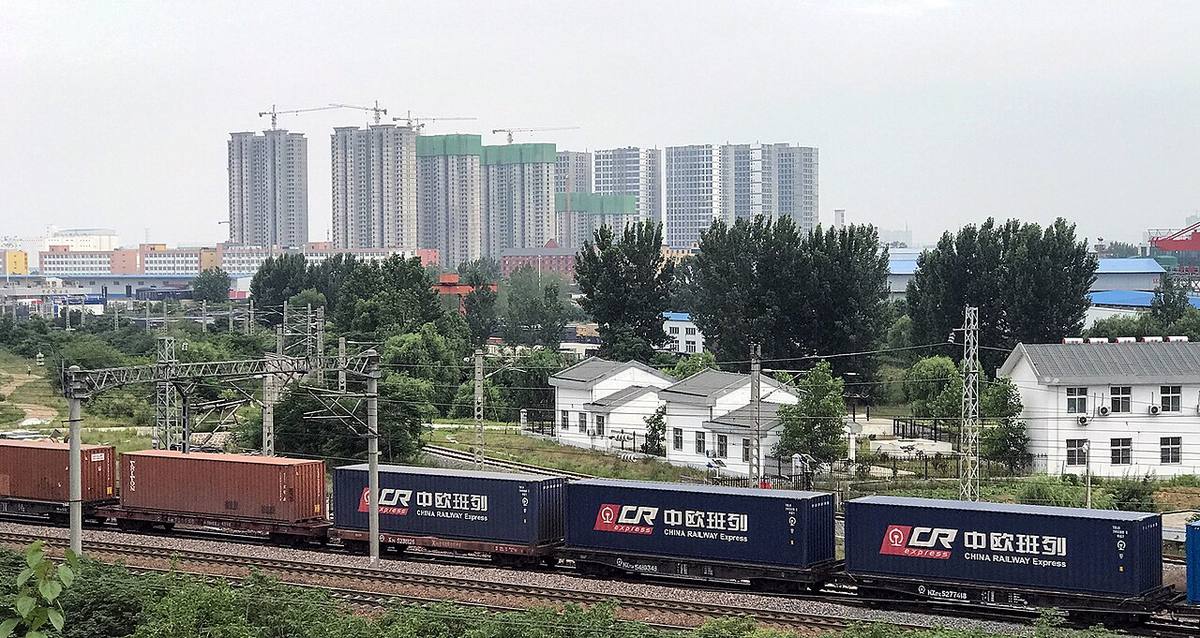
- China–Europe rail freight planning — where rail fits between sea and air.
- DDP shipping from China — what a duty-paid door-to-door arrangement really covers.
- What is DDP shipping? — the delivered-duty-paid model explained on its own terms.
- Purchase orders and proforma invoices — where the trade term and payment milestones belong.
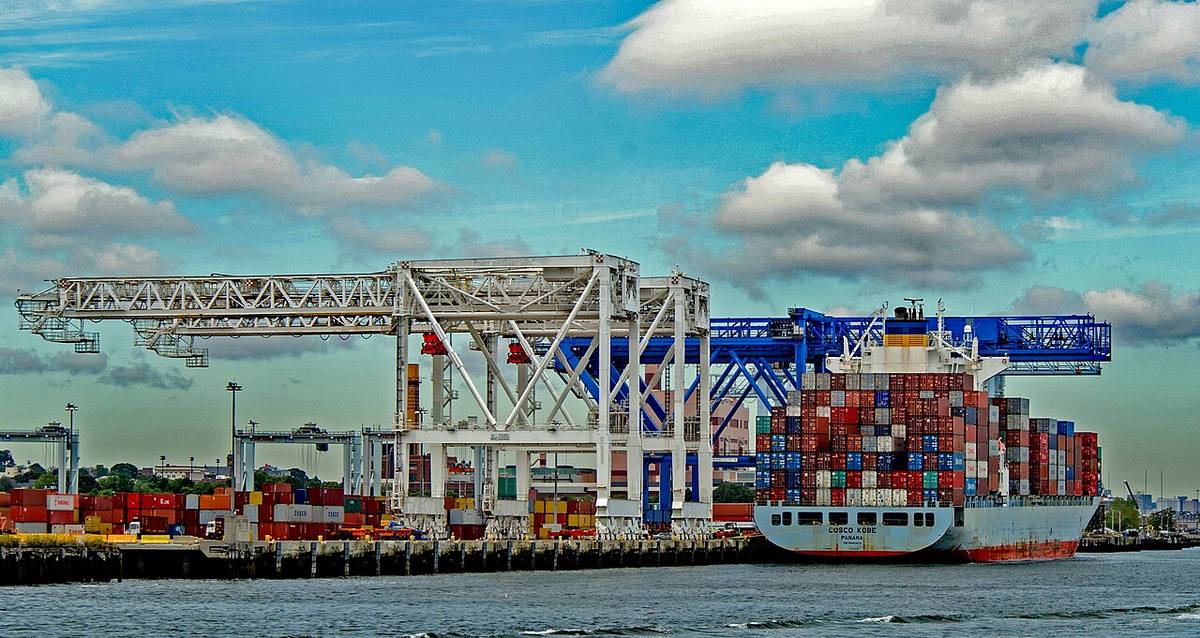
Photo credits: cover - container ship at Conley Terminal by Eric Kilby, licensed CC BY-SA 2.0, via Wikimedia Commons.