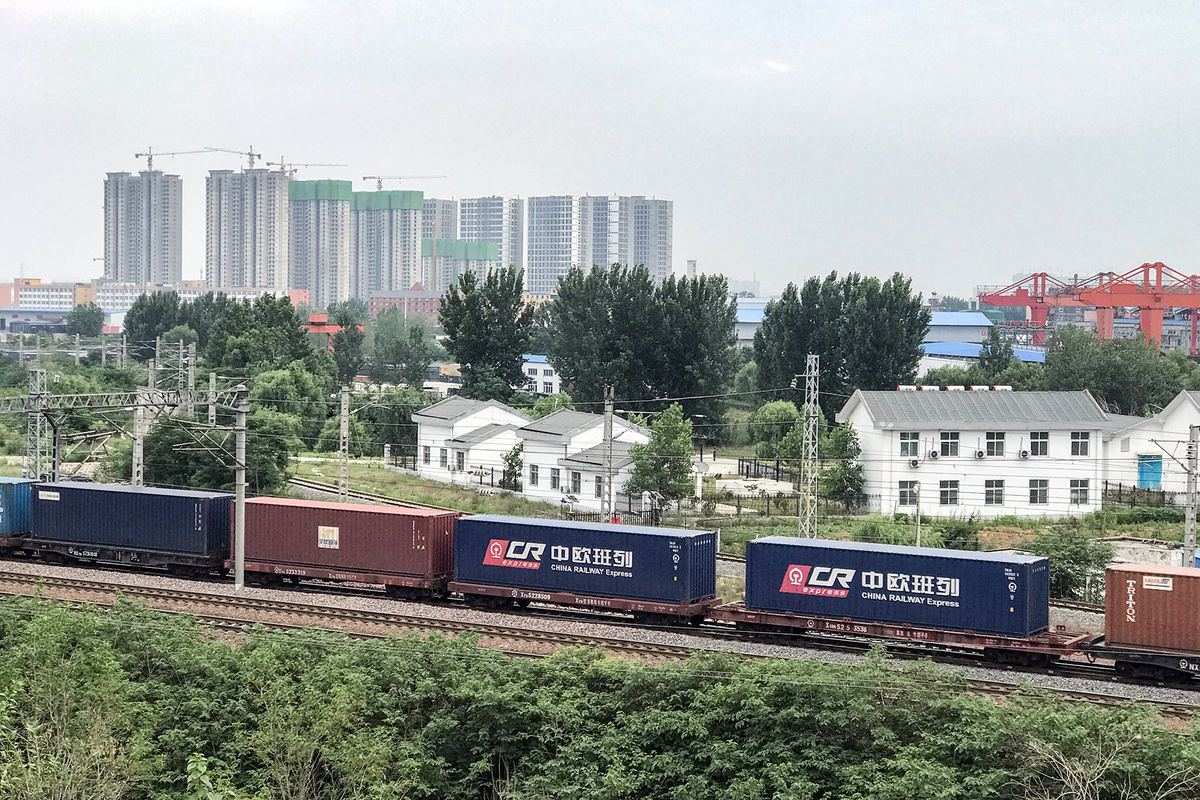

Sea freight is cheap and slow; air freight is fast and expensive. Rail has quietly become the option European buyers actually use for the middle ground — restocking that cannot wait six weeks but cannot justify RMB 40 per kilo either.
The catch is that rail rewards planning more than any other mode. Trains leave weekly, with a hard cut-off, and a shipment that is not measured correctly on Friday morning becomes next week’s problem.
What the train actually quotes
On our contracted forwarder’s September 2026 rate card, door-to-door DDP rail rates to Poland run by weight tier:
| Chargeable weight | Rate per kg (DDP, truck delivery) |
|---|---|
| 51 kg | RMB 20.89 - 22.25 |
| 101 kg | RMB 18.14 - 19.29 |
| 201 kg | RMB 16.70 - 17.79 |
| 301 kg | RMB 16.13 - 17.19 |
| 501 kg | RMB 15.61 - 16.64 |
| 1,001 kg | RMB 15.12 - 16.10 |
| 2,001 kg + | RMB 14.92 - 15.86 |
Courier-served rail shipments are cheaper at the low end: RMB 16.5-17.5 per kg at 21-31 kg and RMB 14.5-15.5 per kg at 101-301 kg, delivered by UPS anywhere in Europe.
The ranges reflect destination postcode groups, not price negotiation. Warsaw is not priced like Szczecin, and Gdańsk sits with Poznań and Wrocław. Rates to Germany start at RMB 12.90 per kg and to Italy at RMB 14.11 per kg on the same tiers.
Two service flavours appear on the card, and the difference matters for planning:
- Standard block train — pickup 16-18 days after the train departs.
- Xi’an express block train — delivery 20-25 days after departure, with longer per-piece limits.
Read those clauses carefully when you compare quotations, because “China-Europe rail, 16 days” and “China-Europe rail, 25 days” are the same mode, different services, and sometimes different prices.
The cut-off discipline
The card sets the cut-off at every Friday 18:00, earlier if the container fills. Everything upstream has to finish before that:
- All suppliers’ goods received at our Guangzhou warehouse
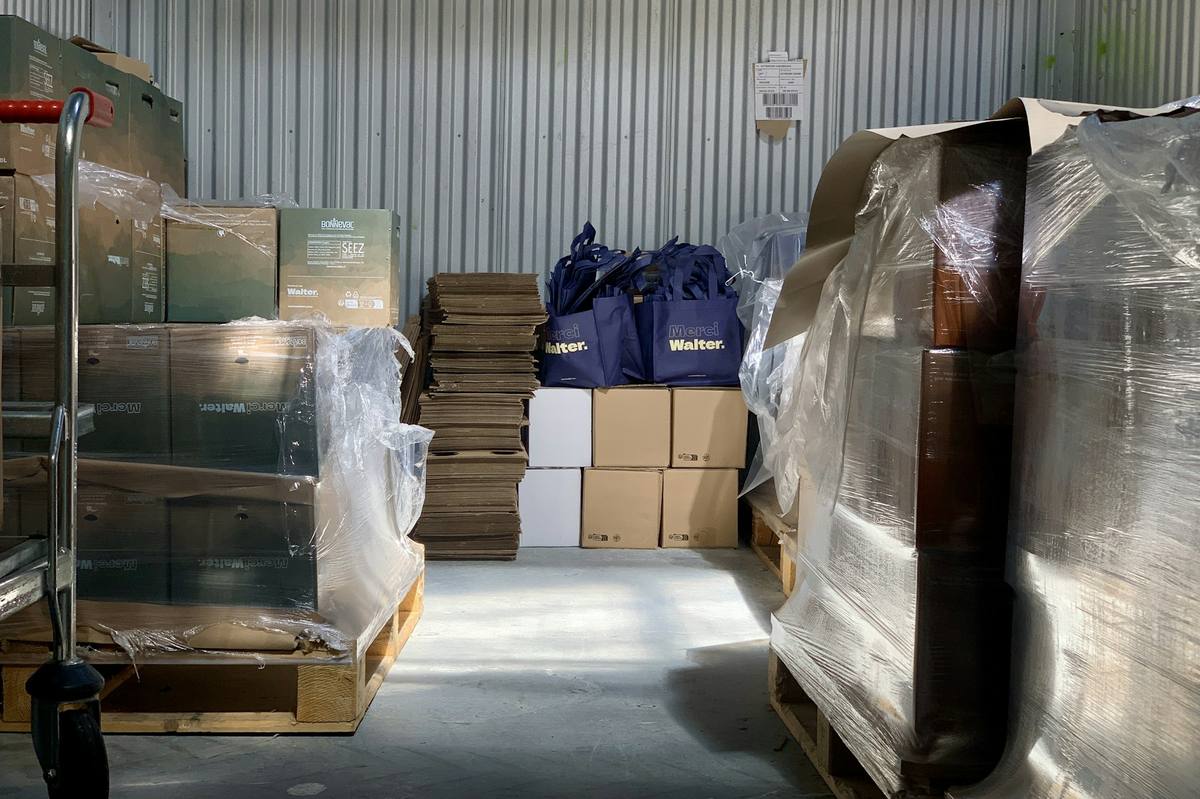
- Cartons counted against the packing list and photographed
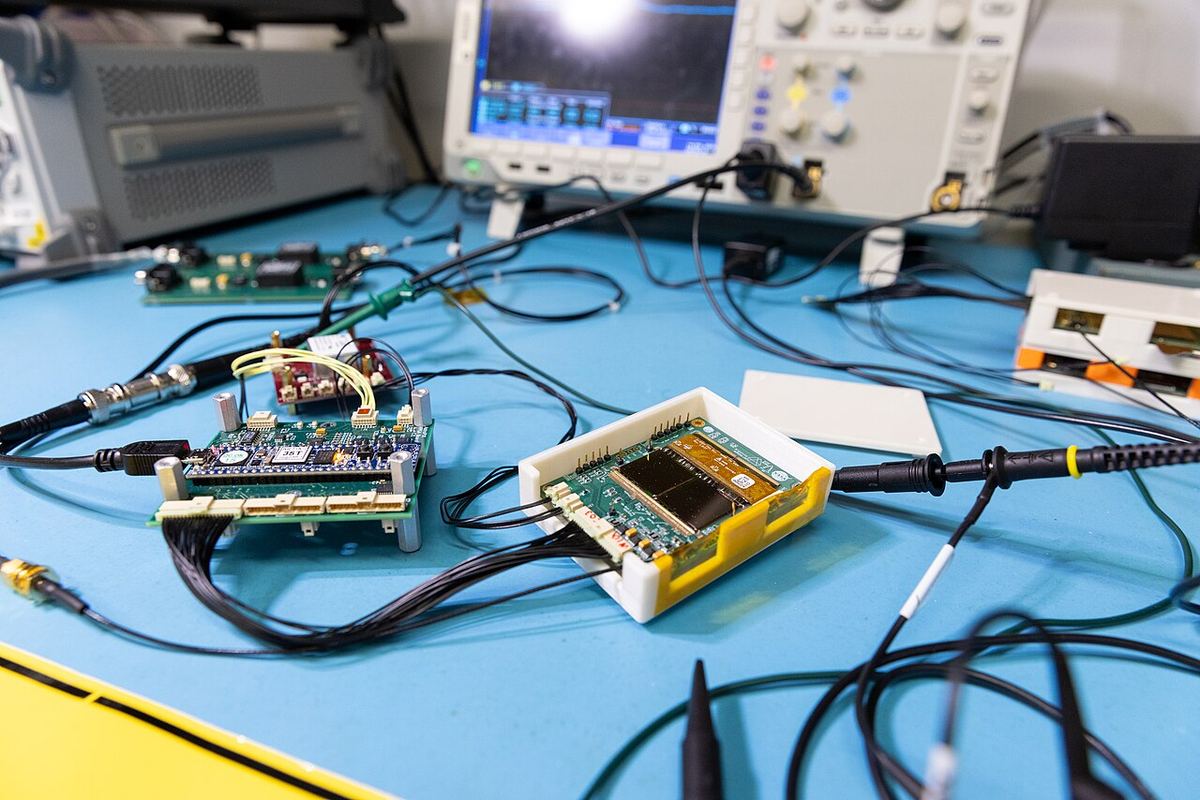
- Optional pre-shipment inspection or burn-in test completed
- Repacking or palletising to the train’s limits
- Export declaration filed and the waybill issued
Working backwards, the practical deadline for goods arriving at the warehouse is Thursday. Suppliers who confirm a shipping date and then miss it by three days do not delay the train by three days — they lose a week, and possibly the space, since the container can close early.
Consolidating four suppliers into one waybill
A rail shipment is rarely one factory. A typical European order is a host machine from one supplier, cable from a second, mounts from a third, spares from a fourth. Four separate shipments at 300 kg each cost four times the handling, and land on four different dates.
Consolidating them changes the arithmetic twice over:
- Weight tier: 1,200 kg in one shipment prices at a lower per-kilo tier than four 300 kg shipments.
- Fixed costs: one export declaration, one cut-off, one delivery appointment, one document set.
The consolidation work is unglamorous and decisive: receive, verify, photograph, repack, palletise, measure. Pallet positions are counted at 120 × 80 cm, pieces between 1,200 kg and 2,000 kg take two positions, and over eight positions the shipment has to be split. Getting that measurement right before the train leaves is the difference between a clean invoice and a surcharge argument.

Rail limits you need to design around
| Limit | Value |
|---|---|
| Max weight per shipment | 2,500 kg |
| Max weight per piece | 1,500 kg |
| Max pieces per shipment | 6 (wooden crate or pallet) |
| Max size per piece | 400 × 220 × 200 cm and 6 CBM |
| Batteries | Built-in battery products not accepted; magnetic products accepted |
| Chargeable weight | Greater of actual and volumetric (L × W × H ÷ 6,000), no volumetric split |
| Minimum per piece | 12 kg on courier-served rail lines |
| Separate export declaration | RMB 350 per shipment, from 100 kg |
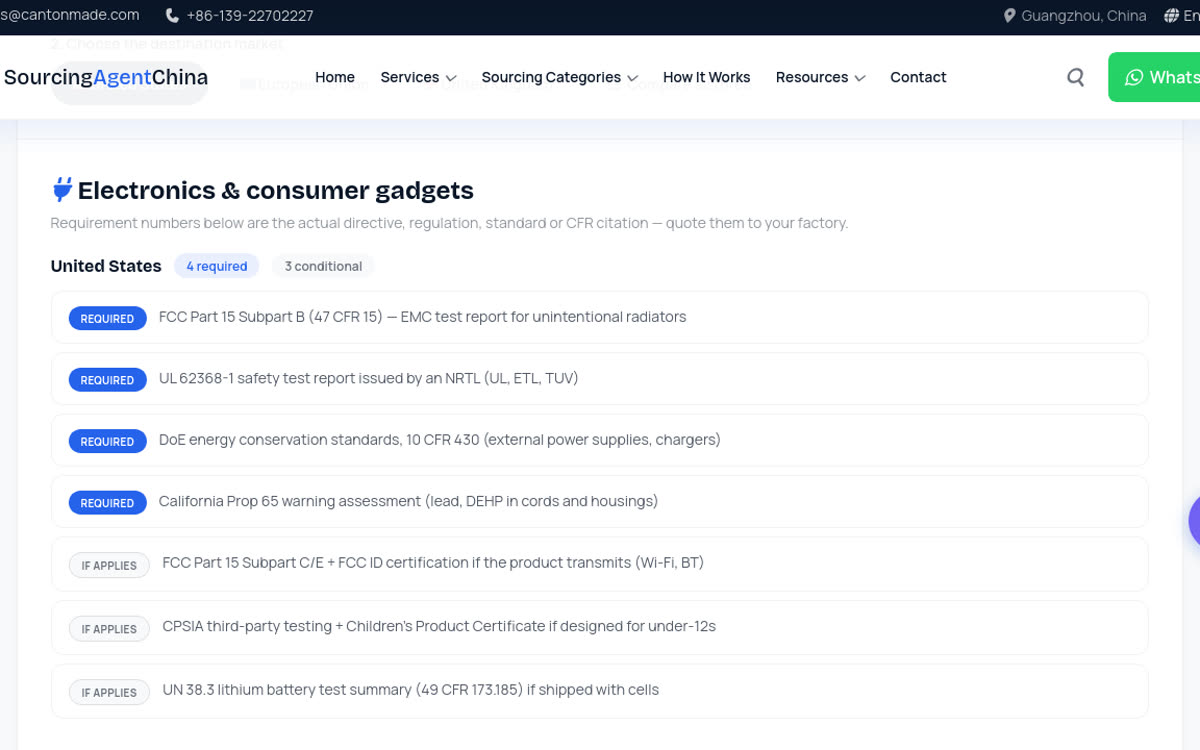
The battery rule catches people who assume rail is a sea-substitute. Power banks, battery packs and devices with built-in lithium cells must go by sea or air. Plan the product mix per mode, or you will be splitting one purchase order across two shipments at the last minute.
There is also a discount worth asking about: heavy-cargo rates fall by RMB 1 to 2 per kilo on cargo with a density ratio of 1:250, 1:400 or 1:800 on shipments over 100 kg. Dense cargo — machinery, hardware, tiles, cable drums — is exactly what the train wants.
Structured RFQs stop the comparison problem
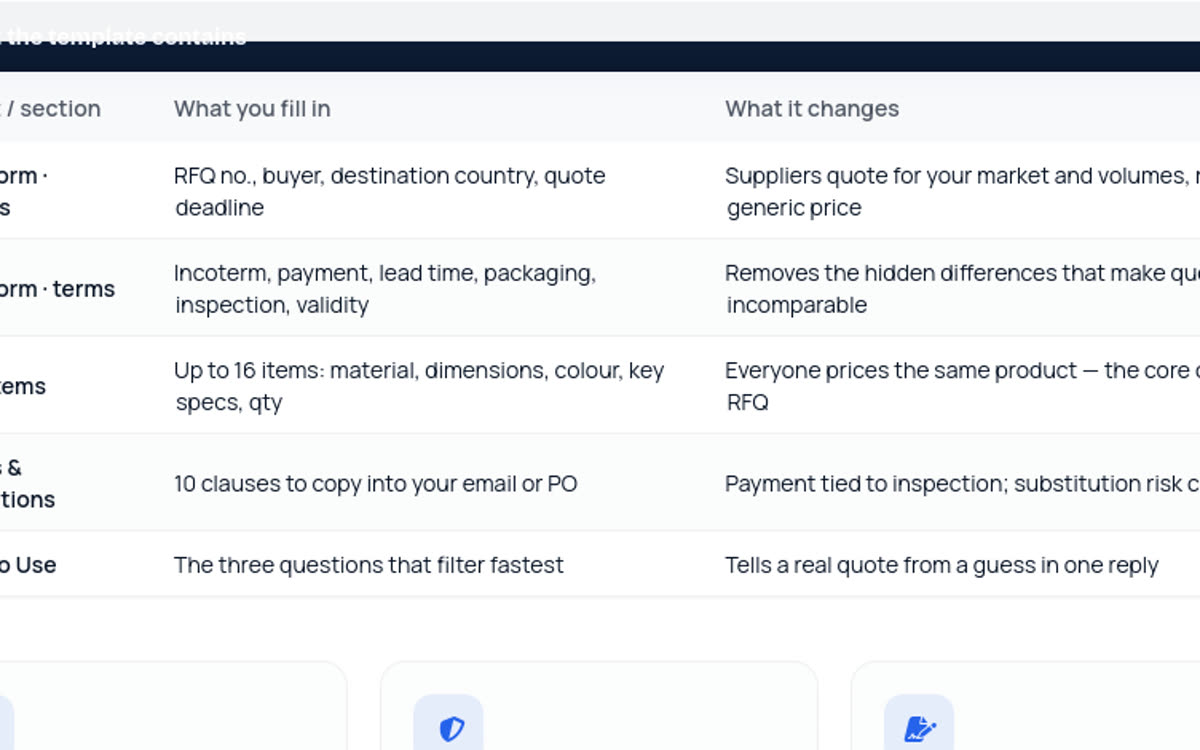
Rail quotes are only comparable if the specs match. Ask every supplier for the same five data points and the comparison sorts itself out:
- Packed dimensions and gross weight per carton, plus the number of cartons
- Total volume in CBM, calculated from the carton data rather than estimated
- Any single piece over 1,500 kg or over 400 × 220 × 200 cm
- Battery content, magnet content and whether the goods are hazardous
- Injection ratio (density) if you want the heavy-cargo discount
Our free RFQ template has these fields built in, and we run the same table for every supplier on a project so the numbers can be lined up column by column rather than argued about.
When rail is the wrong answer
Be honest about the trade-offs:
- Under 100 kg and no deadline: air economy is faster and often not much more expensive once handling is counted.
- Over 15 CBM and no urgency: sea freight wins clearly, and DDP door-to-door sea rates fall to RMB 9-13 per kg to Poland.
- Battery products: sea or air, not rail.
- Oversize pieces beyond 400 × 220 × 200 cm: rail oversize needs an enquiry; sea oversize handles more.
Everything else in the 300-2,500 kg band is usually rail territory for a European restocking cycle, because three weeks changes what you can promise your own customers.
The rail chain, end to end
Rail is one leg. The rest of the chain decides whether the shipment is worth it: the right factory at the right price, verified before the deposit, inspected before loading, consolidated into one shipment, declared correctly at export, cleared and delivered DDP or duty-unpaid on your own VAT.
We run all of it from Guangzhou — sourcing, factory audit, AQL inspection, consolidation, export declaration, rail booking and delivery to your address in Poland, Germany, France, Italy or Spain. Details and rates: China–Europe rail freight and shipping from China to Poland. Send the cargo list with dimensions and weights, and you get a rail quote with the exact weight tier and delivery zone in writing.
👉 WhatsApp: +86 139 2270 2227 | Email: sales@cantonmade.com