Most importers make the same mistake when they look for China sourcing agents: they contact one agency, like the reply, and sign up. Two months later, when the first inspection report arrives late and the factory is not the one they were quoted, they realize they never actually compared anyone.
That mistake is expensive — and completely avoidable. Choosing between China sourcing agents is not about reading websites or trusting WeChat vibes. It’s a structured evaluation that takes about two weeks and a few hundred dollars, and it separates serious agencies from resellers with a business card.
Here’s the exact process we recommend, the same one we suggest buyers run on us before they sign.
Step 1: Send the Same Sample RFQ to Three Candidates
Shortlist three to five China sourcing agents and send every one of them the identical RFQ — same product, same quantity, same destination port, same deadline. Do not customize the message per agency. The point is to compare apples to apples.
Then watch what comes back. You are not looking for the lowest price. You are looking for:
- Response time. A reply within one business day is baseline. If an agency takes three days to answer your first email, multiply that by every urgent issue during production.
- Questions asked. A good agent responds to an RFQ with questions: Is the brand logo printed or embossed? What certification does the destination market require? What’s the MOQ tolerance? An agent who quotes instantly from a catalog is likely just a trading desk passing through prices.
- Transparency of the quote. Does the breakdown show factory price, agency commission, inspection fees and logistics separately? Or is it one opaque lump sum? Separate lines are the sign of an agency that earns fees from you, not hidden markups from factories.
- Honest pushback. If your spec has an obvious problem — a tolerance that doubles the cost, a material that won’t clear customs — a real agent tells you before quoting, not after you’ve paid.
Write down one score per candidate per criterion. You’ll need the table in Step 4.
Step 2: Verify References and Paperwork
Anyone can claim ten years of experience. Verification takes an afternoon:
- Ask for three recent client references — and email them yourself, in English, asking three questions: Were the inspection reports on time? Did the agent show factory invoices? What failed on your first order?
- Ask for the business registration. A Chinese company has a unified social credit code (统一社会信用代码). Verify it on the National Enterprise Credit Information Publicity System (国家企业信用信息公示系统). A trading company registered six months ago is a risk, not a partner.
- Ask for a sample inspection report. Real China sourcing agents have dozens of them. A genuine report names the factory, the inspector, the date and the defect photos. A redacted one-page PDF that “protects the client” is usually protecting something else.
- Check the physical office. Ask for a live video call inside the office, not a brochure photo. You want to see desks, people and — if they claim in-house QC — the QC room.
Skip this step and you’re choosing an agent the way you’d choose a taxi: by which one pulls up first.
Step 3: Run a Paid Trial Order
This is the single most reliable test, and it is cheaper than you think. Instead of a full production order, give your top two candidates a paid trial order: a small batch — even 50–200 pieces — of an existing product, with a strict delivery date and a pre-agreed inspection point.
What the trial reveals:
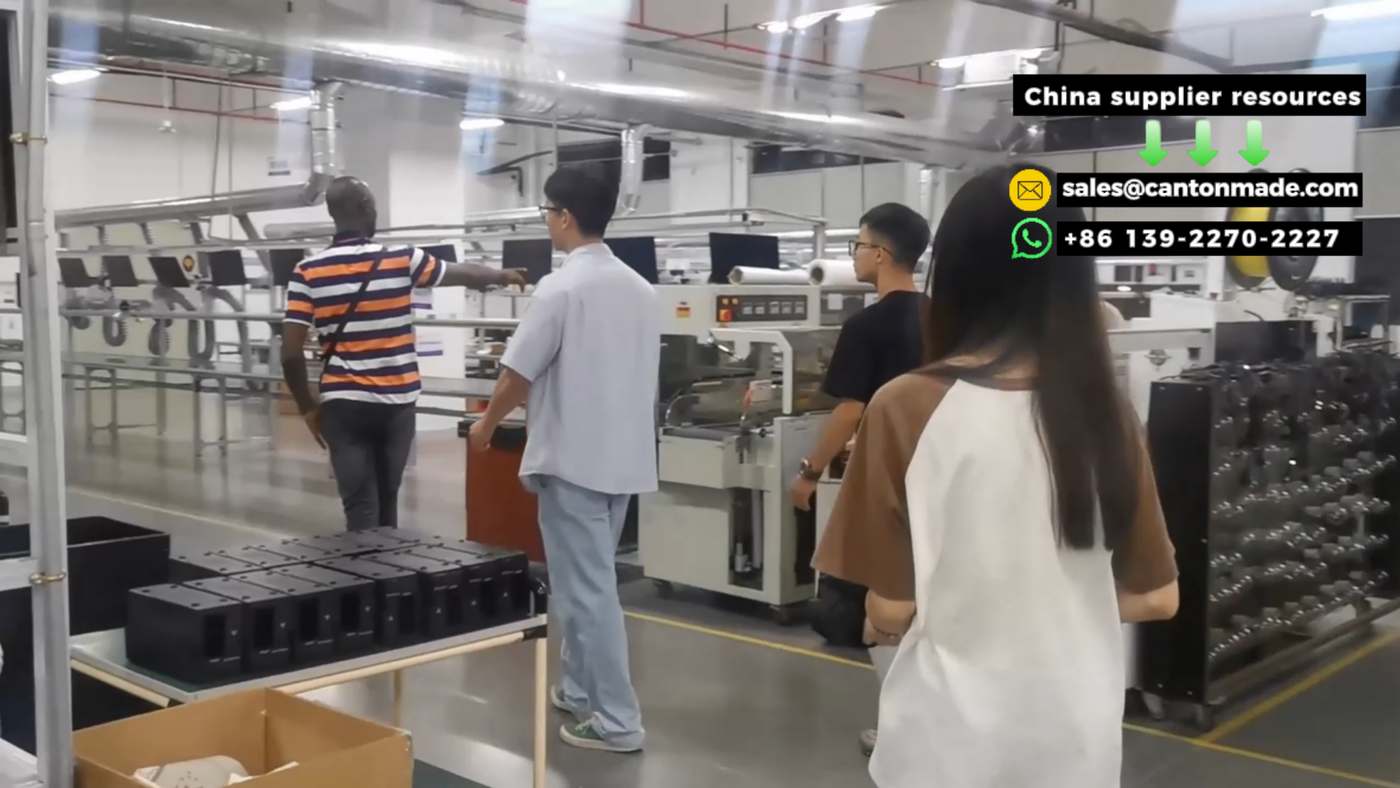
- Whether the agent actually visits the factory or just phones it (the trial’s shipping photos and inspection timestamps tell you)
- Whether the factory invoice matches the quoted price (transparency test)
- Whether your emails get forwarded to the factory verbatim, or translated, negotiated and answered with decisions
- Whether problems surface in progress reports or after shipment
Budget 300–600 USD for the trial including sample freight. That is the cheapest insurance you will ever buy for a supply chain that may run for years. An agency that refuses a small trial order is telling you how they treat small clients — listen.
Step 4: Compare Fee Structures, Not Just Percentages
By now you have three data points: RFQ scores, verification results and trial performance. The last comparison is money. China sourcing agents typically charge one of three ways:
- Commission on factory price (usually 5-8%), sometimes with a minimum per order
- Fixed monthly retainer for ongoing sourcing work
- Per-service fees — separate charges for supplier search, audits and inspections
The percentage alone is meaningless. A 5% commission on an inflated factory price costs you more than a 7% commission on a verified price. Ask each candidate: will you show me the factory’s original invoice on every order? The answer to that question matters more than the fee itself — an agency that shows invoices can’t quietly mark up, so their commission is what you actually pay. Agencies that won’t show invoices are not cheaper; they’re just less visible.
Also ask about what’s not included: samples, courier, certification documents and re-inspection fees are common exclusions that can add 15–20% to your first-order cost. Get the full price list in writing before signing.
Red Flags Checklist
Walk away — or never start — if you see any of these:
- Quote arrives with no questions asked and a “factory-direct price” that’s suspiciously low
- Won’t share the factory name until after payment
- No written contract, or a contract that’s a one-page WeChat screenshot
- Inspection reports that are “in preparation” for weeks
- Asks you to wire payment to a personal account, or to a company that doesn’t match the invoice
None of these are rare. We see buyers burned by each one every quarter. The evaluation process above is exactly what catches them early.
The Bottom Line
Picking between China sourcing agents is a two-week process, not a two-email one. Same RFQ to three candidates, real reference checks, one small paid trial, and a fee comparison built on invoice transparency. Do that once, and you’ll either have a partner you can trust for years — or a clear, evidence-based reason to keep looking.
If you’d like to run this exact process on our team, we’ll make it easy: we’ll show you our registered company details, put you in touch with current clients, and let you structure the trial order however you like. Send us your product spec and we’ll respond within one business day with a transparent, line-by-line quote. Or message us on WhatsApp — real people in Guangzhou, not a chatbot.
For more context before you decide: our 7-point checklist for choosing a China sourcing company covers the company-vs-freelancer decision, the sourcing agent cost guide breaks down every fee line, and the FAQ answers the common contract and MOQ questions. And if you want to see what a serious agency’s process looks like end to end, here’s how our 15-step sourcing process works.