A hotel IPTV system is the single most visible technology in the building — every guest turns on the TV within ten minutes of arriving. Yet most procurement conversations start in the wrong place: unit price per set-top box.
This is one spoke of the ELV system cluster we run for hotels and commercial buildings — the overview page explains how the subsystems are combined.
The projects that go wrong are almost never lost on hardware. They are lost on four interfaces that nobody quoted: how the TV talks to the hotel’s property management system, how premium content is encrypted, how the interface handles five guest languages, and how audio gets routed to the right place. Get those right and the hardware becomes a detail. Get them wrong and the guest sees a black screen with the hotel’s logo on it.
This guide covers what hotel IPTV integration actually involves — and how to source it from China without buying a system nobody can commission.
It Is an Integration Project, Not a Box Purchase
A hotel IPTV system has four layers, and each one has its own supplier risk:
| Layer | Function | What buyers get wrong |
|---|---|---|
| Head-end | Receives satellite/terrestrial/cable sources, encodes and streams channels | Assuming any encoder works with any middleware |
| Middleware / IPTV platform | Channel management, DRM, UI, guest services, billing hooks | Quoting hardware before the platform is chosen |
| Room endpoint | Set-top box or IPTV-ready TV | Ignoring the TV’s conditional-access capability |
| Integration layer | PMS interface, network, monitoring | Treated as “the IT guy’s problem” at the end |
The system is only as good as the weakest handshake between these layers. That is why a supplier who only sells boxes cannot deliver a working hotel IPTV system — and why the evaluation criteria are different from a normal product purchase.
Interface 1: PMS Integration (Oracle OPERA and Friends)
The interface that separates a “TV with channels” from a hotel IPTV system is the PMS connection. For properties running Oracle OPERA — still the most common PMS in international hotels — integration means the TV system can:
- Push a personalized welcome page with the guest’s name and check-out date on the room TV
- Display the guest’s bill and let them review charges or check out from the remote
- Trigger messages (checkout reminders, wake-up confirmations, service notifications)
- Suppress adult or premium content based on the room’s profile and billing rules
For the buyer, three questions decide whether the integration will actually work:
- Does the middleware vendor support your PMS version? PMS interfaces are version-sensitive — an integration that worked on an older release can break after an upgrade.
- Who owns the interface documentation? Ask to see the integration guide before you buy, not after.
- Who tests it? The room-level test (does the welcome page show the right name for the right room?) is the acceptance criterion that matters.
If a supplier answers “yes, we support PMS” without asking which version you run, treat the answer as marketing.
Interface 2: Content Protection (Pro:Idiom, HDCP and CAS)
Hotels show content that cannot be redistributed freely, which is why content protection is a technical requirement with legal consequences. Three mechanisms come up in almost every project:
- Pro:Idiom — the DRM scheme built into commercial-grade hospitality TVs; encrypted premium channels are decrypted inside the display itself, so a guest cannot split the signal to another device
- HDCP — the protection layer for HDMI links between sources, switches and displays; a matrix or splitter that does not pass HDCP correctly produces a black picture, not an error message
- CAS / conditional access — for satellite premium services, the decoder and card system tied to the broadcaster
The design decision that matters most: decide the encryption path before choosing displays. If the property standardizes on Pro:Idiom-capable commercial TVs, the set-top box can pass protected streams directly. If it buys consumer TVs, premium content has to be handled differently — or not at all.
Interface 3: The Guest-Facing UI
The interface is the product, from the guest’s point of view. What a well-specified hotel IPTV UI includes:
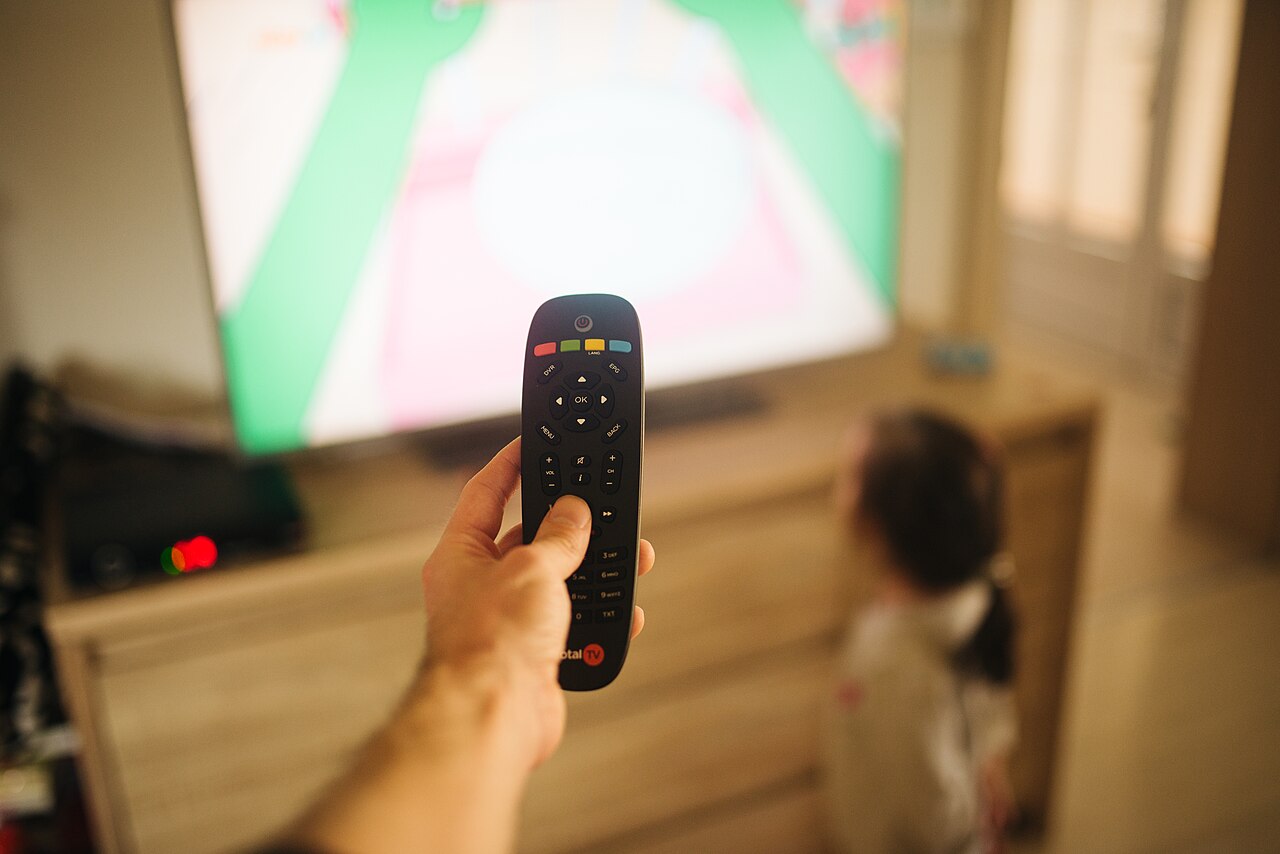
- Multi-language menus — in an international property, that means at least the languages of your main source markets, switched from the same remote
- Channel numbering that mirrors the guest’s expectations (news, sports, movies, local channels in predictable ranges)
- Guest services on screen: room service, housekeeping requests, spa booking, checkout
- Weather, flight information, and hotel information — the small features that generate “this hotel is well run” impressions
- Branding consistent with the property’s identity
Because the UI is software, it is also the part most likely to be under-specified in a quotation. When comparing suppliers, ask for a live demo or a screen recording of the actual UI, not a rendered mockup.
Interface 4: Audio Routing
Audio is where hotel AV projects quietly fail. A guest TV playing in the wrong zone, an announcement that interrupts a movie, or a PA system that cannot reach a ballroom all trace back to routing design.
The project-level questions:
- Where does sound need to go? In-room only, or also bathroom speakers, lobby, meeting rooms, restaurants?
- Who needs to override whom? Emergency paging must override everything; a restaurant’s background music should override nothing outside its zone
- Is audio processed or straight-through? An audio DSP (digital signal processor) handles routing, level control and equalization for large venues, while in-room audio is usually handled by the TV or set-top box
For hotels with meeting facilities, the AV integration and the IPTV system should be designed together — they share the same network, the same matrix, and often the same technicians.
The Head-End: Satellite, Encoders and the Compliance Line
The head-end is where the channels come from. A typical hotel design pulls from a mix of sources:
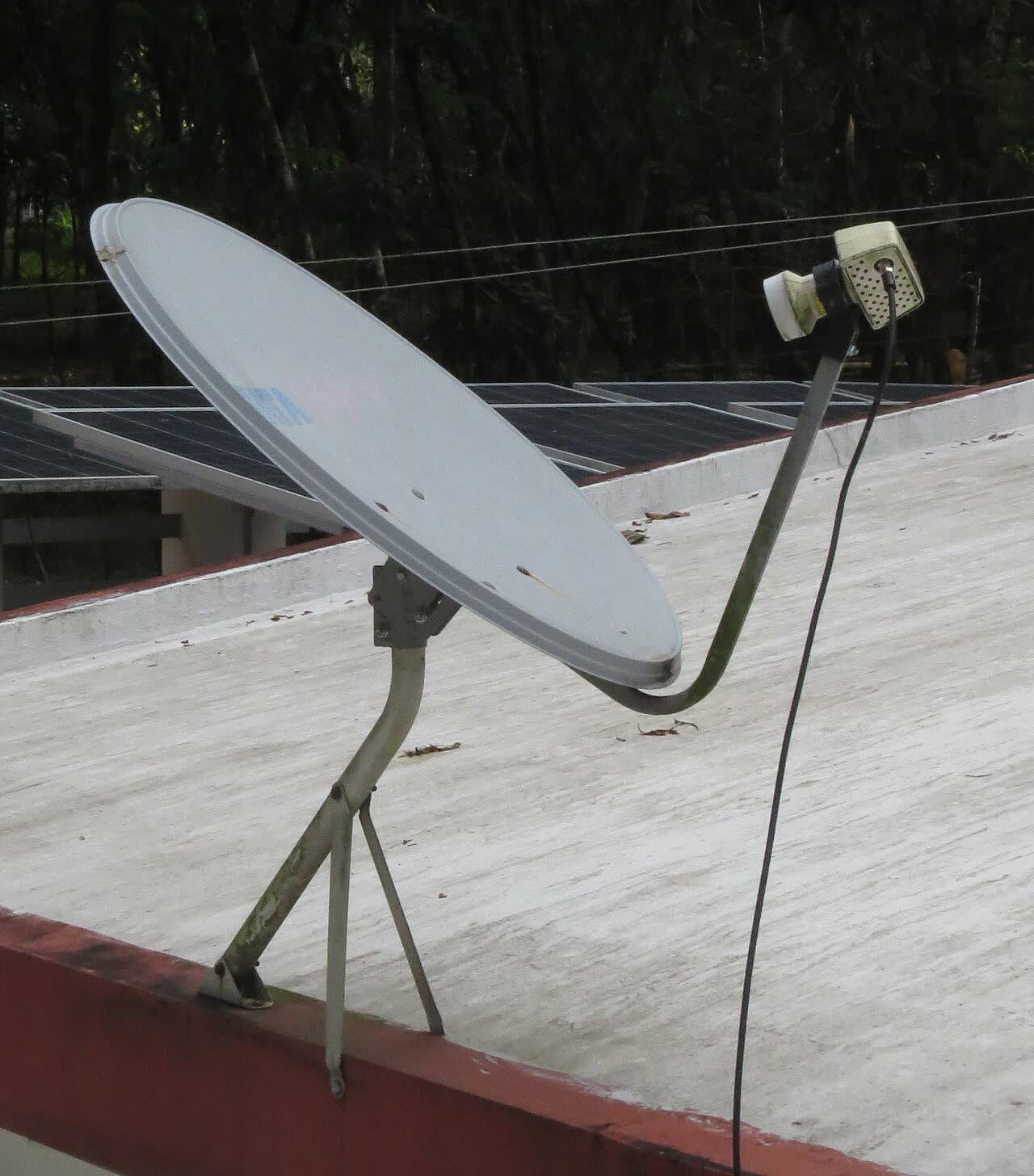
- Free-to-air satellite channels received on dishes and distributed to all rooms
- Local terrestrial channels where available
- In-house content — welcome video, hotel promos, conference feeds
Two engineering rules hold in almost every project:
Rule 1: Size the dish for the site, not for the catalogue. Wind load, signal strength and point count all matter. A coastal or exposed site may need a smaller dish with better mounting than a large dish that becomes a liability in the rainy season.
Rule 2: Stay on the right side of content licensing. Distributing premium satellite or cable services to all rooms without the appropriate licence can put the hotel in conflict with broadcasters and regulators. The standard compliant approach: distribute free-to-air channels as the hotel’s service, and let guests who want premium services activate their own subscription in the room. Design the room wiring so both paths work — that is a cabling decision made once, at the design stage.
Sourcing from China: What to Evaluate
Chinese AV manufacturers can supply every layer of this system. The difference between a good and a bad supplier is not the price list — it is whether they can answer integration questions. When you evaluate:
1. Ask for a system-level answer, not a product answer. “Send me your hotel IPTV solution” should produce a system diagram with head-end, middleware, endpoints and the PMS interface — not a set-top box datasheet.
2. Test compatibility before committing. Request that the middleware vendor confirm support for your exact PMS version and your TV model, ideally in writing.
3. Verify DRM capability per endpoint. Confirm Pro:Idiom/HDCP support on the actual hardware models quoted, not the platform’s general capability.
4. Get a commissioning plan. Who configures the middleware? Who integrates the PMS? Who trains the hotel’s staff? A supplier who says “our system is plug and play” has either never commissioned a hotel or is describing a different product.
5. Check real references. A supplier that has integrated PMS and DRM in a comparable property can show you the project. Ask for one.
Checklist: Hotel IPTV Procurement
- Choose the middleware before the hardware — the platform determines what the endpoints must support
- Confirm the PMS integration path in writing, including your exact PMS version
- Decide the content-protection route (Pro:Idiom-capable commercial TVs vs. other approaches) before buying displays
- Specify the UI: languages, channel plan, guest services, branding
- Design audio routing at the same time as the IPTV and AV systems, not afterwards
- Plan the head-end for your site — dish sizing, signal conditions, and licensing boundaries
- Require a commissioning and training plan from the supplier, not just a delivery date
Talk to a Technical Sourcing Partner
This is the kind of project where the sourcing partner needs to understand the system, not just the purchase order: PMS interfaces, DRM, head-end design, audio routing and the licensing line that keeps the hotel out of trouble.
Send us your property profile — room count, TV standard, PMS version, source markets and channel requirements — and we will help you turn it into a specified, commissionable hotel IPTV system.
👉 Contact our sourcing team or see how our product sourcing service works.
Related: hotel Wi-Fi network design for a 500-room property — the data network behind IPTV, sized room by room.