The 140th Canton Fair runs three phases: 15-19 October (electronics, appliances, machinery, hardware), 23-27 October (houseware, gifts, building materials, furniture) and 31 October - 4 November (textiles, medical, office, food). Roughly 25,000 exhibitors - and most buyers leave Pazhou with forty catalogues, six friendly promises and no verified capability.
That is normal. What is not normal is waiting for the quotations to arrive. A fair gives you a shortlist, not a supplier, and the shortlist starts rotting the day you leave the complex.
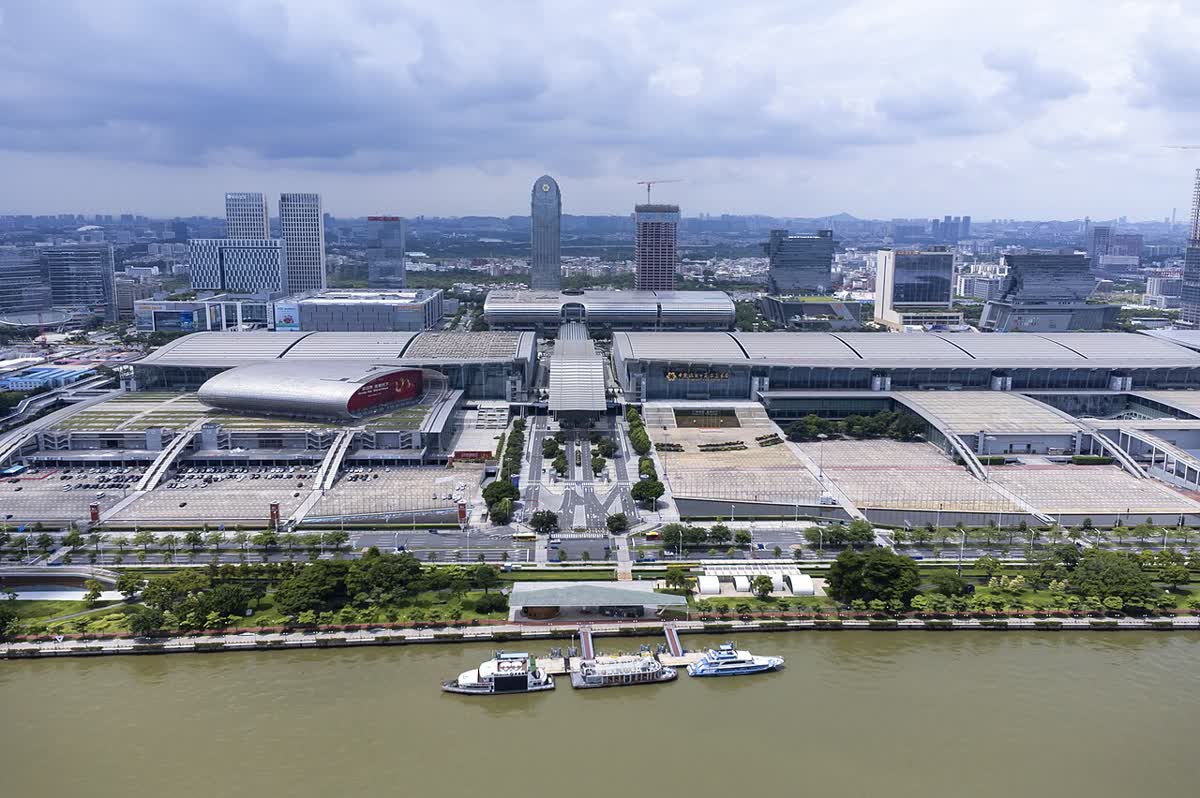
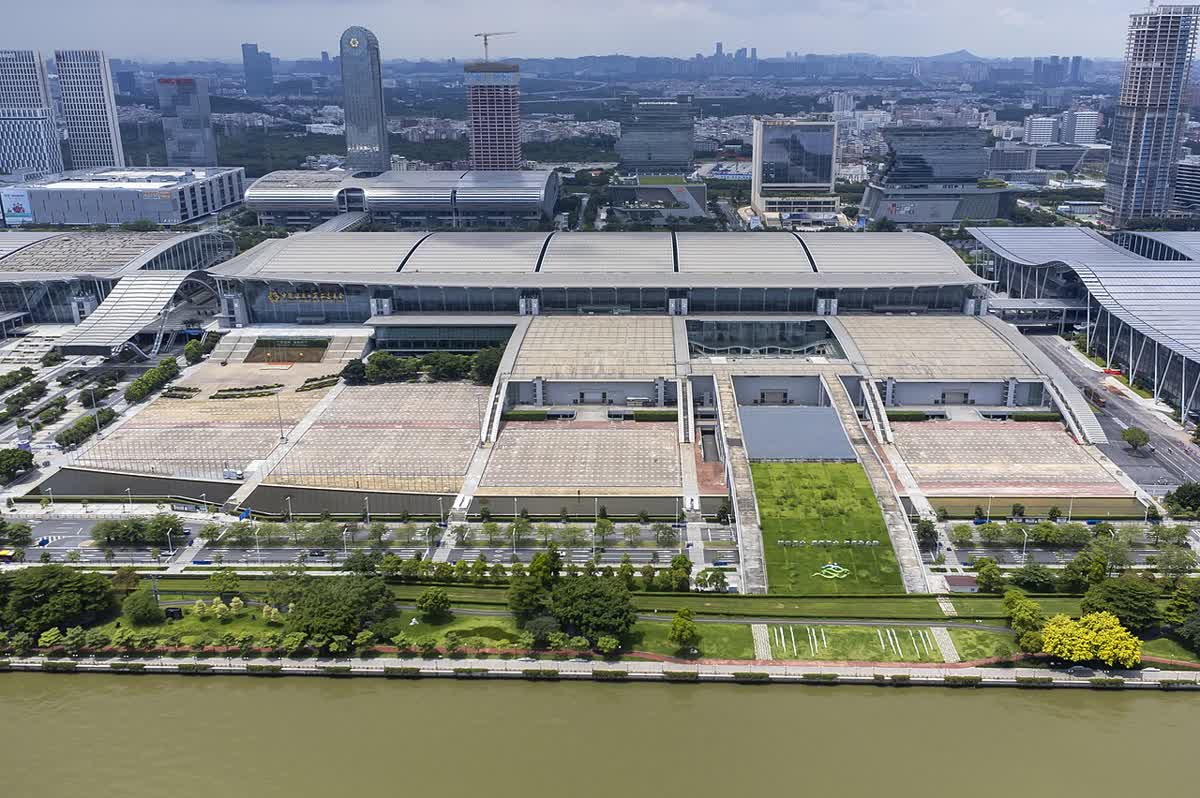
Photo: Tim Wu, CC BY-SA 4.0, via Wikimedia Commons.
What are the 2026 Canton Fair dates you are working around?
| Phase | Dates 2026 | Main categories | What the gap after it is for |
|---|---|---|---|
| Phase 1 | 15-19 October | Electronics, appliances, machinery, hardware, new energy | Follow up 20-22 Oct; visit electronics plants in Dongguan and Shenzhen |
| Phase 2 | 23-27 October | Houseware, gifts and decorations, building materials, furniture | Follow up 28-30 Oct; visit Foshan, Zhongshan, Jiangmen |
| Phase 3 | 31 October - 4 November | Textiles, garments, shoes, office supplies, health, food | Follow up 5-8 Nov; whatever survives to here is usually the real shortlist |
The 20-22 and 28-30 October gaps matter more than the phase dates. The halls are closed, suppliers are back at their plants, and nobody is standing at a booth waiting to hand you a catalogue - they are the only clean factory days of the month.
Why do thirty leads turn into three answers?
Because the information you carry out of the halls decays at different speeds, and buyers treat all of it as permanent.
| What you learned | How fast it decays | What to do about it |
|---|---|---|
| Price and MOQ | Immediately - quoted for the booth model at their standard quantity, not your order | Re-ask with your quantity written out in numbers |
| “Delivery in 30 days” | Two weeks - the fair generates offers, and offers become booked slots | Ask for a ship date assuming the PO lands in 10 days, and what would move it |
| Who can answer technically | Fast - the rep is a salesperson; the engineer behind them is someone else | Get that person’s name and direct email this week |
| Who makes the core component | Does not decay - it was never disclosed at the booth | Ask it directly and watch whether the answer names a company |
The one thing that must be captured now is the physical reference: the exact model you saw, with the number legible. Weeks later, when the goods arrive and look slightly different, that photograph is the only thing separating “not as agreed” from “not as I remember”.
What did you actually buy at the booth?
A booth sells an indicative price, one friendly representative and a model on a plinth. It does not sell who makes the core part, who tests it, the monthly capacity, or who signs an inspection report. That structural gap is why project buyers with customised, cross-category requirements so often leave with nothing usable - the exhibitors are built for standard mass production, and the mismatch is worth understanding before you blame your supplier.
The fair did not fail. It is step one of a two-step purchase.
What should the follow-up email contain?
Nine questions, one email, no small talk. The point is not the answers but which answers come back - a sales desk answers two, an engineering team answers all nine.
| # | Question | What the answer proves | Red flag |
|---|---|---|---|
| 1 | Who manufactures the core component (PCB, module, motor, lens, power supply) - can you name the company? | Whether they build the product or assemble bought-in parts | “We use the best materials” - no name |
| 2 | What is the price at the quantity below? (state it in units) | Whether the booth price was a mass-production MOQ price | “Depends on quantity”, no table |
| 3 | Which certificate numbers does this exact model hold? | Whether the certificate belongs to this model or a similar one | Certificate photos with the model number unreadable |
| 4 | Field failure rate of this model in the last 12 months, and what happens to a failed unit? | Whether warranty is a process or a sentence | “Warranty one year” with no return route |
| 5 | Which line produces it, monthly capacity, current load? | Whether your date is realistic | Capacity far above what the plant could physically run |
| 6 | Will you accept third-party inspection at AQL 2.5 major / 4.0 minor? | Whether quality is negotiable | “Our QC is very strict” instead of a yes |
| 7 | Can you send packaging, label and artwork for approval before production? | Whether rework is designed out | “Standard packing, no problem” |
| 8 | A 3-minute unedited video: material store to line to test to packing, supervisor naming the line | Whether the plant exists, and what it looks like | Edited clip, close-ups only, no wide shot of the hall |
| 9 | If the PO is issued within 10 days, what is the ship date and what would delay it? | Whether the schedule is owned by production or by sales | “No problem, fast delivery” |
Question 6 is not rhetorical: the sampling standard has to be agreed before there is a dispute. Our AQL sampling table turns an order quantity into a sample size and an accept/reject number - the sentence you want inside the PO.
If you only run two checks, run these
The licence against the address. The registered scope on a business licence states what the company may do. A factory’s includes manufacturing; a pure trading company’s does not - and its production address belongs to somebody else. Compare that address with the one printed on the invoice and the contract.
The shipper against the invoice. The name on the bill of lading and the export declaration should be the company invoicing you. A different name is not automatically a problem, but it means a middle layer sits between your money and the production line - and that layer is where quality responsibility usually disappears.
A capable trading company can be the better partner for a mixed order. The rule is not “factory good, trader bad”; it is that an unadmitted layer should not be paid for out of your quality margin.
What does a 40-minute factory visit settle?
Video calls and photos are evidence that a plant exists. A short visit answers the question you actually have: can this plant make my order, repeatedly, at the standard I wrote down.
| Check | What to look at | Bad sign |
|---|---|---|
| Line against exhibit | The model you saw at the fair actually running, with the same fixtures and jigs | Nobody can point to the line that makes it |
| Incoming inspection | An IQC station with records and a reject bin that has something in it | No incoming check - components go straight to the line |
| Test and ageing | Burn-in or functional test racks with pass/fail records | “We test 100%” and no rack, no record |
| Packing | Carton, label and artwork matching the approved version; a drop-test station | Packing subcontracted to a nearby shop |
| Finished goods | Units staged for shipment - proof they ship for other buyers already | An empty hall and a showroom full of samples |
Two habits make the visit usable afterwards: photograph with a timestamp and the plant name visible in frame, and have one named person sign the visit record - the same person who will answer for the pre-shipment inspection.
Where do the gap days go?
From Guangzhou the Pearl River Delta is a one-to-two hour problem: Foshan 40-60 minutes, Dongguan about an hour, Shenzhen and Zhongshan around 1.5 hours. Clustered by city, two gap days handle five or six plants; scattered across three cities, two or three at most.
- 20-22 October: electronics, PoE switches, CCTV and access control in Dongguan and Shenzhen - the category Phase 1 just put in front of you.
- 28-30 October: lighting, hardware and hotel fit-out suppliers in Foshan, Zhongshan and Jiangmen.
- Carry the samples collected at the fair to the visit; comparing a booth sample against a production unit in the same hour settles more than a month of email.
If you cannot be in Guangzhou, this is exactly the work a local agent does - supplier audits - and there is a free factory audit checklist if you are sending someone else.
Then put it in one box
The last thing buyers forget: eight suppliers means eight shipments, eight document sets and eight chances for a customs question. Samples and ex-stock from several plants can be collected into one Guangzhou warehouse, repacked and shipped as a single consignment - warehousing and consolidation - which is also how you get one AQL inspection instead of eight. Building the post-fair sample box covers the intake record, the mixed-goods declaration and what cannot fly together; the mechanics of a first order are in how the sample process works.
Send Us the Shortlist
If you are in Guangzhou for the fair, send the list - company names, models, the quantity you actually need - and we will run the 48-hour round: the nine questions to the right contact, the two entity checks, and factory visits clustered on the gap days, returning photographs, a signed visit record and comparable quotations instead of another catalogue. Contact us or see how we work; if you are still deciding whether to travel at all, the cost side is here.
Related reading: the full pre-shipment sequence, from AQL plan to a report you can act on, is in pre-shipment inspection in China; why quotations for identical specs still land 2-3x apart is in quote comparison; and paying a deposit without losing leverage is covered in paying Chinese suppliers safely. If the number you are chasing was quoted at a booth, why the Canton Fair price changes after you leave explains the gap line by line.