Somewhere in Hall 9.1 an exhibitor says a number that sounds workable. Eight weeks later the proforma invoice carries a different one, and nobody is lying: the first number was never a quotation for your order. It was a quantity-tier, mass-production, FOB number delivered verbally by a salesperson who had thirty other buyers to talk to that morning.
That distinction decides whether you spend the next two months arguing about price or about scope. Every argument about price in a Chinese supply chain ends up being an argument about scope anyway.
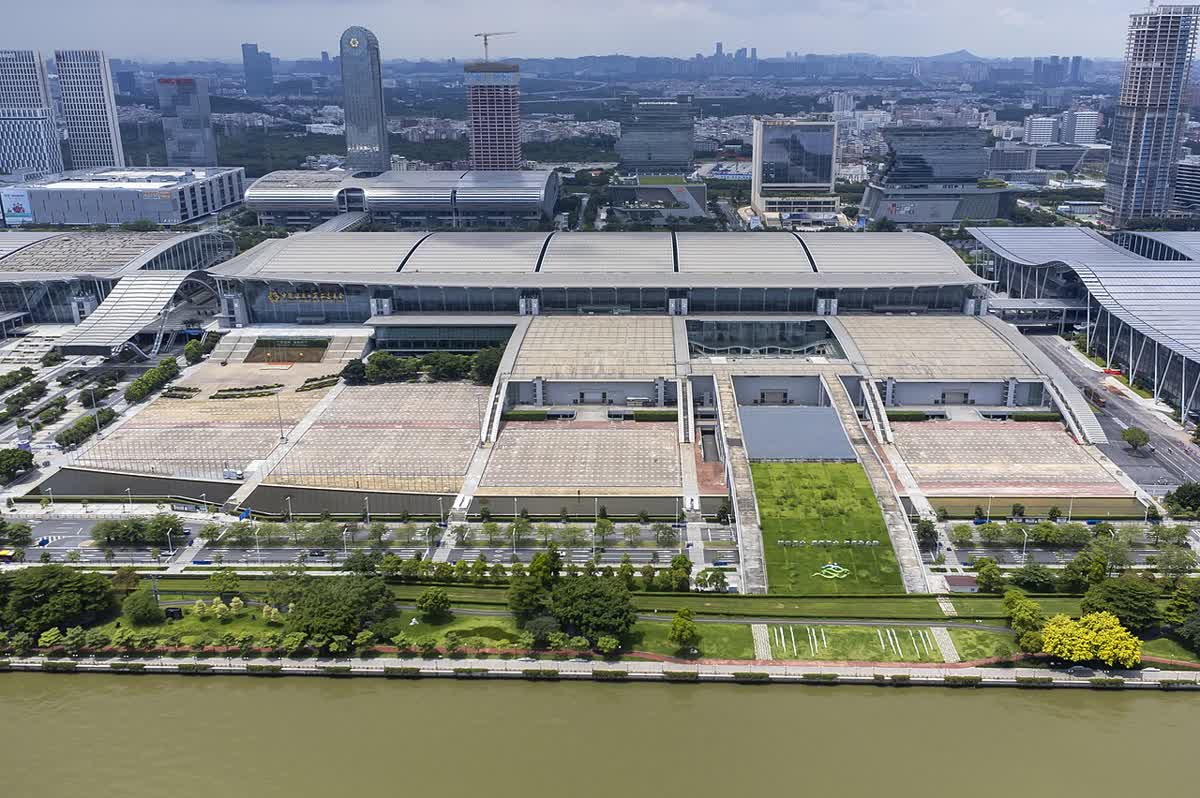
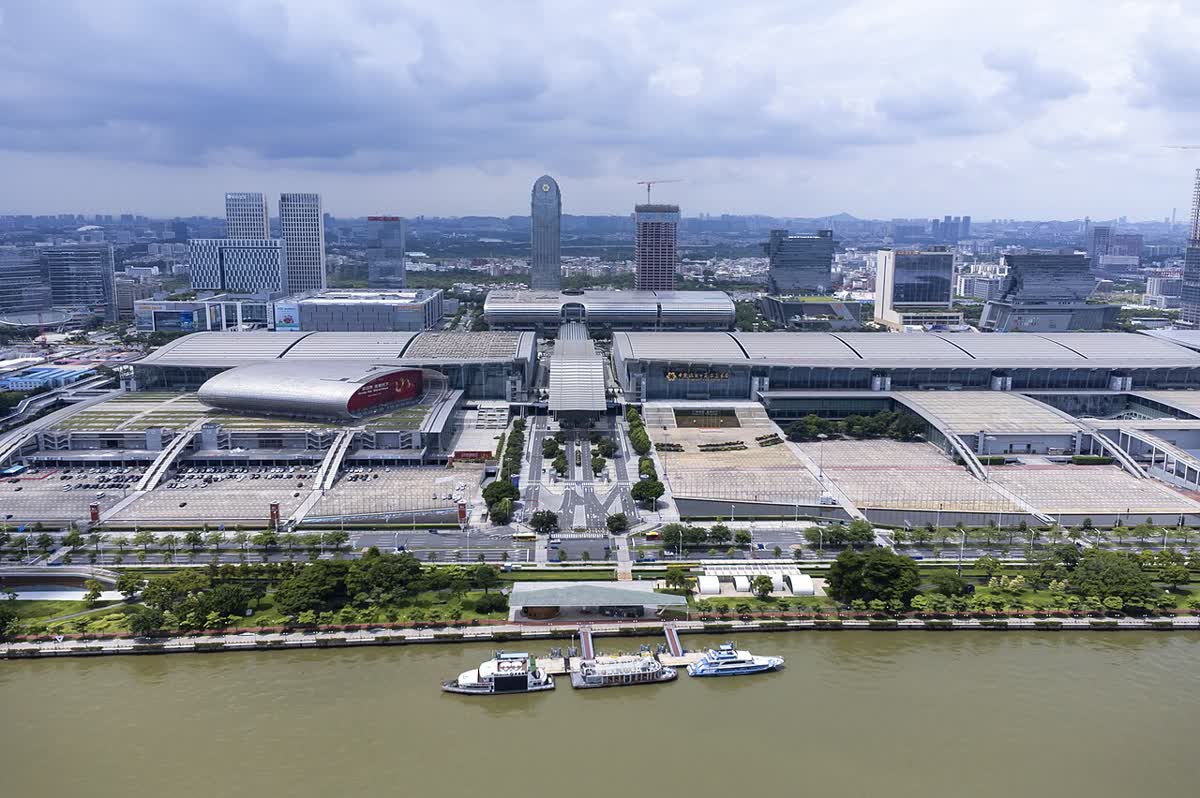
Photo: Tim Wu, CC BY-SA 4.0, via Wikimedia Commons.
What does a booth price actually state?
| What you heard | What it left out | What to ask before you move on |
|---|---|---|
| “$X per unit” | The quantity tier it belongs to - usually their MOQ, not your order | What is the price at my quantity? Send the tier table |
| “FOB Guangzhou” | Who pays inland freight, export declaration and port handling; what happens under EXW or CIF | Which term are we actually quoting, and what is excluded |
| “30 days” | From deposit, from artwork approval, or from PO | Lead time from what starting point |
| “Same as this sample” | Material grade, thickness, finish, packaging | Which grade, and what is written on the approved sample |
| “CE certificate” | Whether it covers this model, who pays the test, which lab | Certificate number for this model, and who pays re-testing |
| “Good price, valid now” | When it expires and which parts re-price | Validity date, and the index it follows |
None of this is dishonesty. A booth is a place where a salesperson compresses a quotation into one sentence, and the sentence loses exactly the six dimensions above.
Which lines sit between the booth quote and your landed cost?
There are two columns of gap, and buyers usually only look at the first.
| Line | Side | Why it moves |
|---|---|---|
| Unit price at your quantity tier | Supplier | The booth number assumed their MOQ; small orders are quoted off a different row |
| Material grade | Supplier | The float price usually refers to the standard grade, not the one your spec needs |
| Packaging, artwork, printing plates | Supplier | Retail box, inner carton, pallet, label - each is a cost and a tooling charge |
| Certification and testing | Supplier | Per model, per standard, and sometimes per shipment |
| Tooling, moulds, jigs | Supplier | One-time and frequently quoted separately, or not at all |
| Sample and inspection costs | Supplier | Sample fees are often refundable against the order but must be stated |
| Inland freight, export declaration, port charges | Supplier | Inside FOB, invisible until you see the term written down |
| Payment terms and currency exposure | Supplier | 30/70 versus 100% T/T changes cash cost, not list price |
| Ocean/air freight, insurance | Buyer | Nothing to do with the factory’s number, and often the largest single line |
| Duty, import VAT, destination charges | Buyer | Determines your landed cost, and therefore whether the deal works at all |
Half the “price increase” buyers experience is not the supplier at all - it is the FOB line ending at the port while the buyer was mentally calculating a delivered price. Converting one number into the other is what the landed cost calculator is for; guessing at it is how a good margin disappears.
Why does the price move between the booth and the invoice?
Four mechanisms, in order of how often we see them.
1. The number was never in the file. The rep quoted from memory - a figure they quote all week. When the factory actually prices your enquiry, the number is different because it was never calculated in the first place. This is the most common cause and the easiest to prevent: ask for it by email from the address on the business card.
2. Your quantity is not the tier. Booth prices assume the MOQ row. Order a third of that and the unit price legitimately moves; order five times more and it should fall. If a supplier cannot produce a tier table, they are quoting you a feeling.
3. Scope was added afterwards. Packaging design, artwork plates, a certification the model did not hold, an inspection standard the factory has to staff for. Each addition is real money, and each one should have been priced as a separate line rather than absorbed into a headline number that then “changes”.
4. The product is index-linked. Copper cable, aluminium extrusion, heat sinks and steel hardware are re-quoted when the metal moves. This is the reason a fair price on anything copper-bearing is the least stable number on the page: the cable price you collected in October is a snapshot, not a commitment. Cables and the standards around them are already a trap area - the BOQ traps in cable specification are worth reading before you compare those lines.
That is also why “valid until further notice” is a warning rather than a comfort. A serious offer has a date on it and names the component that would re-price it.
What are the four questions to ask at the booth?
- What quantity is this price for, and what is the price at my quantity? Take the tier table, not the headline.
- What exactly is in the box? Material grade, packaging, certificate and testing for this specific model.
- Which parts of this number are index-linked, and until when does it hold? Get a date and the re-pricing trigger.
- What gets removed to make it cheaper? This is the only negotiation that works at a booth - on scope, not on the number. If the answer is “a thinner wall” or “a lower-grade driver”, you have learned something about the product.
Then do the thing almost nobody does: write the answers into one email and send it before you leave Guangzhou. A photograph of a catalogue page with handwritten notes is not a quotation, and it will not survive contact with a factory’s finance department. The quotation comparison template is built for exactly this: one page, the same rows for every supplier, so the differences are visible instead of remembered.
How do two booth quotes become comparable?
Two suppliers, both “around the same price” at the fair, and one of them is 20% cheaper - on paper. Line them up on the same eight rows and the reason usually appears: one quoted a lower grade, one excluded packaging, one assumed twice your quantity, one had certification the other did not.
If you are buying a project package rather than a single product, the same discipline applies at a larger scale: five different quotations for one bill of materials is normal, and why identical specifications come back 2-3x apart is the longer version of this argument.
What can actually be won on the spot?
Not the price - a salesperson’s discount authority is limited and the factory’s number is set by tier and material. What you can win at a booth is worth more:
- A lower MOQ for the first order, in writing.
- A sample committed to a date, with the model and grade named.
- The engineer’s direct contact, not the sales inbox.
- Written acceptance of third-party inspection at a stated AQL.
- The tier table for the volume you expect next year.
Each of those changes what happens in month three; a 2% discount changes a line in a spreadsheet.
Then close it in the following week
A number collected at a booth becomes a price only after an email, a scope and a date. The process for that week - what to send, what the answers prove, and how to verify the plant that quoted you - is in the 48-hour follow-up routine.
Send Us the Booth Quotes
Send the numbers you collected - supplier, model, quantity, term - and we will turn them into comparable lines: same quantity tier, same scope, same term, with the index-linked parts and the validity dates flagged so you know which figures can be trusted for a month and which ones expire next Tuesday. Contact us or start from the RFQ template; if the enquiry is an equipment package rather than a single product, quality control is where the scope conversation usually needs to end up.