China to USA shipping time:
every lane, and what each figure counts from
Air is 6–9 working days to pickup; the Matson sea lane is about 16 natural days and standard sea about 22 — from vessel departure. Here are the real numbers from our contracted forwarder's September 2026 card, with the stage that usually explains a late shipment.
Four lanes from China to the USA — and what each clock counts from
Every figure below is from the forwarder rate card dated 22 September 2026, in RMB per kilo of chargeable weight, DDP door-to-door. The right-hand column is the one most quotes leave out.
| Lane | Counted from | Transit | Rate band | Notes |
|---|---|---|---|---|
| Air priority (P) | From cargo receipt at our Guangzhou warehouse | 6–8 working days to pickup | RMB 54–68/kg | Fastest lane on the card. Mainland China flights, UPS/FedEx last mile, DDP. No battery goods. |
| Air economy (C) | From cargo receipt | 7–9 working days to pickup | RMB 57–71/kg | Hong Kong / Korea flights. Accepts built-in batteries and magnetic goods with a declaration. |
| Sea — Matson express | From vessel departure | About 16 natural days to pickup | RMB 13.5–20/kg | Delayed-sailing credit RMB 0.5/kg/day, capped at RMB 2/kg. No battery goods. |
| Sea — Yantian standard | From vessel departure | About 22 natural days to pickup | RMB 10.8–17/kg | Cheapest US lane. Built-in batteries accepted with a declaration (no power banks). |
Why "22 days" and "22 days" are not the same number
Air lanes count from the moment your cargo is in our warehouse; sea lanes count from vessel departure, which happens after consolidation and loading. So the honest door-to-door figure for a five-supplier sea order is 22 days of sailing plus 3–7 days in China plus 1–3 days of clearance and delivery: roughly four to five weeks from the day the last factory releases the goods. Compare quotes on the same start line or you are comparing nothing. See all US lanes, zones and rates →
Where the time actually goes
Five stages, in order. If a shipment is late, it is nearly always stage 1 or stage 4 that did it — not the flight and not the vessel.
1. Collection and consolidation
1–3 days per supplier
We collect from each factory, check quantities against your PO, photograph and repack. One supplier is quick; five suppliers is where the days go.
2. Export clearance and loading
1–2 days
Customs declaration in our name, container stuffing or airline handover, and the document set that travels with the cargo.
3. Main carriage
Air 2–4 days · Sea 14–20 days
Flight time is hours; the working-days figure includes airline acceptance, transhipment and arrival. Sea is measured from vessel departure, and the vessel itself only leaves on its schedule.
4. Import clearance
1–3 days
On DDP we file and pay duty and tax. This is the stage that becomes a week if the invoice description, HS code or declared value does not match the goods.
5. Delivery to your address
1–4 days
Last-mile courier for air lanes, truck for sea. Commercial and residential addresses price differently, and an FBA warehouse needs an appointment.
6. The variable nobody quotes
0–7 days
Documents that do not match the goods, a customs inspection, peak-season congestion or a magnetic/battery declaration that was not ready. Not a lane property — a preparation property, and the one you actually control.
The same five questions for five markets
Buyers searching "china to usa shipping time" usually end up asking about several destinations in the same week. Same rate card, same counting rules.
| Market | Air | Sea | Rail | Sea from |
|---|---|---|---|---|
| USA | 6–9 working days to pickup | 16–22 natural days from departure | — | RMB 10.8/kg |
| UK | 5–7 working days to pickup | 40–45 days sailing (oversized) | 25–30 days to pickup (rail-truck) | RMB 7.5/kg head-haul |
| Canada | — | 25–30 days (Vancouver) · 35–40 days (Toronto) | — | RMB 1,450/CBM |
| EU (DE/NL/BE/FR) | 8–12 calendar days to pickup | 40–45 days after sailing | 22–25 days to pickup | RMB 8/kg |
| Poland | 6–10 working days | 38–45 days after departure | 16–18 days after train departure | RMB 9/kg |
| India | — | 15–25 days port-to-port | — | Quote per shipment |
Air and sea figures are the card's published transit times to pickup (air) or from departure (sea). India is quoted per shipment because we do not hold a per-kilo card for that lane — we say so rather than invent a number.
What reliably slows a US shipment
- Invoice description, material, use, HS code or declared value not matching the goods
- A customs inspection plus the detention, demurrage or storage it triggers
- Peak season, mid-November to February — schedules stretch and delay compensation is suspended
- Magnetic cargo without a magnetic inspection report, or battery goods booked on a lane that refuses them
- Pieces over 38 kg with a girth above 300 cm, or irregular packaging, on air lanes
- A second delivery attempt because no one was at the address, or an FBA warehouse with no appointment
What actually makes it faster
- Send the invoice, packing list, HS code and declared value before the cargo reaches us — this is worth more days than any lane upgrade
- One consolidated shipment instead of four: one export declaration, one import entry, one delivery
- Air priority when the margin justifies it; rail or sea only when you can hold four to six weeks of stock
- Repack to reduce volumetric weight — bulky light cargo bills half its volumetric weight from 100 kg actual on US lanes
- Book outside peak season, or accept a buffer between mid-November and February
- Confirm the address type up front: commercial, residential and FBA warehouses price and schedule differently
Working with a partner in the US? We are the China-side desk: collection, checking, consolidation, export clearance and handing over on EXW, FOB or DAP with your own master bill. See how consolidation works → UK transit times and postcode zones →
Rates, zones and preparation — the rest of the picture
All four lanes, the three ZIP zones, the anti-dumping watch list and DDP double clearance.
ZIP, weight and packing in — zone, tier and a door-to-door range out.
Labelling, carton and weight marks, palletising and delivery into US, UK and Canadian FBA warehouses.
How pallets are counted and priced, with the transit comparison across four markets.
How to choose between LCL, FCL, air and express, and what a freight bill is made of.
How we collect from several suppliers, inspect, consolidate and ship on one booking.
Transit times to the USA — the questions buyers ask
What each figure counts from, why shipments run late, what we compensate for, and which lane fits a three-week deadline.
How long does shipping from China to the USA take?
On our contracted forwarder's September 2026 rate card: air priority is 6–8 working days to pickup and air economy 7–9 working days, both counted from the day we receive the goods. Sea freight is 16 natural days to pickup on the Matson express lane and about 22 natural days on the standard Yantian lane, counted from vessel departure. Add 3–7 days of consolidation and export paperwork in China before the cut-off, and 1–3 days of clearance and delivery at the US end if you are not already counting them.
Is that time port-to-port or door-to-door?
The card figures are to pickup at your delivery address — door-to-door DDP — but each lane counts from a different starting point, and that is where most quote comparisons go wrong. Air: from cargo receipt at our warehouse. Sea: from vessel departure, so it excludes the 3–7 days we spend collecting from your suppliers, checking, repacking and clearing export. If a quote tells you "22 days" without saying 22 days from where, treat it as marketing.
Why did my last shipment take longer than the estimate?
The usual reasons, in order of how often we see them: documents that did not match the goods (invoice description, HS code or declared value), a customs inspection at either end together with the detention, demurrage or storage it causes, peak-season congestion from mid-November to February, sailing or flight delays outside the forwarder's control, and cargo that needed a magnetic inspection or a battery declaration before it could be accepted. Weather, port strikes and airline capacity cuts in the same week hit everyone on the lane, not just your shipment.
What is the fastest realistic way to get goods from China to the USA?
Air priority (P) at 6–8 working days to pickup is the fastest lane on our card, with air economy (C) one to two days behind it — and you only get the full benefit if your documents are ready before the cargo arrives at our warehouse. In practice the paperwork is what decides the total: a shipment that arrives with a complete invoice, packing list, HS code and declared value moves the same day, while one that needs three rounds of clarification sits for a week before it even books.
Do you compensate for late sea shipments?
On the Matson express lane, yes: the card carries a delayed-sailing credit of RMB 0.5 per kilo per day, capped at RMB 2 per kilo. There is no delay compensation on the other lanes, and the card is explicit that delays caused by customs, weather, strikes or airline capacity are outside it. From mid-November to February the forwarder also suspends delay compensation because peak season makes schedules unpredictable — we tell you that before booking, not after.
Does consolidation add time?
Yes, and it is the stage buyers forget to budget. Collecting from several suppliers takes 1–3 days per factory, and the goods then need checking against your PO, photographing, repacking and export clearance before the cut-off — 3–7 days in total for a multi-supplier order. It buys you something worth having: one shipment instead of five, one customs entry instead of five, and usually a lower freight rate because volume pushes you into a better weight tier.
Which lane should I pick if I need the goods in three weeks?
Air priority if the value per kilo justifies it, air economy if it is close and you want the lower rate, and rail or sea only if you can accept four to six weeks. A useful rule of thumb on our card: anything under 100 kg is nearly always air, because the sea saving per kilo rarely covers the four extra weeks; anything over 500 kg is nearly always sea, because the air premium becomes thousands of yuan. Between those numbers we quote both and show you the crossover in writing.
Can I ship to an Amazon FBA warehouse on the same lanes?
Yes, and the transit time is the same — what changes is the preparation: two or more labels per carton, Team Lift marking above 22.5 kg, Heavy Package marking above 15 kg, and a delivery appointment the consignee or we arrange with the warehouse. US FBA lanes are door-to-door DDP like any other US shipment; if you want the full preparation checklist it sits on our FBA prep and shipping page.
Tell us what you need and when — we tell you if it is possible
Send the goods, the volume, the destination ZIP and your deadline. You get a dated plan with the lane that hits it, and an honest no if none of them can — free, within 48 hours.
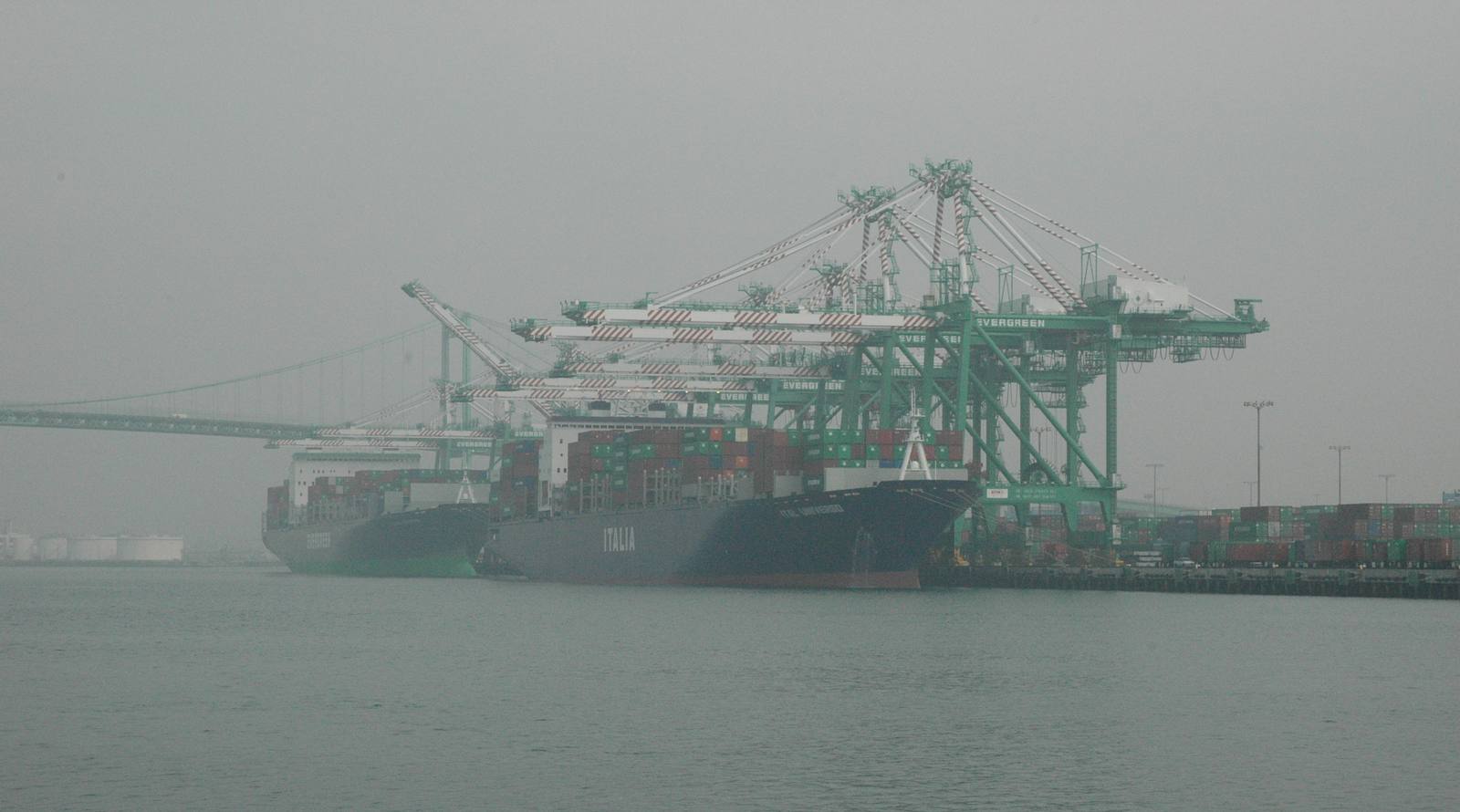
Transit times from our contracted forwarder's rate card dated 22 September 2026 (RMB, DDP, standard limits); customs, weather and airline capacity excluded. Planning reference, not a quotation. Photo: Evergreen San Pedro terminal — Marshall Astor, CC BY-SA 2.0, via Wikimedia Commons.