A remote factory audit is not a weaker version of an on-site visit. It answers a different set of questions.
Video can prove that a legal entity exists, that a building stands at a specific address, that the machines are installed and running, and that people work there. It cannot prove how much spare capacity the factory has, whether part of your order will be sub-contracted to a workshop down the road, or how much raw material is actually in the warehouse.
Knowing which column you are in decides whether one video call is enough or whether somebody has to get on a plane.
Why buyers ask for a remote audit at all
Three reasons come up again and again.
The trip is expensive relative to the decision. A Guangdong factory visit from Europe costs a flight, four nights and two working days. For a buyer still choosing between five suppliers, that maths does not work.
The decision point has moved earlier. Buyers now want a screening step before they spend money on samples, not after.
The factory is inland. Shenzhen and Guangzhou are easy. A supplier in Zhengzhou or Chengdu adds two travel days to a trip that was already tight.
None of this makes video better than standing on the floor. It makes video the right tool for one specific job: confirming that the supplier is who it says it is and does what it says it does, before you commit money.
What a video audit can prove
1. That the legal entity is real
Ask for the business licence before the call, not during it. Every Chinese licence carries an 18-digit Unified Social Credit Code, and you can check that code yourself on the National Enterprise Credit Information Publicity System (gsxt.gov.cn) in about two minutes.
Check three things: the company name matches the invoice header, the registered address matches the site you are about to see, and the business scope covers manufacturing of your product. “Trading” and “technology” scopes are common and not automatically disqualifying, but they change who you are really buying from.
2. That the site exists where they say it does
Start the walk at the gate, not in the meeting room. Ask the person holding the phone to pan to the company plaque on the building, then to the street, then keep walking. Compare the plaque with the licence address.
If the factory is in an industrial park with numbered buildings, ask for the building number twice, five minutes apart. Staged tours lose track of their own story.
3. That the machines are installed, not rented for the day
Every serious machine has a nameplate: model, serial number, year of manufacture. Ask for a close-up and ask the operator to read the model number aloud. Then ask what the machine was running this morning and what it will run this afternoon.
A nameplate proves ownership of a machine, not of a production line, but it removes the most common form of fiction: the “factory” that is a showroom with three demo units.
4. That the process runs in a particular order
Pick one step in your product and ask to see it, live, unannounced. For cable, ask to see the conductor stranding before the jacket goes on. For a control panel, ask to see the wiring jig. For anything painted, ask to see the pretreatment line.
The point is not to inspect quality. It is to see whether the process you were sold on paper exists as a sequence in a building.
5. That the people are the people
Ask a line worker a question about the process, through the phone, not through the sales manager. What is the reject rate on this station? Who signs off on first-off inspection?
You will get one of two outcomes. A real answer, or a translation that adds nothing. Both are information.
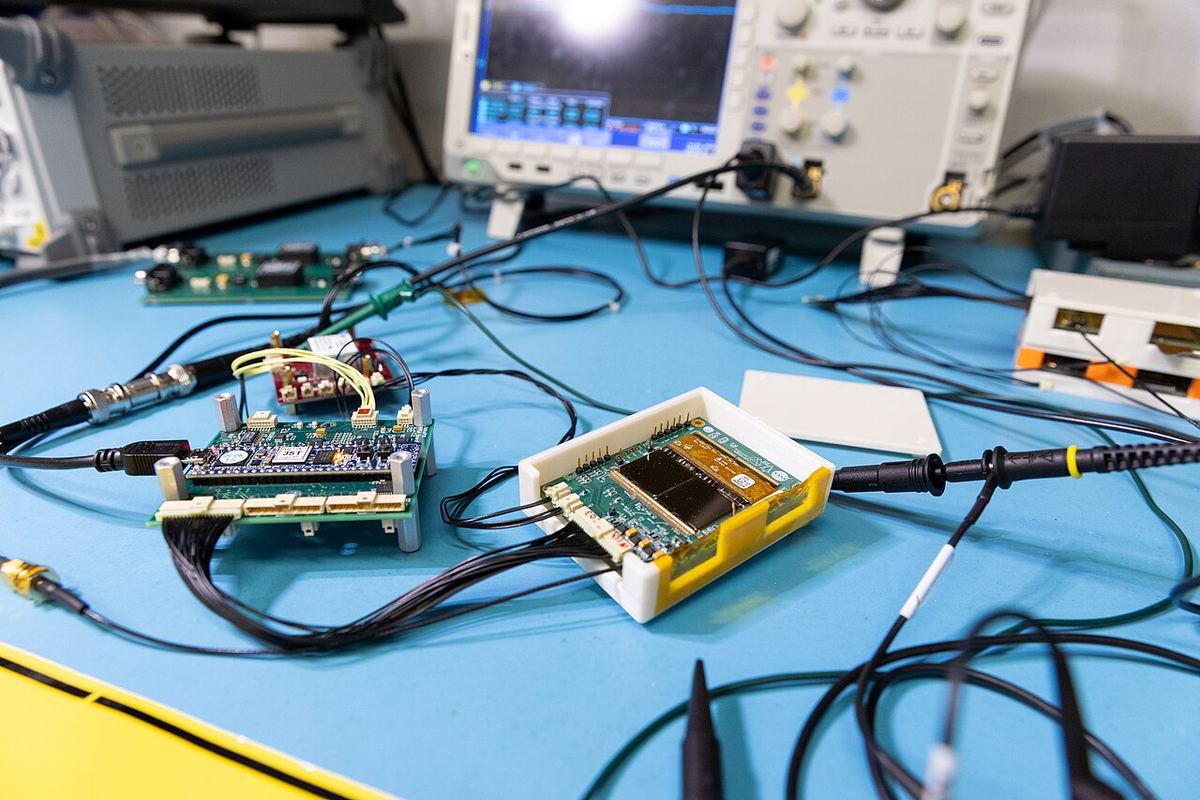
Two things make or break a remote audit: who holds the camera, and whether you ask for something they did not prepare for. A polished “factory tour” video proves that a video exists.
What a video audit cannot prove
This is the part most remote audit offers skip.
Spare capacity
A running line proves one shift is working. It does not prove the factory can absorb your 5,000 units alongside its existing orders. You can ask for a production schedule or a screen-share of the MRP system, and some factories will show you. It is still self-reported.
Sub-contracting
The single most common failure in Chinese sourcing is not a bad factory. It is a good factory that passes your audit and then routes part of the order to a smaller workshop when the schedule tightens. Video cannot see a truck leaving at 11pm.
The partial defence is contractual: name the site in the PO, require written approval for any sub-tier, and put the penalty in the contract. It is not an audit finding. It is a contract term, and it belongs in the same conversation.
Raw material stock
Counting pallets on camera is theatre. A warehouse can be filled for the day. What matters is the in/out record against your order quantity, and that is a document question, not a video question.
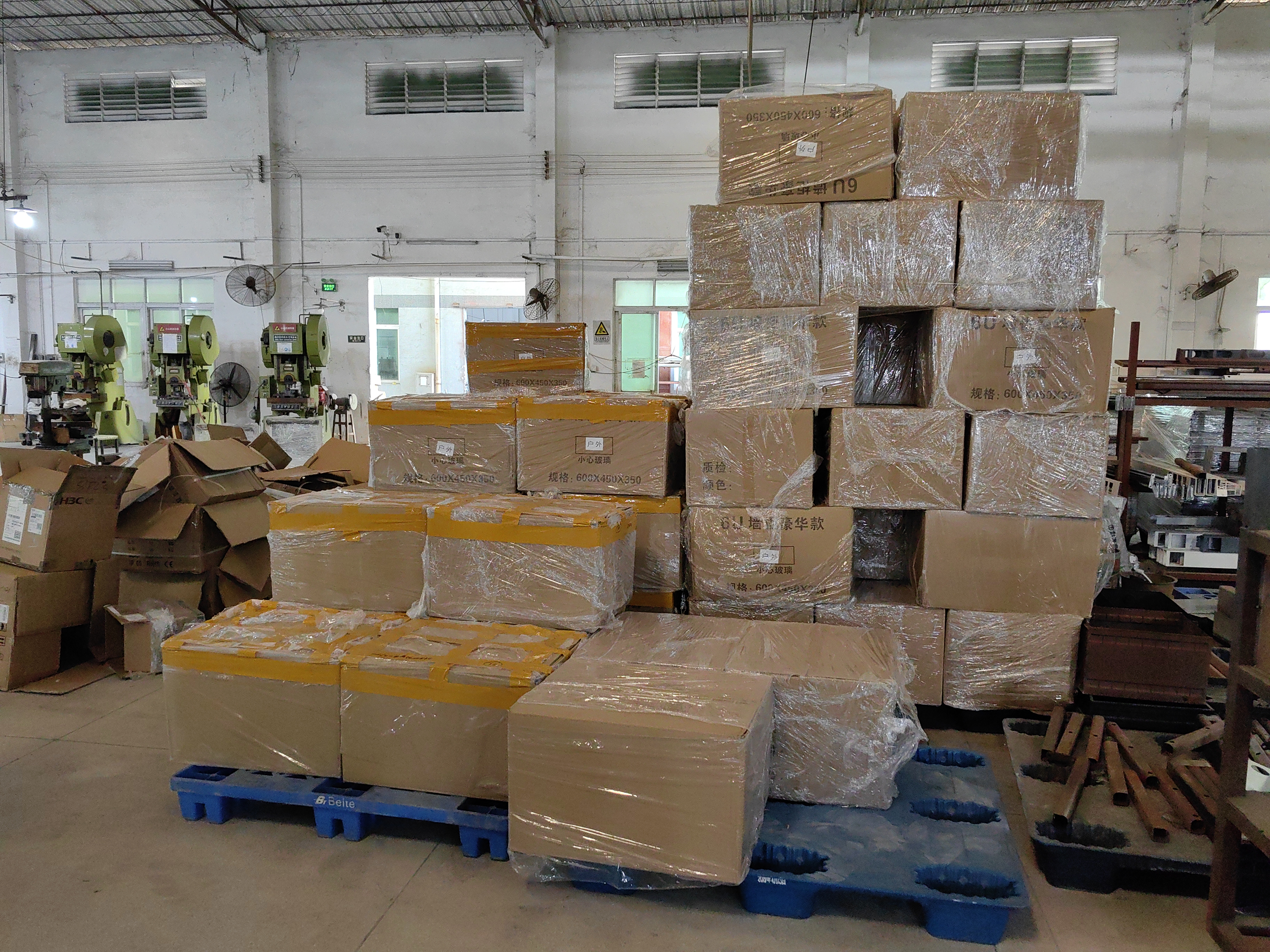
Labour and safety conditions
A 40-minute walk can be staged, and a social compliance audit is a separate discipline with its own standards. If your customer requires BSCI or SMETA, a video call does not substitute for it.
The checks you can run without any call at all
Before you book anything, four databases will tell you more than an hour of video.
| What you are checking | Where to check it |
|---|---|
| Company exists, address, scope, status | gsxt.gov.cn, using the 18-digit credit code |
| Export rights and customs registration | China Customs credit publicity platform (credit.customs.gov.cn) |
| ISO 9001 or product certificate | The issuing body’s own database, or IAF CertSearch |
| CE notified body number | The EU NANDO database |
| UL certification | UL Product iQ |
Two details catch buyers out. First, an ISO certificate lists the site address it covers; factories with two plants often present a certificate issued for the other one. Second, an EU Declaration of Conformity must name the manufacturer and its address; a DoC issued to a trading company tells you who is legally responsible, which may not be who is welding your product.
For what a credible remote audit is supposed to look like, IAF MD 4 sets out how information and communication technology may be used in auditing. It is written for certification bodies, not buyers, but the principles transfer.
The 60-minute call: before, during, after
Before the call
Send one message with a fixed list: business licence, factory floor plan, machine list with models, certificate numbers with issuing bodies, and a three-minute uncut video of the line. Then state the route you want to walk, in order, from gate to loading dock. Give them 48 hours.
Factories that prepare well are usually the ones that are used to being audited. Factories that panic and ask “can we just show the showroom” have told you where the conversation is going.
During the call
- Gate first, plaque second, licence third.
- Walk one direction and do not let the camera cut.
- Nameplate close-up on the machine that matters most.
- Ask for a specific process step, chosen by you.
- Ask for today’s date written on paper and held next to a machine.
- Ask a worker a question without the sales manager translating.
- Ask to see the reject bin and the QC station log.
- End at the loading dock. Loading activity is a decent proxy for whether goods actually move.
After the call
A written report within two working days: photos, timestamps, what was verified, and a short section on what could not be verified. That last section is the useful one. It tells you what the on-site visit, if you do one, has to cover.
When remote is enough, and when you have to go
| Situation | Remote audit | On-site visit |
|---|---|---|
| Existing supplier, repeat order, new SKU | Enough, plus pre-shipment inspection | Optional |
| New supplier, first order | Useful as screening | Recommended |
| New tooling or custom mould | Not enough | Required at T1 |
| Regulated product (fire, medical, PPE) | Not enough | Required, plus lab testing |
| Buyer’s own customer requires social compliance | Not enough | Required, by an accredited body |
The rule of thumb we use: video decides who gets the deposit. A visit decides who gets the balance.
Red flags that only appear on video
- The camera never leaves the meeting room, and the “workshop tour” is a separate pre-recorded file.
- One person answers every question, including the technical ones.
- Nameplates are out of focus in every frame.
- “That workshop is closed today” — on a Monday morning, in a factory that claims three shifts.
- The licence address and the site address differ, and the explanation arrives before you ask.
- They will not walk to the loading area.
- Every product is “in production” but no work-in-progress is visible anywhere.
What this means if you are buying from China this quarter
If you cannot get on a plane, the sequence that protects you is: document verification first, live video second, written report third, and a contractual sub-contracting clause always.
You can run the first three yourself. If you would rather not, we run them from Guangzhou — document checks, the live walk-through with a checklist matched to your product, and a report that separates what was verified from what was not.
Start with the supplier audit service, or take the factory audit checklist into your next call. If you are still choosing between suppliers, the China factory audit guide covers the on-site version, and pre-shipment inspection covers what happens after the order.
FAQ
Is a remote factory audit accepted by buyers?
For identity and process checks, yes. For first orders, regulated products, or anything where capacity and sub-contracting matter, most buyers treat video as a screening step and still send someone on site before the deposit.
How long does a remote factory audit take?
Document verification takes a few hours and can be finished before any call. The live walk-through runs 45 to 60 minutes. The written report follows within two working days.
What if the factory refuses a live video call?
That is your answer. A factory that will not walk a phone through its own workshop for an hour, for a buyer about to place an order, is either not the factory that would make your goods, or has something on the floor it does not want seen.
Can I combine a remote audit with an inspection later?
Yes, and that is the normal pattern. Audit first to choose the supplier, inspect before shipment to confirm the goods. The two check different things and neither replaces the other.