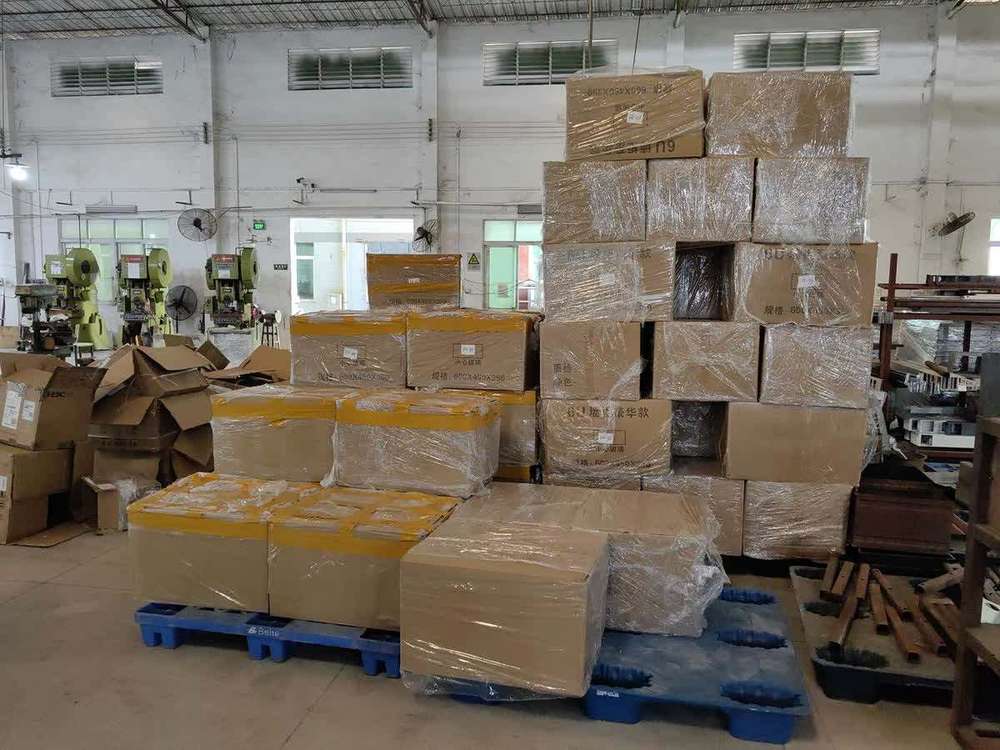
Tile is the easiest category in cross-border building materials to price by the square metre, and the easiest to lose money on through freight and breakage. On the same 600x600 quotation, one factory quotes USD 4.8/m2 and another USD 5.6/m2, yet the cheaper one can land higher. Tile is heavy cargo: ocean freight is driven by weight, not cube. And what decides whether you keep a margin is the breakage rate.
This guide follows the order a real purchase actually runs: which absorption class you need (get this wrong and everything after it is wrong), the seven parameters that decide price and service life, how the Foshan and inland production bases divide the work, the 12 items a quotation must state in writing, the weight limit on a 20GP (tile often should not ship in a 40HQ), how to push breakage below 1%, the seven points to watch at inspection, and how US, EU and India certification requirements differ.
Photo: Hugh Venables, CC BY-SA 2.0, via Wikimedia Commons.
First, confirm which class of tile you need: absorption, not pattern
In international trade “ceramic tile” is one broad category, and two tiles that differ 2-3x in price can sit in the same catalogue. The dividing line is water absorption (E), defined by ISO 13006 and GB/T 4100 (EN 14411 in the EU).
| Class | Water absorption E | Typical products | Where it can be used | What to actually watch when buying |
|---|---|---|---|---|
| Porcelain BIa | <= 0.5% | Polished tile, rustic tile, large-format slabs | Interior and exterior floors, ventilated facades, underfloor heating | Flexural strength, flatness, slip DCOF |
| Porcelain stoneware BIb | 0.5%-3% | Wood-look tile, mid-range rustic tile | Interior floors, kitchens and bathrooms | Batch-to-batch absorption variation (it swings) |
| Fine stoneware BIIa | 3%-6% | Mid-to-low price floor tile | Interior floors (safe in dry areas) | Wet areas need a separate slip report |
| Stoneware BIIb | 6%-10% | Entry-level floor tile / wall-and-floor | Mostly interior walls | Confirm the use class before laying on floors |
| Earthenware BIII | > 10% | Glazed interior wall tile | Interior walls only | Never buy it as a wall-and-floor tile |
The one-line rule: absorption is not a quality ranking, it decides the fixing method and whether the tile can go outdoors. Porcelain at <= 0.5% can be laid on cement mortar or thin-bed adhesive, can go on facades, and survives freeze-thaw. Earthenware above 10% belongs on interior walls only; put it outdoors in a freeze-thaw cycle or on a wet floor and one winter will show you why.
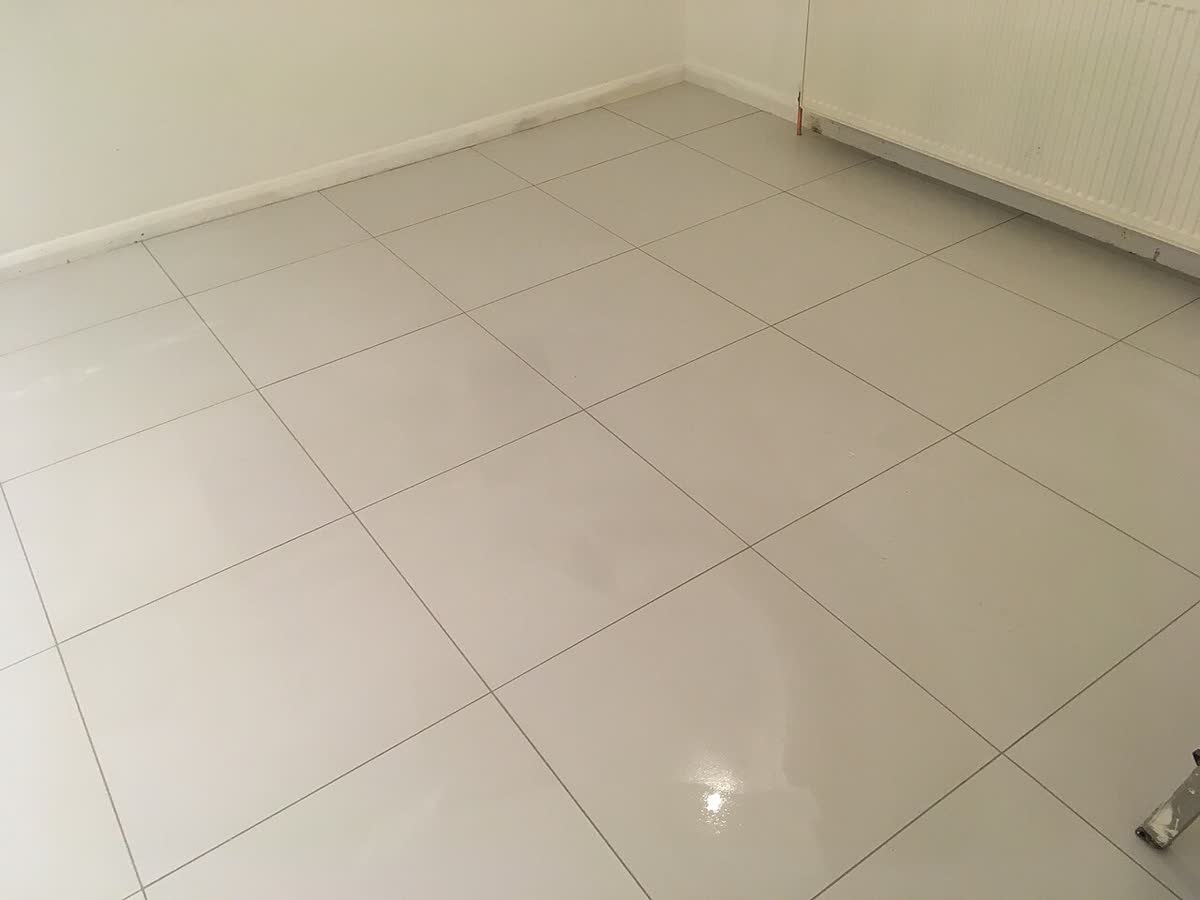
Photo: ColumbD, CC BY-SA 4.0, via Wikimedia Commons.
The seven parameters that decide price and service life
When a factory quotation arrives, check these seven first. If one is missing, the quote cannot be compared with another.
| Parameter | Common spec / limit | Where quotations get vague | How to verify |
|---|---|---|---|
| Water absorption | By class: BIa <= 0.5%, BIb <= 3%, BIII > 10% (ISO 10545-3) | Says “porcelain” without the percentage or report number | Ask for the report number and trace it to the batch |
| Size and thickness | 600x600 / 800x800 / 600x1200 / 750x1500 / 900x1800 / 1200x2400 mm; 8-12 mm thick | Quoted at 9.5 mm, delivered at 9.0 mm on a negative tolerance | Measure length, width and thickness on 10 pieces per batch |
| Dimensional tolerance and flatness | Length/width commonly +/-0.5%, edge straightness / flatness <= 0.5%, squareness <= 0.5% (ISO 10545-2) | “Meets national standard” with no figures | Pull 10 pieces, measure diagonals and edges, check warpage with a feeler gauge |
| Flexural strength | Porcelain averages >= 35 N/mm2 (EN 14411 for BIa); large formats need more | “High strength” instead of a number | Third-party report; for slabs also review lifting and transport |
| Abrasion resistance | Glazed tile by PEI I-V (EN 154); unglazed porcelain by abrasion depth (ISO 10545-7) | Commercial projects quoted a domestic PEI grade | Set the grade by use and write it into the contract |
| Slip resistance | US ANSI A326.3 wet DCOF >= 0.42 (level interior floors); German DIN 51130 R9-R13; wet areas and pool surrounds also EN 16165 A/B/C | Only a dry coefficient, or a figure from another standard passed off as US | Report standard name + value + test date |
| Colour code and batch | Colour code + sequence/firing number, sealed sample mandatory | Colour code without firing number, so replenishment mismatches | Compare against the sealed sample under standard light at inspection |
One cost benchmark: once flexural strength and absorption are lifted from “standard minimum” to “project requirement”, factory cost rises roughly 5-10%. Raising slip resistance to R11 or DCOF >= 0.42 usually needs a glaze formula change, adding another 3-8% to the unit price. So a quote that is “15% cheaper on the same pattern” has normally given up one or two of these three, not the factory’s margin.
Production base map: pick the base by target market, then talk price
| Production base | Strength | Typical buyers | Port of shipment |
|---|---|---|---|
| Foshan, Guangdong (Chancheng, Nanhai, Sanshui) | Most concentrated export cluster; porcelain, large-format slabs and stone-look development move fastest, export documents and packaging standards most mature | Wholesalers and contractors in the US, EU and Middle East | Shenzhen / Nansha / Foshan (barge to Shenzhen) |
| Zibo, Shandong | Mainly glazed interior wall tile, strong value, close to northern ports | Price-sensitive orders for the Middle East, Africa, South Asia | Qingdao |
| Jinjiang / Nan’an, Fujian | Long-established exterior wall tile base (full-body exterior tile, strips) | Exterior wall project orders, Southeast Asia and Middle East facade packages | Xiamen |
| Gao’an, Jiangxi / Jiajiang, Sichuan | Mid-to-low end interior wall tile, mostly domestic | Domestic channels, low-price trial orders | Weak export support |
| Gaoyi, Hebei | Northern interior wall tile cluster | Northern domestic sales, Russia / Central Asia | Tianjin |
Field experience: on the same specification, Foshan quotes run 10-20% higher than inland bases, and the gap comes mainly from design development capability, completeness of third-party reports and packaging standards. If your order is large-format for the US or EU, Foshan is almost the default. If it is standard interior wall tile for Africa or South Asia at an extremely price-sensitive level, Zibo and Fujian are more realistic. For exterior wall project orders, go straight to Jinjiang / Nan’an, where freeze-thaw and flexural strength are understood more deeply than in general-purpose bases.
Tile often appears in the same project as sanitaryware, flooring and windows: for sanitaryware packages (vanity, basin, faucet) see the bathroom vanity sourcing guide; if the floor needs waterproof plus fast installation, compare the SPC flooring sourcing guide; for facade systems see the aluminium window and curtain wall sourcing guide.
The 12 items a quotation must state in writing
- Category and absorption class (BIa / BIb / BIIa…) plus test report number;
- Size (L x W x thickness in mm) and weight per piece;
- Surface finish (polished / soft-matte / matt / dry-grain / moulded) and gloss level;
- Colour code + sequence (firing) number + sealed sample reference;
- Written limits for dimensional tolerance, squareness, edge straightness / flatness;
- Flexural strength and abrasion grade (PEI or abrasion depth);
- Slip data (DCOF or R value) plus the test standard name;
- Pieces per carton, m2 per carton, gross weight per carton;
- Packaging: carton ply, pallet spec (or loose loading), corner protection, stretch wrap, mark content;
- Loading figures: m2 and total weight per 20GP and per 40HQ (this decides your landed cost);
- Trade terms (FOB Shenzhen / Foshan / Qingdao, or EXW / CIF) and payment method;
- Lead time, peak-season extension terms, and how breakage liability and compensation are split.
MOQ and container loading: tile is heavy cargo, so a 40HQ is often the wrong choice
This is the most overlooked section in tile sourcing, and the one that eats margin fastest.
| Item | Common figures | Notes |
|---|---|---|
| Reference weight | Porcelain 9-10 mm about 20-24 kg/m2, with carton and pallet 21-26 kg/m2 | Each extra 1 mm of thickness adds about 2.4 kg/m2 |
| 20GP capacity | About 1,000-1,350 m2 | 20GP weight limit about 28 tonnes (carrier and inland road limits bring actual stow to 22-26 tonnes), so you hit the weight ceiling first |
| 40HQ capacity | About 950-1,250 m2, often no more than a 20GP | 40HQ limit about 26.5 tonnes, i.e. about 1.5 tonnes less than a 20GP; the extra cube is useless for tile |
| When a 40HQ makes sense | Thin 6 mm tile, mosaic, decorated tile, mixed light cargo | Only worth pricing by cube below 15 kg/m2 |
| MOQ | 500-1,500 m2 per colour; mixed colours can share a container | Sharing a container beats forcing a single colour to MOQ, and gets better pricing |
| New design plate fee | About RMB 2,000-8,000 depending on plate size and process, 300-800 m2 minimum | Put plate fee ownership and volume rebate in the contract |
| Lead time | Normally 20-35 days | 35-50 days in the Aug-Nov export peak and before Chinese New Year |
The conclusion in one line: tile freight is priced by the tonne, not the cubic metre. For the same 1,200 m2 of 10 mm porcelain, a 20GP may load right up to the weight limit at the lowest freight; forcing it into a 40HQ means you cannot fill the container because of the weight limit, and you pay the container differential and the empty cube yourself. Getting the factory to state “m2 per 20GP + total weight” at quotation stage is the precondition for any comparison.
For the full packaging and securing method see the export packaging guide; checking carton specs against the packing list is part of pre-shipment inspection.
Breakage: the biggest hidden cost in tile
Sea freight breakage on tile commonly runs 1-3%, and with good control it can be held below 1%. On a 1,200 m2 container, 3% is 36 m2 written off, and once you add the claim process and schedule delay, the real loss is far more than the value of those 36 m2.
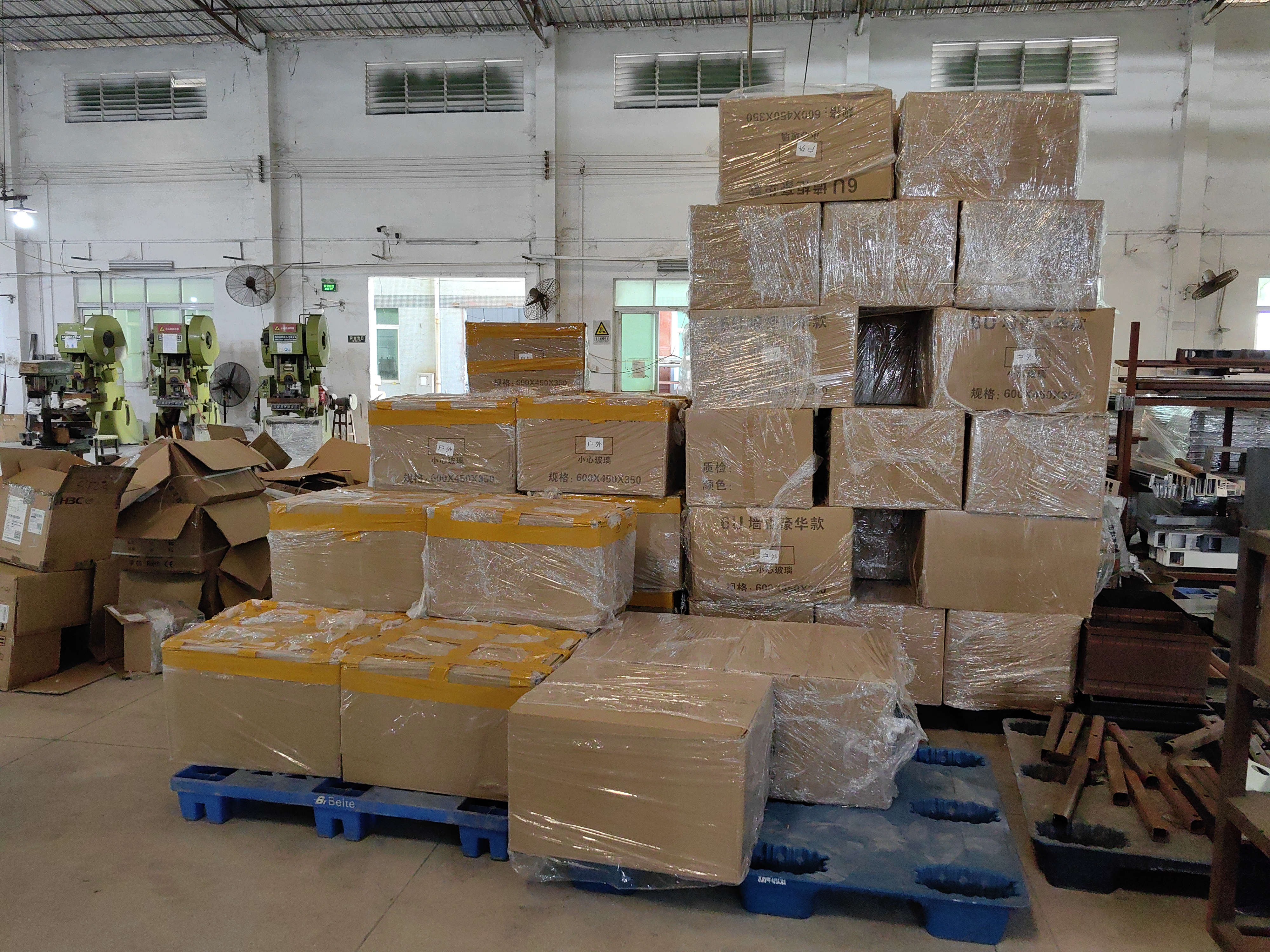
The key points for pushing breakage down:
- Cartons: 5-ply; keep gross weight per carton <= 30-35 kg, and if the destination market has manual handling rules (Europe often sets 25 kg), fix the carton split in advance;
- Orientation: tile must be stood on edge (faces together, stacked the same way), with a timber frame or angle iron on the pallet. Flat stacking under load is the number one cause of breakage;
- Pallet vs loose: pallets are easier but eat 8-12% of the cube; loose loading saves money but clearly raises breakage and claim risk. In a heavy container, decide on total cost, not packaging cost alone;
- In-container securing: timber or airbags plus buffer at the door end; stretch wrap and corner protection are not optional;
- Marks and carton specs: every carton marked with colour code, sequence number, size and piece count, so the destination port can collect in batches without mixing;
- Insurance terms: under CIF/CFR, state who insures, the deductible and the claim window in the contract.
At inspection, run AQL general inspection level II per the AQL sampling table: critical 0 (broken on opening, crazing, obvious chipping), major 2.5, minor 4.0, plus a 1.2 m drop test per carton to check internal filling.
Seven points to watch at inspection
Arrive at about 80% production complete: earlier and you cannot see the full batch colour variation, later and there is no time to rework.
- Colour variation: compare against the sealed sample under standard light, pull 20 cartons at random across the container, and focus on different firing numbers of the same colour code;
- Size and squareness: measure length, width, thickness and diagonals on 10 pieces per batch against the contract limits;
- Flatness / warpage: lay pieces flat, watch the edges, and measure the maximum gap with a feeler gauge;
- Surface defects: count pinholes, blowholes, glaze misses and chipping by AQL, and keep numbered photos of defects on file;
- Strength and absorption: project orders must have third-party spot tests (flexural strength, absorption) traceable to the batch;
- Slip resistance: check that the DCOF / R value report matches the glaze process used for this run (changing glaze means retesting);
- Packaging and carton specs: pieces, m2 and gross weight per carton must match the packing list item by item, plus the drop test and pallet wrap check.
Certification and market differences
| Market | Key requirements | Buying advice |
|---|---|---|
| US / Canada | ANSI A137.1 specification, ANSI A326.3 wet DCOF >= 0.42, TCNA installation practice, Prop 65 | Report numbers must be traceable and match the batch; for slabs also review lifting and transport |
| EU / UK | CE + EN 14411 (absorption classes AI / BIa…), EN 13501 fire rating, UKCA | Confirm before shipment that the DoP (declaration of performance) can be issued, and set the fire rating by use |
| India | Mandatory BIS certification for ceramic tile (IS 15622 series); BIS licence is a precondition for customs clearance | Before the first order, confirm whether the factory or the importer holds the licence - do not find out at the port |
| Middle East | Saudi SASO/SABER, UAE ESMA; Arabic labelling | Schedule certification and labelling into production, not the week before shipment |
One reminder: North American and EU orders only accept reports for the same model and batch. A factory substituting a test report from another model in the same series is the most common cause of rework at inspection, so we check this at quotation stage.
Fee structure and the three most common traps
We charge a commission of 5-8% of the factory invoice value. What you see is the factory’s original quotation, not a marked-up lump sum. The full cost breakdown and where extra charges arise is set out in detail in this article. Inspection is RMB 700-2,000 per order, factory audit RMB 1,500-3,500 per factory, and consolidation, securing and third-party testing are billed at cost.
- Buying interior wall tile as floor tile. Laying earthenware above 10% absorption on a floor looks fine at first, then fails in the first rainy season or freeze-thaw cycle, and replacing the whole batch costs far more than the tile;
- Comparing m2 price only, without container weight. Freight is priced by the tonne: two quotes 15% apart, where the cheaper tile is 10% heavier per m2, can reverse once landed. Always get “m2 per 20GP + total weight” first;
- Choosing the cheapest packaging. The packaging saving is usually under 1%, while the 3% breakage rate and claim process that come with it almost always cost more than the difference.
FAQ
Q1: Porcelain or glazed tile - how do I choose? Start with the application. Floors, outdoor areas, underfloor heating and wet zones need porcelain with absorption <= 0.5% (BIa). Dry interior walls on a tight budget can use ceramic wall tile (BIII). Where slip resistance matters (hotel public areas, pool surrounds, commercial kitchens), set the grade by DCOF or R value on top of the porcelain base.
Q2: Should I book a 20GP or a 40HQ? For standard-thickness floor tile (9-10 mm), price the 20GP first: it has the higher weight limit and is cheaper per tonne. The 40HQ only wins on cube for thin 6 mm tile, mosaic and mixed light cargo. Ask the factory for m2 per container plus total weight for both types, then have your forwarder quote freight on those figures before you compare.
Q3: How do I tell if a factory quote is credible? Check three things: test reports matching this exact model and batch (absorption, flexural strength, slip resistance); written limits for dimensional tolerance and flatness; and a signed sealed sample with the same colour code and firing sequence number. If any of the three is missing, a low price is not credible.
Q4: Who pays for breakage? Per contract: packaging defects found at pre-shipment inspection are the factory’s responsibility; damage in transit caused by poor securing depends on whether the factory or the forwarder loaded the container, and the insurer and deductible must be written into the contract. In practice, run the 1.2 m drop test at inspection and photograph the container bracing at loading - that is the only useful evidence in a claim.
Q5: Can I mix colours in one container? Yes, and it is the most practical way to buy tile: three to four colours at 300-500 m2 each fill one 20GP, and you get better pricing and scheduling than forcing 500 m2 of a single colour. Seal and label each colour separately, and load in the order the consignee will collect.
Next step: send us the spec and the area, get a factory quotation comparison within 48 hours
If you have a tile project in hand - whether it is 1,500 m2 of commercial flooring in the US, or a first mixed-colour container for a Middle East distributor - send us these five things: size (L x W x thickness), absorption class or application, total m2, target market, destination port. Within 48 hours we will return a formal quotation comparison from 3-5 factories in Foshan / Zibo / Jinjiang, item by item on absorption, flexural strength, tolerances, packaging and loading weight, and tell you which parameters can be optimised for cost and which cannot be moved.
WhatsApp / phone: +86 139 2270 2227 (Guangzhou team, Monday to Saturday 09:00-19:00 GMT+8; messages answered within 12 hours including weekends) | Email: sales@cantonmade.com. To see every step from enquiry to shipment first, see how we work; if the same project includes sanitaryware or curtain wall, look at the bathroom vanity sourcing guide and the aluminium window and curtain wall sourcing guide together.